📌 Pear amandine tart: the pastry chefs’ technique for a perfectly melting almond cream
Posted 20 March 2026 by: Admin
An Icon Of French Pastry: History And Secrets Of The Amandine Tart
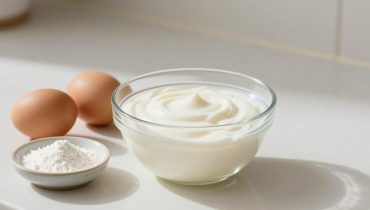
The pear amandine tart embodies the excellence of French pastry: a refined recipe that passes through generations without ever failing. Its secret lies in a technical distinction that is often misunderstood. Unlike frangipane, which incorporates pastry cream, true almond cream consists of only four ingredients in equal proportions: 125g of butter, sugar, ground almonds, and two eggs for 6 to 8 servings.
This minimalist composition allows for the pure expression of the almond, creating a striking contrast with the freshness of the pears. The alliance works through complementarity: the creamy richness absorbs the fruity lightness, while the juice of the pears tempers the richness of the butter. This balanced marriage explains why Williams, Conference, or Comice remain the preferred varieties – their firm flesh resists cooking while releasing their delicate fragrance.
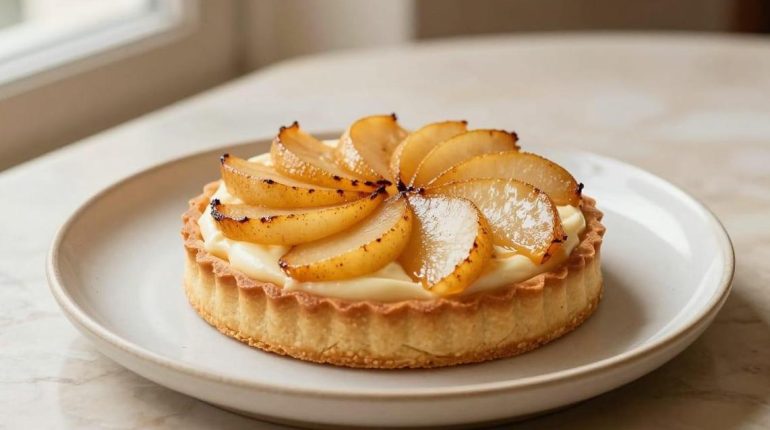
Success rests on four inseparable pillars. The melting texture is born from the progressive emulsion of butter-sugar and then eggs. The fragrance is achieved with precision: six drops of bitter almond extract are enough to scent without dominating. The crispy base requires a pricked shortcrust pastry, preventing any puffing. Visual elegance stems from a harmonious assembly where the pears sink slightly into the cream before baking.
This timeless dessert appeals as much to beginners for its simplicity as to connoisseurs for its discreet sophistication. An accessible technical mastery that transforms ordinary ingredients into a refined creation.
The Detailed Recipe: 40 Minutes For A Pastry Shop Result
This apparent sophistication is demystified by a methodical execution in six timed steps. The overall timing – 10 minutes of preparation, 30 minutes of baking at 180°C – reveals the accessibility of a dessert often perceived as technical. The required equipment is limited to the essentials: tart mold, mixing bowl, whisk, knife, and oven.
The first phase consists of rolling out the shortcrust pastry in the mold and then pricking the bottom with a fork. This perforation prevents puffing during baking, guaranteeing a perfectly flat base. The dough then rests in the cold while the filling is prepared.
The pears, peeled and halved with the core removed, can be sliced into thin strips for an elegant presentation. Lemon juice applied lightly prevents oxidation that would blacken the flesh during assembly – a professional tip often overlooked.
The almond cream requires a precise progression: soft butter and sugar beaten until creamy, then incorporating the eggs one by one, mixing well between each addition. The ground almonds are then integrated, followed by six drops of bitter almond extract. This sequence guarantees homogeneity.
The final assembly involves pouring the cream onto the pastry, harmoniously arranging the pears before pushing them down slightly. Three visual indicators signal optimal baking: golden surface, set cream in the center, melting pears. Cooling before unmolding preserves the structure, allowing for warm or cold tasting according to preference.
Keys To Professional Execution: Four Golden Rules And Chef’s Tips
Beyond the procedure, four principles transform this tart into a creation worthy of a professional window. The choice of pear variety conditions the final result: Williams, Conference, or Comice offer the ideal compromise between ripe flesh and firm hold. A pear that is too green will resist cooking, while flesh that is too soft will disintegrate into the cream.
The texture of the butter determines the homogeneity of the almond cream. It must be soft enough to incorporate without lumps into the sugar, creating that essential creamy base. Room temperature a few hours before use guarantees this optimal consistency.
Baking timing represents the critical balance point: 30 minutes at 180°C transforms the liquid preparation into a melting cream. One excessive minute irremediably dries out the texture, while insufficient cooking keeps the center liquid. Visual monitoring – uniform browning, slight central sagging – takes precedence over the timer.
Professional finishes elevate the presentation. A tablespoon of rum in the cream brings aromatic depth. Flaked almonds sprinkled before baking create a crunchy contrast. Glazing with slightly heated apricot jam using a brush gives that characteristic pastry shine. A pinch of salt in the almond cream, counter-intuitive as it may be, exalts the sweet flavors by contrast.
These technical refinements, from the professional repertoire, allow simple ingredients to be transformed into a dessert whose elegance rivals artisanal creations.
Creative Variations And Service: Personalization And Storage
The classic structure of the amandine tart allows for four validated variations. The addition of dark chocolate chips scattered in the cream or a thin layer of ganache under the pears introduces a cocoa dimension that dialogues with the almond. Substitution with thin apple slices creates an autumnal version where fruity acidity is more assertive. Incorporating fresh raspberries between the pear quarters brings that tangy touch that contrasts with the creamy richness. For intolerances, a certified gluten-free pastry replaces the traditional shortcrust base without compromising the result.
Service optimizes the taste experience. A scoop of vanilla ice cream placed in the center releases a striking thermal contrast. Light whipped cream, whipped without excess sugar, lightens the tasting. Coffee or black tea naturally accompanies this dessert during a refined snack. A drizzle of salted butter caramel sauce creates a sophisticated sweet-salty dialogue.
Pragmatic storage extends use over time. At room temperature, the tart maintains its qualities for a maximum of 24 hours. In the refrigerator, it keeps for three days under plastic wrap, though the pastry gradually loses its crunch. Reheating for 5 minutes in the oven at 150°C partially restores the initial texture.
With 300 to 400 calories per portion, this dessert combines assumed richness with a controlled nutritional profile. This versatility – daily family dessert, creation for guests, elegant snack – explains its permanence in the French repertoire for generations.