📌 Peanut Butter Curry Elicoidali with Eggplant and Pomegranate
Posted 28 March 2026 by: Admin
It’s Friday night, and friends are arriving in an hour. You don’t have the time or the energy for something complicated, but you still want it to look impressive. These peanut butter curry elicoidali solve the problem.
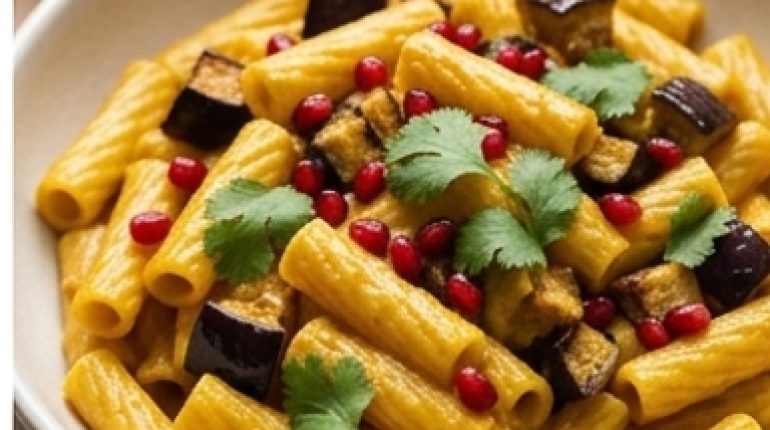
The sauce is a warm ochre, somewhere between light caramel and turmeric, coating every groove of the pasta without drowning it. The pomegranate seeds glisten on top like little rubies—they pop under your teeth with a fresh acidity that elevates the whole dish. The rising aroma is that strangely effective blend of toasted curry and sweet coconut milk. You’re not quite sure where it comes from, but you definitely want more.
Why you’ll love this recipe
Ingredient Notes
Everything you need for this fusion pasta: elicoidali, eggplant, pomegranate, coconut milk, and peanut butter.
- Elicoidali : A tubular pasta with spiral grooves. If you can’t find any, rigatoni or penne rigati do exactly the same job—the important thing is those ridges to catch the thick sauce.
- Peanut butter : Go for the version with no added sugar, the one where the oil sits on the surface. Sweetened peanut butter will unbalance the sauce—it would become too sweet, almost like a dessert.
- Coconut milk : A full carton, not the ‘light’ version. The sauce holds together thanks to the fat in the coconut milk. With the low-fat version, it becomes watery and the texture is ruined.
- Eggplant : A large one, firm to the touch. If it sinks when you press it, it’s overripe and will release water during cooking instead of caramelizing.
- Pomegranate : To get the seeds out without making a mess: cut it in half over a bowl and tap the back with a spoon. The seeds fall right out in thirty seconds.
Eggplant first
Cut the eggplant into cubes of about two centimeters—no need to be surgical. Thinly slice the onion and crush the garlic. In a pot, heat a drizzle of olive oil over medium-high heat. The eggplant absorbs the oil like a sponge for the first few seconds, which is a bit scary, but hang in there and don’t add more oil. The mixture will first sizzle loudly, then calm down once the vegetables have released their moisture. After ten minutes, the cubes are translucent, slightly caramelized on the edges, and the onion gives off a toasted sweet smell. That’s when it really begins.
The convincing sauce
Pour the coconut milk into the pot, directly over the vegetables. Add the curry, paprika, and peanut butter all at once. Stir. The sauce takes a few seconds to emulsify—the peanut butter melts slowly into the hot liquid and creates a silky, slightly thick texture that coats the back of the spoon. Let it simmer for five minutes on low heat. The color shifts from milky white to a deep golden orange, almost like a roux. Taste and adjust the salt—if you want more heat, an extra pinch of curry is all it takes.
Pasta in parallel
Start a large pot of water—really salty, like seawater. The elicoidali cook for twelve minutes. They should be al dente, with a tiny firm heart still left. Before draining, keep a ladle of cooking water aside: if your sauce is too thick when serving, this is what will loosen it without thinning out the flavor.
The impressive plating
Pour the pasta into the sauce, not the other way around. Mix quickly so that every elicoidale is well coated. Give each plate a generous scoop. Then the pomegranate seeds on top—their sharp acidity cuts through the roundness of the coconut milk sauce and wakes everything up. Finish with roughly chopped cilantro. Put the plates on the table while they’re still steaming.
Tips & Tricks
- Salt your cooking water as if it were seawater, a real big pinch. Unsalted pasta in a spicy sauce creates a weird imbalance that you can’t fix afterwards.
- You can prepare the sauce in advance and reheat it gently when serving—it even improves after a night in the fridge, giving the spices time to meld completely.
- Cilantro goes on the plates at the very last moment, not in the hot sauce. If you add it too soon, it cooks, turns black, and loses everything that makes it interesting.
Can I replace elicoidali with another pasta?
Yes, no problem. Rigatoni or penne rigati are the best alternatives—their tubular shape with ridges catches the thick sauce in the same way. Spaghetti or tagliatelle don’t work well here; the sauce would slide off.
My sauce is too thick, how do I fix it?
That’s why we keep a ladle of pasta cooking water. Add it spoon by spoon while stirring until you get the desired consistency. The cooking water is full of starch and loosens the sauce without diluting it.
How to store leftovers?
In the fridge in an airtight container for two days maximum. When reheating, the sauce will thicken—add a little water or coconut milk and stir over low heat. The pasta will soften a bit, but the taste remains intact, or even better.
Can the sauce be made ahead of time?
Yes, and it’s actually recommended for a dinner party. The sauce can be made the day before and kept in the fridge. The next day, reheat it over low heat while the pasta cooks. The spices will have had time to meld and the taste will be deeper.
I don’t like cilantro—what can I replace it with?
Flat-leaf parsley works well as a neutral alternative. Thai basil gives a different but coherent angle with the spices. If you really don’t like any fresh herbs, a pinch of lemon zest at the moment of serving provides the same fresh note.
Can I add a protein to make it a more complete meal?
Roasted chickpeas from the oven fit perfectly into the curry sauce—they bring crunch and plant-based protein. Sautéed firm tofu cubes also work. Sliced grilled chicken, added at the end of cooking, if you want something more substantial.
Peanut Butter Curry Elicoidali with Eggplant and Pomegranate
Italo-Asian Fusion
Main course
A fusion pasta ready in 42 minutes, with a coconut-peanut-curry sauce that perfectly clings to the pasta’s ridges. Pomegranate seeds bring the acidity that changes everything.
Ingredients
- 200g elicoidali (or rigatoni, penne rigati)
- 400ml full-fat coconut milk (1 carton)
- 1 medium eggplant (about 300g)
- 1 pomegranate
- 1 onion
- 1 garlic clove
- 1 bunch fresh cilantro
- 2 tbsp peanut butter (no added sugar)
- 1 tbsp curry powder
- 1 tbsp paprika
- 1 drizzle olive oil
- 1 tsp salt (+ sea salt for cooking water)
Instructions
- 1Finely slice the onion and garlic. Cut the eggplant into 2 cm cubes.
- 2Heat a drizzle of olive oil in a pot over medium-high heat. Sauté the onion, garlic, and eggplant together for 10 minutes, stirring regularly, until the cubes are soft and slightly golden.
- 3Pour the coconut milk into the pot. Add the curry, paprika, and peanut butter. Mix well and simmer for 5 minutes over low heat.
- 4Meanwhile, boil a large pot of generously salted water. Cook the elicoidali for 12 minutes, then drain, keeping a ladle of cooking water.
- 5Extract the seeds from the pomegranate. Roughly chop the cilantro.
- 6Pour the drained pasta into the sauce and mix quickly. Adjust the consistency with the reserved cooking water if needed.
- 7Divide into plates, sprinkle with pomegranate seeds and cilantro. Serve immediately.
Notes
• Storage: leftovers keep for 2 days in the fridge. When reheating, loosen the sauce with a little water or coconut milk over low heat.
• Protein variation: add roasted chickpeas or sautéed firm tofu cubes directly into the sauce before incorporating the pasta.
• Make ahead: the sauce can be prepared the day before. It gains flavor after a night in the fridge—reheat gently and cook the pasta at the last moment.
Nutrition Facts (per serving, estimated)
| 980 kcalCalories | 22gProtein | 95gCarbs | 54gFat |