📌 Parmesan and Cracked Pepper Crusted Prime Rib

Posted 15 April 2026 by: Admin #Recipes

Prep Time
20 minutes
Cook Time
2 hours 30 minutes
Total Time
2 hours 50 minutes
Servings
6 to 8 servings

Prime rib is arguably the most intimidating cut of beef to cook — and also the easiest to mess up if you panic. This version with a parmesan and cracked pepper crust solves the problem: a simple technique, ingredients we all have at home, and a result that truly impresses. Why make it complicated?
Advertisement:
Final result
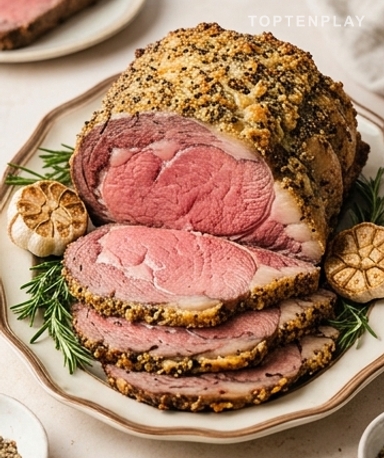
The sliced prime rib reveals a perfect pink center, surrounded by a golden parmesan and pepper crust.

Imagine a thick crust, almost black in places, hiding meat as pink as a sunrise. That transition between the crunchy exterior and the melting interior is exactly what we’re looking for. The smell coming out of the oven blends toasted parmesan, slightly nutty, with pepper that has been gently roasting for two hours. When carving, the knife passes through the crust with a clean crack, then slides into the meat without resistance.

Why you’ll love this recipe

The crust does all the work : Parmesan, pepper, garlic, oil — mixed together, they form a coarse paste that protects the meat during cooking and develops intense flavor without you having to monitor a thing.
Few ingredients, zero fuss : No 24-hour marinade, no complicated technique. You apply the crust, put it in the oven, and wait. It really is that simple — and no one would guess it seeing the result.
The meat works for you : Prime rib is a naturally rich and marbled cut. Even without an elaborate sauce, it stays juicy. The crust traps the juices instead of letting them escape into the bottom of the pan.
The effort-to-effect ratio is unbeatable : This is the kind of dish you bring out for big occasions. Placed whole on the table before carving, it makes an impact — without you spending the whole day in the kitchen.

Ingredient Notes

Ingredients

Advertisement:

All ingredients gathered: the rib roast, grated parmesan, garlic, and fresh herbs.

  • Standing Rib Roast (Prime Rib) : Ask your butcher for it bone-in, it’s better — the bone conducts heat and protects the meat on the bottom during cooking. A 2 kg roast serves 6 people. Take it out of the fridge at least an hour before roasting: meat that is cold at the center will never cook evenly.
  • Grated Parmesan : Use finely grated, not thick shavings. The finer it is, the better it adheres and forms an even crust. Grate it yourself if you can — canned parmesan often contains anti-caking agents that prevent the crust from forming properly.
  • Black Peppercorns, to be crushed : This is where we don’t compromise. Grains coarsely crushed in a mortar or under the flat of a knife — those big shards of pepper that crunch under your teeth are the whole identity of the dish. Fine ground pepper has neither the same power nor the same texture.
  • Garlic : 4 cloves finely minced or crushed into a paste. The garlic mixes with the oil and parmesan to bind the crust. It roasts gently during cooking, loses its bite, and becomes almost sweet. No garlic powder — here, you need fresh.
  • Fresh Herbs (Rosemary, Thyme) : Not mandatory, but rosemary toasting with the parmesan releases a resinous scent that is hard to forget. Avoid fresh parsley — it turns black in the oven. Slip a few sprigs under the crust or place them around the roast in the pan.

The crust is simple

In a bowl, mix the olive oil, parmesan, minced garlic, and cracked pepper. The result looks like a coarse, sticky paste — exactly what we want. Before applying anything, dry the surface of the roast thoroughly with paper towels. Damp meat prevents the crust from sticking, and we don’t want it sliding off during cooking. Then apply the mixture with your hands over the entire surface, pressing firmly so it clings to the fibers. Take the time to cover the sides and the nooks around the bones — these are often the tastiest areas.

The crust is simple
Generous application of the parmesan-pepper crust mixture over the entire surface of the roast.

The initial blast of heat

Oven at 230°C, no less. The first 20 minutes at this temperature set the crust and start the browning — we’re looking for a dark caramel, almost mahogany, not a pale and shy blond. Meanwhile, the smell of toasted parmesan begins to fill the kitchen, slightly nutty, almost burnt but not quite. It’s the sign we’re on the right track. After these 20 minutes, lower to 160°C and let the meat cook quietly, without opening the door every five minutes.

Advertisement:

The thermometer, your best ally

Forget time estimates per kilo — they vary depending on the shape of the roast and the accuracy of your oven. A meat thermometer inserted into the center of the roast, without touching the bone, will give you the exact answer. For a pink center (medium-rare, the best), remove the roast at 52°C. It will continue to cook by 3 to 4 degrees during resting. At 60°C, the meat begins to lose its tenderness. It’s up to you how far you go, but beyond that, it’s a shame.

Resting is not negotiable

Take the roast out of the oven, place it on a board, and cover loosely with aluminum foil. Minimum 20 minutes — 30 is even better. During this time, the meat fibers relax and the juices redistribute throughout the cut. If you cut right away, those juices run straight onto the plate and you end up with dry meat. This is one of the most common mistakes with large cuts. During this time, you can set the table and collect the pan drippings for an express sauce.

Resting is not negotiable
The roast cooking in the oven, the crust forming and aromas filling the kitchen.

Tips & Tricks
  • Take the roast out of the fridge at least 1 hour before cooking, 2 hours is even better. Meat at room temperature cooks much more evenly — the center is no longer icy when the outside is already overcooked.
  • For an even crispier crust, place under the broiler on high for 3 minutes just before taking the roast out. Watch carefully — it goes from perfect gold to burnt in seconds.
  • The juices in the bottom of the pan are precious. Pour them into a small saucepan, add a little hot beef stock, and let reduce for two minutes. You have a simple and powerful sauce, with nothing else needed.
Close-up
The striking contrast between the crunchy pepper crust and the pink, juicy meat.
FAQs
Advertisement:

Can I use a boneless rib roast?

Yes, but the bone provides natural thermal protection and flavor during cooking. A boneless roast will cook a bit faster and less evenly — monitor the internal temperature even more closely and reduce the cooking time by about 20 minutes.

How to check doneness without a meat thermometer?

Advertisement:

Press lightly on the meat with a finger: soft and springs back quickly is rare. A bit of resistance under the finger is medium-rare. Firm and barely gives is well done. This takes practice, but investing in a thermometer remains the best advice we can give for this type of cut.

Can I apply the crust in advance?

Yes, up to 12 hours in advance. Apply the crust, wrap the roast in plastic, and refrigerate. The meat will absorb the aromas of parmesan, garlic, and pepper, which intensifies the final flavor. Just remember to take the roast out 1.5 hours before putting it in the oven so it returns to room temperature.

Advertisement:

How to store and reheat leftovers?

Leftovers keep for 3 days in the refrigerator in an airtight container. To reheat without drying out: wrap the slices in aluminum foil with a splash of broth and bake at 120°C for 15 minutes. Avoid the microwave which toughens the fibers and destroys the crust.

My oven doesn’t go up to 230°C — how to adapt?

Advertisement:

Use the broiler (grill) for the first 10 minutes with the roast in the high position, until the crust takes on a nice mahogany color. Then switch to conventional baking at your oven’s maximum temperature for the rest. The result will be very similar.

What to serve with this prime rib?

Roasted vegetables (carrots, potatoes, parsnips) cooked in the same pan during the last hour of cooking work perfectly — they absorb the meat juices. A green salad on the side lightens the meal. For the sauce, the pan drippings deglazed with beef stock are more than enough.

Advertisement:
Parmesan and Cracked Pepper Crusted Prime Rib

Parmesan and Cracked Pepper Crusted Prime Rib

Medium
American
Main Course
Prep Time
20 minutes
Cook Time
2 hours 30 minutes
Total Time
2 hours 50 minutes
Servings
6 to 8 servings

A whole standing beef rib roast, covered with a crispy parmesan and cracked pepper crust. The technique is simple, the result is impressive.

Ingredients

  • 2 kg standing beef rib roast (prime rib)
  • 2 c.s. olive oil
  • 30g finely grated parmesan
  • 25g black peppercorns, coarsely crushed in a mortar
  • 4 garlic cloves, finely minced
  • 1 c.s. fine salt
  • 4-5 sprigs fresh rosemary (optional)
  • 4-5 sprigs fresh thyme (optional)

Instructions

  1. 1Take the roast out of the refrigerator 1.5 to 2 hours before cooking. Preheat the oven to 230°C.
  2. 2Thoroughly dry the entire surface of the roast with paper towels. Season generously with salt on all sides.
  3. 3In a bowl, mix the olive oil, grated parmesan, minced garlic, and cracked pepper until you get a coarse, sticky paste.
  4. 4Apply the crust with your hands over the entire surface of the roast, pressing firmly. Cover the sides and the nooks around the bones.
  5. 5Place the roast bone-side down in a roasting pan. Tuck the rosemary and thyme sprigs under the roast or around it if desired.
  6. 6Roast at 230°C for 20 minutes to set and color the crust.
  7. 7Lower the temperature to 160°C and continue cooking until the core reached 52°C (for medium-rare). Allow 1h15 to 1h45 depending on the thickness of the roast.
  8. 8Remove from the oven. Cover loosely with foil and let rest for 25 to 30 minutes before carving.
  9. 9Collect the juices from the bottom of the pan, pour into a small saucepan with 200ml of hot beef stock, reduce for 3 minutes over high heat and serve as a sauce.

Notes

• The crust can be applied up to 12h in advance: wrap the roast and refrigerate. Take out of the fridge 1.5h before roasting.

Advertisement:

• The target temperature of 52°C gives a medium-rare result. For meat that is more cooked, remove at 58°C — beyond that, the meat starts to lose its tenderness.

• Leftovers keep for 3 days in the refrigerator. Reheat wrapped in aluminum foil at 120°C for 15 minutes with a splash of broth.

Nutrition Facts (per serving, estimated)

620 kcalCalories 52gProtein 2gCarbs 44gFat

Advertisement:
Share it!

Thanks for your SHARES!

You might like this

Add a comment:

Latest posts

Chipotle Chicken Tacos with Apple-Red Cabbage Slaw and Homemade Creamy Sauce

Crispy Oven-Baked Turkey Ham and Mozzarella Sticks

One-Pan Spaghetti and Meatballs

Slow Cooker Ravioli Lasagna

Banana Split Fluff Salad

Banana Chocolate Chip Muffins

Pumpkin Spice Gooey Butter Cake

Slow Cooker Cube Steaks in Brown Gravy

Golden Pepperoni and Melty Mozzarella Stromboli

Cooked Squash Drink

Loading...