📌 Papaya seeds: why this digestive enzyme surpasses that of the fruit and what it changes for your digestion
Posted 3 March 2026 by: Admin
Papaya Seeds: A Little-Known And Wasted Nutritional Treasure
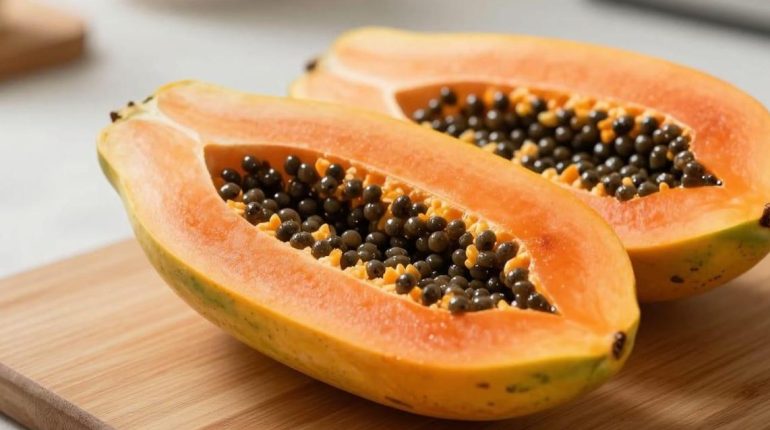
These small black seeds that you systematically throw away after enjoying your papaya contain an exceptional concentration of bioactive compounds. Unlike the sweet flesh of the fruit, the seeds contain powerful digestive enzymes, notably papain in much higher quantities, as well as dietary fiber, phenolic compounds, flavonoids, and beneficial fatty acids.
Papain, this proteolytic enzyme present throughout the fruit, reaches its maximum concentration in the seeds. Its role? To break down dietary proteins to facilitate their assimilation by the body. This property explains why many traditional cultures have used these seeds for generations to support digestion after heavy meals and promote internal balance.
Laboratory research also reveals that these seeds contain natural antioxidants capable of reducing oxidative stress, the main cause of cellular imbalance in the liver. The phenolic compounds identified in the seeds act as protective agents for cells, particularly in a modern dietary context dominated by processed products.
Beyond enzymes and antioxidants, papaya seeds have a high fiber content and natural antimicrobial properties that help maintain a balanced intestinal environment. This unique combination transforms a daily food waste into a true ally for the digestive system, without requiring expensive supplements or complex preparations.
What Scientific Research Reveals About Their Potential Benefits
This digestive efficiency is now echoed in scientific literature. The World Journal of Hepatology published work demonstrating that papaya extracts reduce lipid accumulation in the liver in animal models subjected to a high-fat diet. These observations are explained by an improvement in antioxidant balance and a modulation of hepatic metabolic pathways.
On the digestive level, the papain contained in the seeds effectively breaks down dietary proteins, alleviating post-prandial heaviness and occasional bloating. This biological mechanism justifies the traditional use of papaya after substantial meals, a practice widespread in many tropical regions.
The phenolic compounds present in the seeds also exert measurable antioxidant activity. By neutralizing free radicals, these molecules contribute to the maintenance of healthy cells and the normal functioning of organs, which are particularly stressed by the modern ultra-processed diet.
The action of the seeds is not limited to the liver. Their fiber content associated with their natural antimicrobial properties promotes an optimal intestinal balance and stimulates normal digestive elimination. This synergy between fiber and bioactive compounds creates an environment conducive to a balanced intestinal flora.
When digestion improves, nutrient absorption generally follows the same trajectory. People who moderately integrate papaya seeds into their diet frequently report a feeling of lightness after meals and a daily energy boost, effects consistent with better digestive efficiency rather than any magical property.
Practical And Safe Instructions For Optimal Consumption
These potential benefits only materialize with appropriate use. Papaya seeds have a peppery and slightly bitter taste, reminiscent of black pepper. Their concentrated power requires a measured approach.
The recommended initial dosage is ½ teaspoon daily, or about 5 to 10 seeds. This amount allows the digestive system to adapt gradually. The maximum dose should never exceed 1 teaspoon per day, a threshold beyond which gastric irritation may occur.
Preparation begins with meticulous rinsing followed by natural air drying or drying in a low-temperature oven. This dehydration extends their shelf life and facilitates subsequent grinding in a coffee grinder or mortar. The seeds reduced to powder are stored in an airtight container, ready for use.
The taste obstacle is easily bypassed. Mixing the powder with lemon juice and honey considerably reduces the bitterness. Integration into a smoothie combining papaya, banana, and yogurt completely masks the taste while creating a nutritional synergy. Lightly sprinkling ground seeds on salads, oatmeal, or bowls is a discreet alternative.
For infusion lovers, papaya seed tea is obtained by boiling the dried seeds for 5 to 10 minutes, then filtering before consumption. This traditional preparation preserves the bioactive compounds while softening their intensity.
This flexibility of use allows everyone to identify the method corresponding to their preferences, making daily adoption natural rather than constraining.
Comparison Flesh Vs Seeds And Essential Precautions
This versatility of consumption naturally invites questioning the respective value of each component of the fruit. The comparative table reveals marked nutritional differences.
Papaya flesh offers a sweet and juicy flavor, a moderate papain content, and is rich in fiber. It is consumed fresh or as juice, constituting a universally appreciated pleasure food.
Seeds, in contrast, have a peppery and bitter profile. Their enzymatic concentration includes not only papain but also carpaine, a specific alkaloid. Their density in fiber and antioxidants surpasses that of the pulp. This concentrated power explains their limited use in small ground doses.
This complementarity suggests that using both components simultaneously maximizes nutritional benefits without requiring an exclusive choice. The flesh provides vitamins and hydration, while the seeds intensify digestive and antioxidant support.
However, some people must abstain completely. Pregnant or breastfeeding women, individuals allergic to papaya or latex, as well as those under medical treatment or with existing pathologies, imperatively require prior medical advice.
Papaya seeds do not diagnose, treat, cure, or prevent any disease. They only constitute natural digestive support whose effectiveness is based on preliminary scientific research and centuries-old traditional use. This distinction between nutritional ally and medical remedy remains fundamental for informed and responsible use.