📌 Papaya seeds: how they support digestion, the liver, and immunity naturally
Posted 5 February 2026 by: Admin
Papaya Seeds: A Little-Known Nutritional Treasure
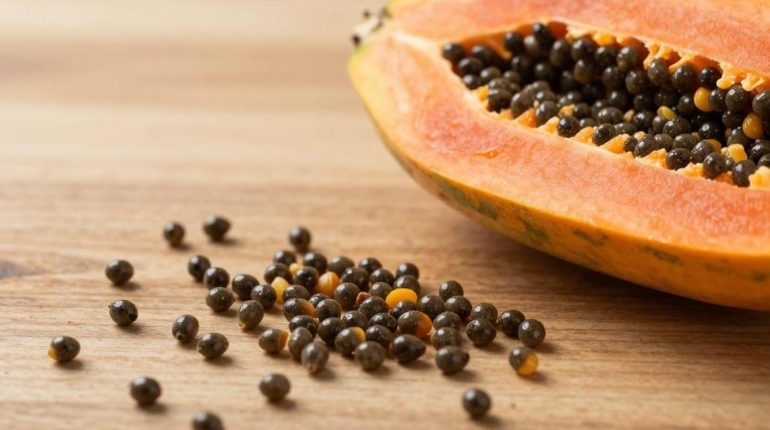
Every day, millions of papaya seeds end up in the trash. Yet, these small black pearls contain an exceptional concentration of bioactive compounds that surpasses that of the fruit’s flesh itself. Rich in papain — a powerful proteolytic enzyme — flavonoid antioxidants, and essential fatty acids, they have been a documented therapeutic ally in traditional medicines of Asia and Latin America for several centuries.
Their nutritional profile explains why these seeds have historically been used to support liver function, facilitate protein digestion, and exert a natural antimicrobial action on the intestinal tract. The papain they contain effectively breaks down complex protein molecules, reducing bloating and the feeling of heaviness after meals. At the same time, their phenolic compounds fight cellular oxidative stress while their antimicrobial active principles contribute to the balance of digestive flora.
What once fascinated traditional healers now interests phytotherapy researchers: the transformation of food waste into an accessible and economical therapeutic ingredient. Unlike industrial supplements, these seeds are used raw, dried, or fresh, without chemical processing. Their intense peppery flavor testifies to their concentration of active principles — a characteristic that, however, requires caution and moderation in their daily use.
Four Scientifically Recognized Benefits
Analysis of the therapeutic properties of papaya seeds reveals four distinct mechanisms of action, documented by traditional use and clinical observation. The first directly concerns protein digestion: papain, a major proteolytic enzyme, fragments complex peptide chains into assimilable amino acids, accelerating gastric transit and reducing the fermentation responsible for bloating. This enzymatic action proves particularly effective after meals rich in meat, fish, or legumes.
The second benefit lies in their natural antimicrobial capacity. The phenolic compounds and alkaloids present in the seeds exert an inhibitory action on certain undesirable microorganisms in the digestive tract, helping to maintain the balance of intestinal flora without disturbing beneficial bacteria. This property explains their ancestral use during mild digestive disorders or temporary intestinal imbalances.
On the hepatic level, the seeds stimulate the liver’s natural detoxification processes. Their antioxidants neutralize free radicals generated during hepatic metabolism, while some of their compounds promote the elimination of toxins via the bile ducts. This liver support justifies their integration into seasonal cleansing protocols practiced in natural medicine.
Finally, their anti-inflammatory effects are particularly observed during sinus congestion or internal irritations. The enzymes and polyphenols they contain modulate the body’s inflammatory response, reducing discomfort without recourse to chemical substances. This therapeutic versatility, however, rests on a fundamental principle: respect for dosages and consideration of individual contraindications.
Four Ready-to-Use Natural Recipes
The practical application of these therapeutic principles involves simple home preparations, precisely dosed. The nasal congestion remedy combines a teaspoon of dried seeds reduced to a fine powder with raw honey: the mixture is held in the mouth for a few minutes before ingestion, allowing the active compounds to act locally on inflamed mucous membranes. This traditional application specifically targets facial pressure and respiratory obstruction related to sinusitis.
For a morning detoxifying action, the smoothie combines a teaspoon of fresh seeds with a glass of freshly squeezed orange or pineapple juice. Consumed on an empty stomach, this mixture activates hepatic processes upon waking while providing vitamin C and bromelain, enzymes complementary to papain. The synergy between these natural elements amplifies the cleansing effect without attacking the body.
The post-meal digestive mix simply requires crushed dried seeds incorporated into half a cup of plain yogurt. This combination unites proteolytic enzymes and probiotics, creating a favorable environment for digestion while reducing heaviness and discomfort after large meals. The effect generally manifests within thirty minutes of consumption.
Finally, the intestinal cleansing drink is prepared by diluting a teaspoon of powder in a glass of warm water with honey added. This protocol lasts for a maximum of seven consecutive days, taken each morning on an empty stomach. Beyond this duration, the body requires a break to avoid any digestive overstimulation. Each recipe respects the daily limit of one teaspoon, a threshold never to be exceeded to guarantee safety and effectiveness.
Precautions for Use and Contraindications
These natural therapeutic protocols require absolute rigor regarding dosage and frequency of use. The daily limit of one teaspoon maximum constitutes a safety threshold never to be crossed, as papaya seeds contain powerful bioactive compounds whose excessive concentration could cause gastrointestinal irritation or nausea. Their naturally intense flavor, comparable to black pepper, also testifies to this density of active principles.
Certain populations must imperatively refrain from any consumption. Pregnant women are at the forefront of these contraindications: papain possesses uterotonic properties documented in ethnobotanical literature, likely to trigger premature contractions. People suffering from gastric ulcers or presenting increased digestive sensitivity risk worsening symptoms through excessive stimulation of enzymatic secretions. Any known allergy to papaya automatically excludes the use of its seeds.
Simultaneous intake of medical treatments requires a prior medical consultation. Proteolytic enzymes can modify the absorption or metabolism of certain pharmaceutical active principles, creating potentially problematic interactions. This precaution particularly applies to anticoagulants, anti-inflammatories, and liver treatments.
Occasional use takes precedence over continuity: these seeds work ideally as a punctual cure of seven days maximum, followed by a rest period allowing the body to regain its natural balance. This cyclic approach transforms ordinary food waste into an effective traditional remedy, provided these essential safeguards are scrupulously respected.