📌 Oven cooking: why convection heat reduces time by 25% and how to adapt your recipes
Posted 28 December 2025 by: Admin
Convection Heat: A Cooking Trap That Ruins Your Dishes
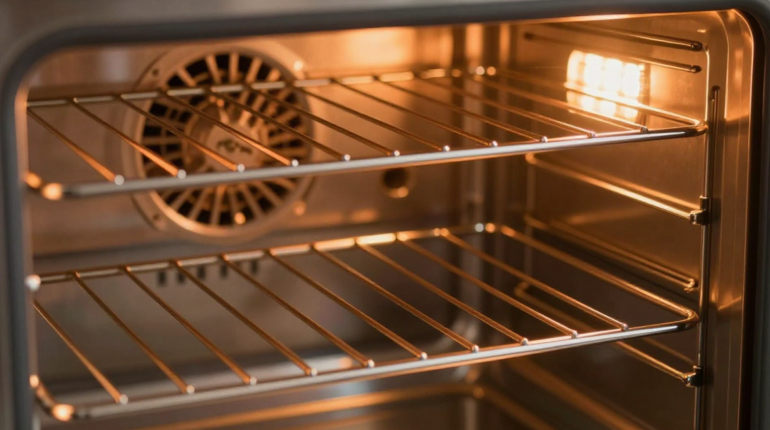
The oven is your ally in the kitchen, but a poorly mastered setting can turn your preparations into a culinary disaster. Convection heat, present on most modern appliances, speeds up cooking by 25% compared to a traditional oven. This fan located at the back propels a constant flow of hot air onto the food, causing chemical browning reactions much faster than in natural convection.
The problem? Recipes are generally designed for classic convection ovens, where air circulates vertically without mechanical assistance. Result: by following cookbook instructions to the letter, you risk serving dried-out cakes, overcooked meats, or pastries burnt on the surface.
The solution lies in the 25-25 rule: systematically reduce the temperature by 15°C and the cooking time by a quarter. This double correction compensates for the intensity of the ventilation system which, while producing more golden and crispy surfaces, can also dry out your preparations if you don’t adjust the parameters. A simple reflex that transforms a handicap into an advantage to obtain perfectly cooked dishes.
Strategic Positioning: The Rack That Changes Everything
The temperature is not uniform in your oven. Heat naturally rises, creating distinct thermal zones that few cooks exploit correctly. This vertical distribution of heat determines the success or failure of your preparations.
Gratins and crèmes brûlées require the upper rack to obtain that characteristic caramelized surface. In the center, position cookies, cakes, muffins, and blind-baked shortcrust pastries. Soufflés, filled tarts, angel food cakes, and yeast breads require the two lower racks, where gentler heat allows for a progressive rise without burning the surface.
Each dish should occupy the center of its rack. The closer it gets to the hot walls, the faster it will brown, creating unbalanced cooking. To cook two preparations simultaneously, use the central racks by staggering the molds diagonally: one at the back, the other at the front. Swap them halfway through cooking to ensure identical heat exposure.
On the same rack, diagonal placement with intermediate rotation also works, provided a slight space is maintained between containers. This simple technique transforms your oven into a multiple cooking tool without compromising the quality of the results.
Materials and Temperature: The Unknown Equation
The choice of mold directly influences the cooking temperature. Black or dark metal molds and Pyrex containers absorb heat more intensely than their pale metal or ceramic counterparts. This accelerated absorption causes premature browning that can turn a perfectly measured cake into an overcooked preparation with charred edges.
The solution lies in a systematic adjustment: reduce the temperature by 15°C as soon as you use a dark or glass mold. Also slightly decrease the cooking time, unless you are deliberately looking for very golden crusts. This simple correction compensates for the superior thermal conductivity of these materials.
Disposable aluminum molds represent the ultimate trap. Their ultra-thin walls conduct heat chaotically, producing pale cakes without pronounced flavor and with desperately uneven cooking. The thinness of the metal allows neither thermal regulation nor homogeneous diffusion, creating overheated zones and others insufficiently cooked.
Systematically prioritize quality molds: ceramic or light metal for slower and more controlled cooking, Pyrex or dark metal for faster results, provided the temperature is adapted. This material variable, often neglected, determines success as much as the recipe itself.
Preheating and Adaptability: Reflexes to Acquire
Beyond the equipment, thermal mastery begins with a fundamental step often botched: preheating the oven. Allow 10 to 15 minutes for your appliance to actually reach the programmed temperature. Putting food in before thermal stabilization compromises the texture, color, and structure of the preparations. This delay allows the heating elements to uniformly heat the entire cavity.
But beware: each oven has its own characteristics. Some reach the displayed temperature quickly, others show a significant delay. To check the reliability of your appliance, place a thermometer in the center of the oven set at 180°C for fifteen minutes. Observe the variations for thirty minutes, every five to ten minutes, without opening the door. A fluctuation of ±8°C remains normal. Beyond a 15°C difference, you must absolutely compensate during each cooking session.
This precise knowledge of your oven radically transforms your approach. Rather than blindly following the time indicated on the recipe, rely on visual and textural indicators: golden color, firm texture to the touch, characteristic smell. Each oven cooks differently depending on its brand, age, and seal. Visual experience takes precedence over the timer.
Develop this professional reflex: monitor the evolution of your preparations through the glass, adjust temperature and duration according to what you observe. This permanent adaptability, nourished by intimate knowledge of your appliance, guarantees consistent results despite technical variables.