📌 Oven-Baked Beef Ribs with Homemade Barbecue Sauce
Posted 3 April 2026 by: Admin
Everyone thinks ribs are a restaurant-only dish or a summer barbecue specialty requiring specific equipment. That’s wrong. An oven, some aluminum foil, and the right technique — that’s all. The rest is just time.
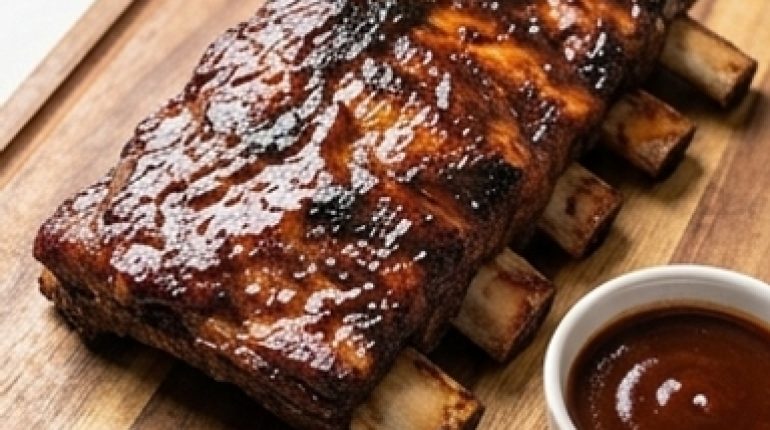
What hits you first is the color: a shiny mahogany brown, almost lacquered, with edges verging on dark caramel. The meat doesn’t really hold onto the bone anymore — it detaches at the slightest pressure, the fibers giving way without resistance. The smell that invades the kitchen in the last half-hour of cooking, that mixture of sugar lightly burning on the edges, smoked paprika, and warm honey, makes it hard to stay patient. You cut in, and the sauce forms a thick, sticky glaze that coats every piece like varnish.
Why you’ll love this recipe
Ingredient Notes
All the ingredients for the dry rub and homemade barbecue sauce, brought together before starting.
- Beef Ribs : Ask your butcher for beef short ribs or spare ribs — bones with some meat and plenty of collagen. It’s this collagen that melts during slow cooking and gives that melting, almost gelatinous texture we’re looking for. Avoid pieces that are too lean; they inevitably dry out.
- Smoked Paprika : Not ordinary paprika — smoked. This is what gives you the barbecue flavor without a barbecue. You can find it in the spice aisle, often in a small red tin. The difference from classic sweet paprika is immediate to the nose: pungent, intense, as if something had actually grilled over embers.
- Apple Cider Vinegar : This is what balances the sugar from the honey and ketchup in the sauce. White vinegar works too, but it’s more aggressive. Apple cider vinegar brings a light fruity note that rounds everything out. Two tablespoons, no more — the sauce should tingle slightly at the back of the mouth, not make you wince.
- Worcestershire Sauce : That English brown sauce we use for nothing else and keep in the back of the fridge for months — it has its purpose here. It brings umami, a salty and fermented depth that makes the barbecue sauce more complex. Without it, the sauce tastes flatter and hollower.
The rub: massage it in
Mix the spices in a bowl — paprika, brown sugar, garlic powder, onion powder, salt, pepper, cumin. The smell of this dry mix is already promising: the brown sugar brings a molasses note, the smoked paprika an almost burnt tip. Before seasoning, remove the thin membrane covering the inner side of the ribs by peeling it off with the tip of a knife, then pulling sharply with paper towels so you don’t slip. Without this, the spices stay on the surface and the texture after cooking is less pleasant. Then, really rub it in — use your palm, everywhere, focusing on the edges and thick parts. The meat should be uniformly coated, almost brick red. Let it rest in the fridge for at least an hour. Overnight is much better.
Three hours. Don’t touch it.
Preheat the oven to 150°C. Wrap the ribs tightly in aluminum foil — the goal is to keep all the moisture inside, not letting a single puff of steam escape. Place everything on a tray and bake. Minimum two and a half hours, three if the ribs are thick. Nothing visible happens from the outside. That’s normal. Inside, the collagen is slowly turning into gelatin, the muscle fibers are relaxing, and the meat is absorbing all the spices from the rub. When you open the foil after taking it out of the oven, a hot, fragrant steam escapes all at once — and the meat has changed appearance, more matte, darker. It should give way immediately when pressed with a fork.
The sauce while you wait
Take advantage of the last two hours of cooking to prepare the sauce. In a small saucepan: ketchup, apple cider vinegar, honey, Worcestershire sauce, mustard, smoked paprika, minced garlic. Low heat. The sauce goes from bright red to an orange-brown as it heats, thickening slightly and the smells blending into something rounder, less raw. Ten to fifteen minutes, stirring occasionally. Taste it. Too sweet? A dash of vinegar. Too tangy? A spoonful of honey. The sauce should coat the back of a spoon without running off too fast — if it runs like water, continue reducing for two minutes.
The game-changing moment
Turn the oven up to 200°C. Take the ribs out of the foil, place them on a tray with parchment paper. Brush generously with sauce — a thick layer on all accessible sides. Bake for ten to fifteen minutes. This is where it tips: the sauce starts to bubble on the edges, concentrating, turning towards that shimmering mahogany brown we’re after. Watch closely. One minute too long and it burns. Take the ribs out, apply another layer of sauce, and bake for five more minutes. This second layer makes all the difference: the glaze becomes thick and sticky, with those tiny caramelized spots on the edges that crunch very slightly under the teeth. Let rest for five minutes before cutting between the bones.
Tips & Tricks
- Don’t skip the membrane step on the back of the ribs. It hardens during cooking and blocks the spices. Use a knife to loosen it, then pull sharply with a paper towel for grip — it comes right off.
- If you can, prepare the ribs the day before with the rub and leave them overnight in the fridge. The spices have time to truly penetrate the meat, not just stay on the surface. The taste difference is clear.
- For the final caramelization, do at least two sauce passes: one before baking at 200°C, and one halfway through. Each layer concentrates and intensifies on the previous one. One layer is good. Two is what you see in photos.
Do I really need to remove the membrane on the back of the ribs?
Yes, and it really changes the result. This thin membrane becomes tough and rubbery when cooked, and it prevents the rub spices from penetrating the meat. To remove it, slide the tip of a knife under a corner, then pull sharply with a paper towel so you don’t slip.
How do I know if the ribs are cooked enough after the slow bake?
Poke a fork into the meat and twist slightly: it should give way without resistance. You can also check if the meat has retracted slightly and pulled away from the bone by about 1 cm. If not, put them back in the oven for another 20 to 30 minutes.
Can I prepare ribs in advance?
It’s actually recommended. You can do the whole slow bake the day before, let the ribs cool in their foil, then keep them in the fridge. The next day, just take them out 30 minutes before doing the caramelization at 200°C. The result is identical, and it saves you from waiting 3 hours on the day.
How to store and reheat leftovers?
Ribs keep for up to 3 days in the refrigerator in an airtight container. To reheat without drying them out, place them in the oven at 160°C covered with aluminum foil for 15 to 20 minutes. Avoid the microwave, which dries out the meat and softens the glaze.
Can I replace smoked paprika if I don’t have any?
You can use regular sweet paprika in the same quantity, but the barbecue flavor will be much less pronounced. To compensate, add a few drops of liquid smoke (found in the spice aisle) — half a teaspoon is enough, it’s powerful.
Can I freeze the ribs?
Yes, preferably after the slow bake and before the caramelization phase. Wrap them well in plastic wrap and then foil; they keep for up to 3 months. Thaw overnight in the fridge, then proceed with caramelization as usual.
Oven-Baked Beef Ribs with Homemade Barbecue Sauce
American
Main Course
Beef spare ribs slow-cooked until ultra-tender, glazed with a homemade barbecue sauce balanced between sweet, tangy, and smoky.
Ingredients
- 1,5 kg beef spare ribs
- 2 tbsp sweet paprika
- 1 tbsp brown sugar
- 1 tsp garlic powder
- 1 tsp onion powder
- 1 tsp salt
- 1 tsp black pepper
- 1 tsp ground cumin
- 200 ml ketchup
- 2 tbsp (30 ml) apple cider vinegar
- 2 tbsp (40 g) honey
- 1 tbsp (15 ml) Worcestershire sauce
- 1 tsp smoked paprika
- 1 tsp mustard
- 1 clove garlic, finely minced
- to taste salt and pepper
Instructions
- 1Remove the thin membrane from the back of the ribs by loosening it with a knife and pulling sharply with a paper towel.
- 2In a bowl, mix the paprika, brown sugar, garlic powder, onion powder, salt, pepper, and cumin. Rub this mixture generously over the entire surface of the ribs.
- 3Cover and refrigerate for at least 1 hour, ideally overnight.
- 4Preheat the oven to 150°C. Wrap the ribs tightly in aluminum foil and place them on a baking sheet.
- 5Bake for 2h30 to 3h. The meat is ready when it easily gives way under the pressure of a fork.
- 6While cooking, prepare the sauce: mix the ketchup, cider vinegar, honey, Worcestershire sauce, mustard, smoked paprika, and garlic in a saucepan. Heat over low heat for 10 to 15 minutes, stirring until slightly thickened.
- 7Increase the oven to 200°C. Remove the ribs from the foil and place them on a tray with parchment paper.
- 8Brush generously with barbecue sauce and bake for 10 to 15 minutes until the sauce caramelizes and shines.
- 9Brush with a second layer of sauce and bake for another 5 minutes.
- 10Let rest for 5 minutes, then cut between the bones and serve immediately.
Notes
• Make-ahead: slow cooking can be done the day before. Keep the ribs wrapped in their foil in the refrigerator, then proceed with the caramelization on the day.
• Storage: up to 3 days in the refrigerator in an airtight container. Reheat at 160°C covered with aluminum foil for 15 to 20 minutes.
• Freezing possible after slow cooking (before caramelization) for up to 3 months. Thaw overnight in the fridge before finishing the recipe.
Nutrition Facts (per serving, estimated)
| 680 kcalCalories | 48 gProtein | 28 gCarbs | 38 gFat |