📌 Ossobuco: How Italian chefs transform veal shank into tender perfection with wine, tomatoes and bone marrow
Posted 13 December 2025 by: Admin
Ossobuco: The Crown Jewel Of Milanese Cuisine
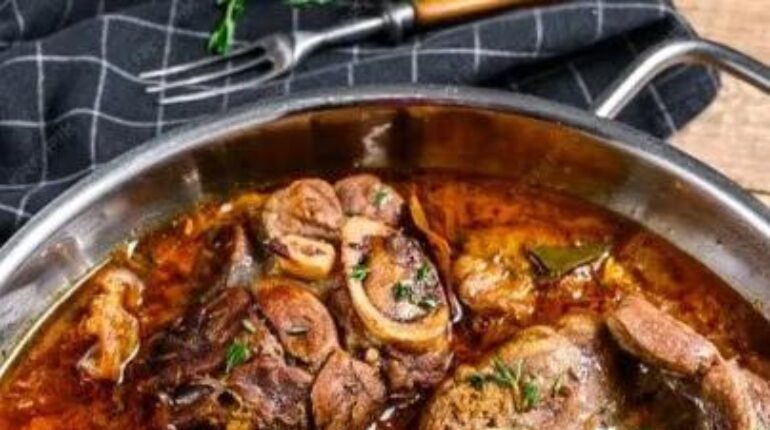
Few dishes embody Italian culinary tradition quite like ossobuco—a masterpiece born from the pragmatic ingenuity of Milanese home cooks who transformed humble veal shanks into an iconic slow-cooked delicacy. The name itself tells the story: ossobuco literally means “bone with a hole” in Italian, referring to the cross-cut veal shanks that form the heart of this legendary dish. What distinguishes ossobuco from ordinary braised meat is precisely this anatomical feature—the marrow-filled bone at the center, which releases its rich essence throughout the cooking process, infusing every fiber with incomparable depth.
This isn’t merely a recipe; it’s a reflection of Italian gastronomic philosophy. Dating back centuries in Lombardy’s culinary archives, ossobuco represents the region’s commitment to resourceful gastronomy where every ingredient serves a purpose. The four cross-cut veal shanks required for an authentic preparation aren’t chosen arbitrarily—they’re selected for their optimal meat-to-bone ratio and their ability to withstand the prolonged braising that transforms them into tender, succulent perfection.
Traditional preparation principles remain unchanged because they work. The dish demands patience, respect for ingredient quality, and an understanding that true culinary excellence cannot be rushed. From the Milanese tables of the 19th century to contemporary restaurants, ossobuco continues to reign as an emblematic representation of slow-food philosophy and regional authenticity.
The Foundation: Essential Ingredients And Flavor Base
The transformation from raw veal shanks to restaurant-quality ossobuco begins with understanding ingredient architecture. While the marrow-filled bone provides structure, it’s the aromatic trinity of onion, carrot, and celery—the foundational soffritto—that builds the flavor foundation. This classical Italian technique isn’t decorative; it creates the savory depth that distinguishes authentic ossobuco from hastily prepared imitations.
The tomato component demands equal precision. Four hundred grams of crushed peeled tomatoes or diluted tomato concentrate provides acidity and body without overwhelming the delicate veal. Paired with one glass of dry white wine and five hundred milliliters of beef or poultry stock, this liquid base achieves the optimal balance between richness and refinement. The wine adds brightness while the stock contributes collagen-derived body that coats each morsel.
Fresh herbs—a single sprig of rosemary and two bay leaves—anchor the flavor profile with subtle herbaceous notes that evolve during the prolonged braising. Two garlic cloves integrate seamlessly into the soffritto, their pungency mellowing into sweet undertones. Salt and pepper aren’t afterthoughts; they’re calibration tools applied strategically throughout cooking to ensure even seasoning penetration into the dense meat. This ingredient synergy doesn’t happen accidentally—it’s the result of centuries of Milanese refinement, where each component was tested, evaluated, and retained only for its measurable contribution to the final result.
Mastering The Cooking Technique
With ingredients assembled and their synergies understood, execution separates competent cooks from those who achieve the profound tenderness ossobuco demands. The process begins with a deceptively simple step: dusting the veal shanks with flour. This isn’t mere coating—it creates a protective crust during searing that traps moisture while developing fond, those caramelized particles essential for flavor complexity. The flour catches the intense heat of extra virgin olive oil, initiating the Maillard reaction that transforms surface proteins into savory compounds.
The searing itself requires precision timing. The oil must reach proper temperature—visible shimmer but not smoking—before the floured shanks meet the pan. This three-to-four minute engagement on each side creates a golden exterior while preserving the marrow’s integrity within. The meat then transitions into braising, the prolonged gentle cooking where temperature and time become more critical than technique. Low heat—never boiling—allows collagen to convert into gelatin gradually, creating that signature tender texture that yields to a fork rather than requiring teeth.
The braising vessel matters: a heavy Dutch oven distributes heat evenly, preventing the exterior from overcooking while the interior remains tough. Nestled amid the tomato-wine-stock mixture with its herbs, the shanks require approximately two hours of unhurried cooking. The occasional rotation ensures even heat exposure, though excessive disturbance disrupts the delicate transformation occurring within. Salt and pepper applications at different stages—initial seasoning, mid-cook adjustment, final calibration—prevent the dense veal from tasting one-dimensional. This methodical approach yields meat so tender it threatens to slip from the bone with the gentlest prodding.
The Finishing Touch: Gremolata Enhancement
As the ossobuco emerges from its two-hour braising journey, tender and infused with the depths of wine, stock, and tomato, a final transformation awaits. Gremolata—though listed as optional—represents the culinary secret that elevates this dish from excellent to extraordinary. This deceptively simple garnish of grated lemon zest combined with chopped fresh parsley serves a purpose far beyond decoration: it cuts through the richness of the braised meat with acidic brightness, awakening the palate with each forkful.
The contrast proves essential to the ossobuco experience. The hours spent coaxing tenderness from bone and marrow create profound, concentrated flavors—deeply savory, almost earthy. Gremolata’s fresh citrus notes and herbaceous character act as a counterbalance, preventing the dish from becoming one-dimensional or overwhelming. The lemon’s acidity also aids digestion of the rich gelatin and fat, explaining why Italian tradition never divorces this garnish from the final presentation.
Authentic preparation requires fresh components: never substitute dried parsley or bottled lemon juice. The zest must be finely grated to distribute evenly across the surface, while the parsley should be hand-chopped just before serving to preserve its volatile aromatics. This finishing element isn’t merely decorative—it’s the essential bridge between technique and transcendence, the detail that separates home cooking from restaurant mastery, and the reason this Milanese classic has endured across centuries.