📌 Oat risotto with squash and Blue cheese: the creamy recipe that twists a great Italian classic
Posted 17 January 2026 by: Admin
The Risotto Technique Revisited With Oats
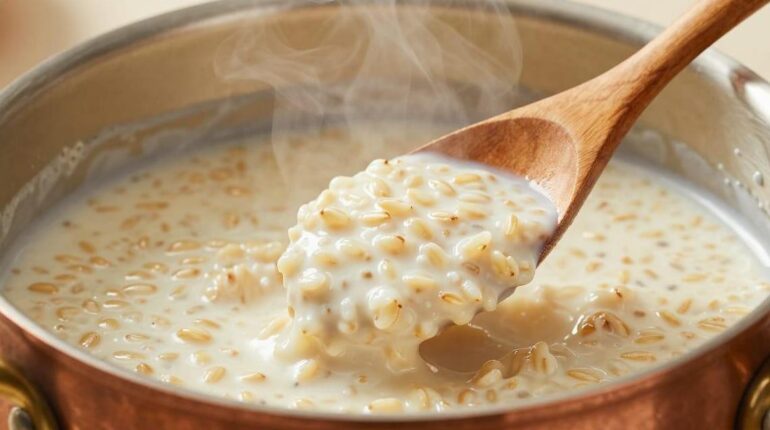
This recipe reinvents Italian risotto by substituting oats for Carnaroli rice, while maintaining the ancestral gestures that are the soul of the dish. The technique remains unchanged: after browning the oat grains for one minute with the onion and garlic sautéed in olive oil, the white wine deglazing starts the show. Once the wine is absorbed, the broth is incorporated ladle by ladle, exactly like a classic risotto. This progressive method allows the oat grains to release their natural starch, creating the desired creaminess without adding cream.
The major innovation lies in the final incorporation of the butternut squash puree, previously cooked for 15 minutes and blended to a smooth texture. This puree replaces the traditional mantecatura – that final buttering that makes Milanese risotto so rich. It brings creamy texture and natural sweetness while considerably lightening the dish’s nutritional profile.
In association with Fourme d’Ambert, this Blue cheese from Auvergne with a strong character, it counterbalances the vegetable sweetness. Its cubes partially melt in the hot preparation, diffusing their lactic notes and aromatic power. This bold squash-blue cheese alliance transforms a simple cereal substitute into an assertive gastronomic creation, where health and indulgence coexist without compromise.
Butternut Squash, The Creamy Foundation Of The Dish
Squash puree is much more than a simple side dish in this recipe: it becomes the structural element. The butternut cubes, plunged into a large volume of boiling salted water for exactly 15 minutes, reach that perfect tenderness that allows for a lump-free reduction. This prolonged cooking transforms the firm flesh into a malleable material, ready to be mashed into a homogeneous puree.
The integration of this puree occurs at a strategic moment: once the oats are fully cooked, after the complete absorption of the broth. This timing is not accidental. If incorporated too early, the squash would dilute in the liquid and lose its binding power. Added at the end of cooking, it coats each oat grain in a creamy veil, creating that melting texture characteristic of risotto without a drop of cream or butter.
The butternut thus fulfills a double role: it mechanically binds the preparation through its natural starch, while bringing its sugary sweetness that contrasts with the salinity of the broth and the residual acidity of the white wine. This vegetable foundation prepares the palate for the taste shock that the Fourme d’Ambert cubes will represent, creating an aromatic progression where each element finds its place in the final balance of the dish.
The Balance Of Flavors: From Sweet To Savory
This aromatic progression relies first on a classic but essential aromatic base: minced onion and garlic, sautéed in olive oil until translucent. These fundamental aromatics create the taste base on which all the complexity of the dish is built. Once browned, the oats join them in the pan for a minute of toasting that reveals their hazelnut notes.
Deglazing with white wine marks the first turning point in flavor development. The alcohol evaporates quickly, leaving behind a fine acidity and fruity aromas that counterbalance the natural sweetness of the squash. This vinous touch prepares the palate for the power of the cheese to come.
Fourme d’Ambert intervenes in two strategic stages. A first wave of cubes melts into the still-hot preparation, creating creamy pockets with a pronounced taste. These melting pieces diffuse their pungent character throughout, contrasting with the vegetable roundness of the butternut. A second round of cubes, placed on the surface at the time of plating, retains its firm texture and raw intensity.
The final seasoning with salt and pepper calibrates the balance between the sugary sweetness of the squash and the saline bite of the blue cheese. This precision in dosage transforms a mixture of ingredients into a harmonious composition where each flavor finds its right place, preparing for the arrival of a final decisive element.
The Final Touch: The Crunch Of Toasted Walnuts
This last decisive element emerges in a dry-heated pan. The crushed walnuts toast there for a few minutes, without added fat, until their surface takes on a golden hue and a woody scent fills the kitchen. This toasting releases their essential oils and increases their aromatic intensity, transforming a common ingredient into a concentrate of character.
The placement of these toasted walnuts follows a precise logic. Arranged on the surface at the time of service, they escape the moisture of the dish and retain their crunchy texture. Each bite then becomes a calculated alternation between the creamy smoothness of the avoinotto and the firm resistance of the walnut pieces, creating a dialogue of textures that maintains the palate’s attention.
This strategy of presentation in shallow bowls is not accidental. The shape retains heat and allows the aromatics to continue their infusion, while the depth of the container highlights the visual contrast between the beige mass of the dish, the blue veins of the cheese, and the golden fragments of the nuts. A few extra cubes of Fourme, added at the last moment, complete this gustatory architecture.
This final detail elevates a comforting preparation to the rank of a balanced creation. Without this saving crunch, the avoinotto would remain a homogeneous and soft dish. The toasted walnuts provide the necessary punctuation, the relief that transforms each plate into a complete sensory experience.