Norman apple cake is often sold as something complicated—AOC Norman butter, orchard apples, meticulously worked dough. In reality, it’s a pantry cake. Twenty minutes of prep, a few basic ingredients, and you’re done.
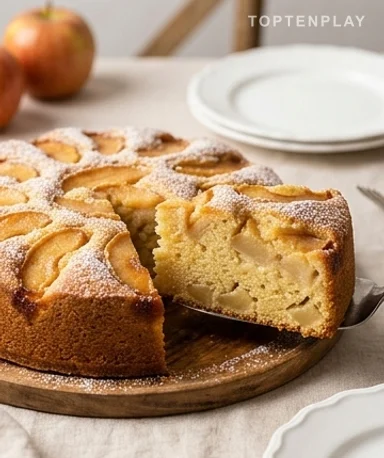
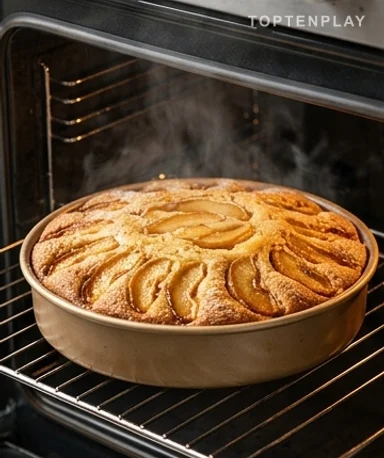
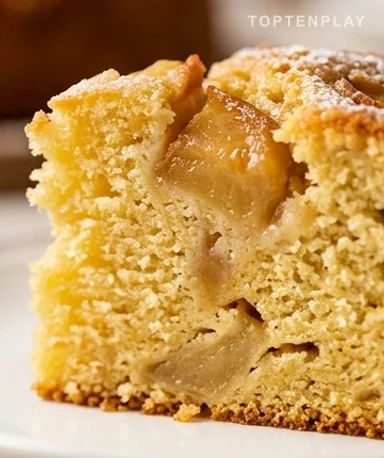
What comes out of the oven is a slightly domed, light caramel-colored cake, with apple slices that have candied on top while browning at the edges. When you press a knife into it, the crust yields without resistance, revealing a moist interior, almost like a flan. It smells of warm cinnamon and baked apples—that blend that instantly turns a cold kitchen into a place where you want to stay. And contrary to what it looks like, it isn’t heavy at all.
Why you’ll love this recipe
Ingredient Notes
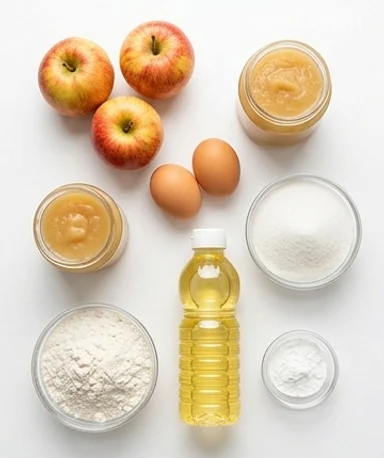
Everything you need for this Norman cake: firm apples, applesauce, eggs, and some pantry basics.
- The apples : Go for Golden or Reinettes. Not the overly sweet snacking apples—you want something that holds up during baking and keeps some character. A Fuji will melt too much, a Granny Smith will provide a nice touch of acidity if you like that.
- Applesauce : Store-bought in a jar is perfectly fine. Unsweetened applesauce is best if you want to control the final sweetness. This isn’t the time to use an artisanal compote you save for crepes—a basic industrial one does the job perfectly here.
- The fat : Vegetable oil (sunflower or rapeseed) or melted butter. Oil gives a slightly moister cake that keeps better. Butter brings a richer taste. Both work, it’s just a matter of what you have on hand.
- The flour : All-purpose or pastry flour, whatever you have in the cupboard. If you’re using self-rising flour, skip the baking powder. And check the expiration date on your baking powder—old leavener will result in a flat, disappointing cake.
Use store-bought applesauce—it’s not a surrender
There’s a tendency to think a traditional recipe requires homemade ingredients from A to Z. For this cake, industrial applesauce does the exact same job as homemade. It adds softness, moisture, and a natural sugar that balances the eggs and flour. What matters is the texture: smooth, neither too liquid nor too thick. If yours is very watery, lightly drain the excess with a small sieve. The rest of the batter is made by simply whisking the eggs with sugar until the mixture pales—two minutes by hand, no more.
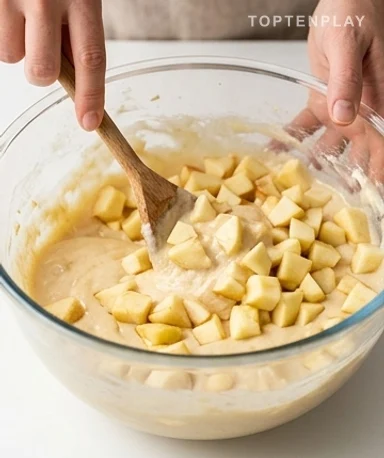
Cut the apples into irregular chunks, not a brunoise
Cubes of 1.5 to 2 cm. No need to be precise. The irregularity is what creates that pleasant texture where some pieces melt completely into the batter while others keep a bit of a bite. Keep a few thin slices to place on top—they will caramelize during baking, their edges browning slightly, giving that rustic look characteristic of a Norman cake. No need to lemon them if you’re mixing them straight into the batter.
Stop mixing as soon as the batter is smooth
This is the most common mistake. We over-mix because we’re afraid of lumps, which activates the gluten in the flour, making the cake dense and slightly rubbery. As soon as you no longer see traces of white flour, put down the whisk. The batter will be thick, a bit sticky under the spatula—that’s normal, it’s intentional. Fold in the apple chunks with broad strokes from bottom to top, not by stirring rapidly like a soup.
Wait until it cools completely before slicing
Taking a cake out of the oven and cutting it immediately is the best way to get a slice that collapses. While hot, the internal structure is still fragile—the applesauce makes the center very soft when warm. Let it cool on a rack for at least 30 minutes before unmolding. At that point, when you press lightly on the top with your fingertip, you’ll feel the firm, slightly springy surface. That’s the sign you can cut a nice, clean slice.
Tips & Tricks
- For a shiny surface, brush the top apple slices with a teaspoon of honey diluted in a little hot water right after taking it out of the oven. It’s sticky, shiny, and adds a light scent without masking the cake’s flavor.
- To check the doneness without a thermometer: insert a knife in the center. If it comes out with sticky, raw batter, put it back for 5 minutes. If it comes out with a few moist crumbs—not dry like a brownie, but not liquid either—it’s perfect. This cake should remain slightly moist at the heart.
- If you’re out of applesauce, 2 extra apples roughly grated and squeezed in a tea towel to remove excess water make a decent substitute. The result will be slightly less moist, but completely edible.
What pan should I use and what size?
A round 22 to 24 cm diameter pan is ideal for this amount of batter. A classic metal springform or a silicone mold works very well. If you use a smaller pan, the baking time will be longer and the cake thicker—check with a knife starting at 45 minutes.
Why is my cake dense and not fluffy?
The most common cause is over-mixing the batter after adding the flour. As soon as the batter is combined, stop stirring. The other possible culprit: old baking powder that has lost its lifting power. Always check the date before use.
Can this cake be frozen?
Yes, without any problem. Let it cool completely, cut into individual slices, wrap each slice in plastic wrap, and place in the freezer for up to 2 months. To thaw, simply leave at room temperature for an hour—it regains its moist texture without needing the microwave.
Can the applesauce be replaced by something else?
If you really don’t have applesauce, you can grate 2 extra apples, squeeze them in a towel to remove excess water, and fold them in instead. The cake will be slightly less tender but still very good. Pear sauce also works great.
How long does the cake keep?
2 to 3 days in the refrigerator, wrapped in plastic wrap or in an airtight container. It’s actually better the next day—the texture firms up and the aromas develop. Take it out of the fridge 20 minutes before serving so it returns to room temperature.
Can I add other fruits or flavors?
Pears pair very well with apples; replace one out of three apples. A handful of crushed walnuts in the batter adds crunch. For flavors, cinnamon is classic, but lemon zest or a teaspoon of liquid vanilla works very well too—or all three together for a more fragrant version.
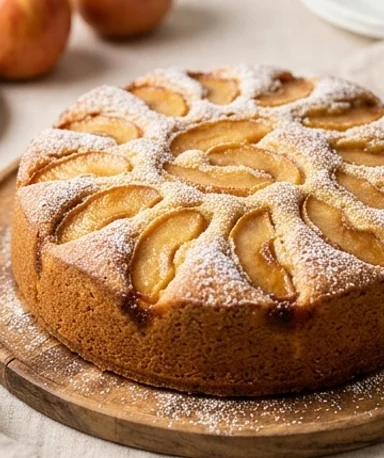
Norman Apple and Applesauce Cake
French
Dessert
A light and melting cake inspired by Norman tradition, where applesauce replaces part of the fat for a unique half-cake, half-flan texture.
Ingredients
- 3 medium apples (Golden or Reinette, ~400g peeled)
- 200g applesauce (preferably unsweetened)
- 3 eggs
- 100g granulated sugar
- 150g flour (all-purpose)
- 1 packet (11g) baking powder
- 80ml vegetable oil (sunflower or rapeseed) or 80g melted butter
- 1 pinch salt
- 1 tsp ground cinnamon (or vanilla, or lemon zest)
Instructions
- 1Preheat the oven to 180°C. Grease and flour a 22-24 cm round pan.
- 2Peel the apples and remove the core. Cut them into 1.5-2 cm pieces. Reserve a few thin slices for decoration.
- 3In a large bowl, whisk the eggs and sugar for 2 minutes until the mixture turns pale.
- 4Add the oil (or melted butter) and mix. Stir in the applesauce, mix again.
- 5Add the flour, baking powder, salt, and cinnamon. Mix until smooth without overworking the batter.
- 6Fold in the apple pieces using gentle bottom-to-top motions.
- 7Pour the batter into the pan. Arrange the reserved apple slices on top.
- 8Bake for 35 to 45 minutes. Check doneness with a knife—a few moist crumbs in the center is perfect.
- 9Let cool on a rack for 30 minutes before unmolding.
Notes
• Storage: 2 to 3 days in the refrigerator, wrapped in plastic wrap. Best the next day.
• Freezing: freezes very well for up to 2 months in individual slices wrapped in film.
• Variation: replace one apple with a pear, or add a handful of chopped walnuts to the batter for extra texture.
Nutrition Facts (per serving, estimated)
| 270 kcalCalories | 5gProtein | 37gCarbs | 11gFat |