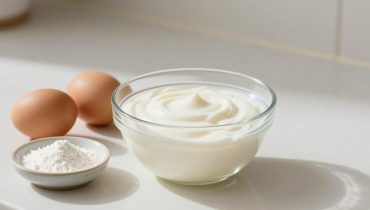
📌 No-bake tiramisu: the egg white technique for a texture twice as airy
Posted 10 February 2026 by: Admin
The Origins And Universality Of An Iconic Dessert
Tiramisu has established itself as one of the most appreciated Italian desserts in the world, transcending borders to seduce the most demanding palates. This universal fame is no accident: it rests on a remarkable balance between simplicity of execution and gustatory elegance, making this no-bake dessert a true reference of transalpine pastry.
What truly distinguishes tiramisu is its skillfully orchestrated sensory contrast. The biscuits delicately soaked in coffee provide a melting texture, while the smooth and airy mascarpone cream envelops the palate in voluptuous sweetness. This harmony finds its balance in the thin layer of bitter cocoa that crowns the dessert, perfectly tempering the richness of the whole.
Designed to be prepared in advance, tiramisu gains aromatic intensity after a few hours of rest in the refrigerator. This feature makes it the ideal dessert to conclude a meal with family or friends on a refined note, without the pressure of last-minute preparation. The magic happens in the progressive fusion of flavors, where the coffee permeates the biscuits and the cream reveals all its creaminess.
Ingredients And Proportions For 6 People: The Basis Of A Successful Tiramisu
This gustatory alchemy rests first on a rigorous selection of ingredients and respect for precise proportions. For six people, the recipe requires 300 ml of strong black coffee previously cooled, 250 g of mascarpone, three fresh eggs (yolks and whites separated), 80 g of sugar, 250 g of savoiardi ladyfingers, and 30 g of unsweetened cocoa powder.
The quality of each component directly conditions the success of the dessert. The mascarpone must have a creamy texture without being liquid, the eggs must be perfectly fresh to guarantee the volume of the whipped whites, and the coffee, sufficiently full-bodied, must have completely cooled before soaking the biscuits. The cocoa powder, for its part, must remain unsweetened to preserve this characteristic bitter contrast.
The temporal paradox of tiramisu lies in its technical accessibility: twenty-five minutes of preparation are enough to assemble all the elements. Yet, it is the minimum rest of four hours in the refrigerator that transforms this simple layering of ingredients into a structured and harmonious dessert. This waiting period allows the cream to firm up, the biscuits to absorb the coffee aromas, and the flavors to merge to reach their full expression. Ideally, a full night in the cool will reveal all the gustatory depth of the tiramisu.
Technical Steps For An Airy And Melting Texture
The transformation of these simple ingredients into an exceptional dessert relies on precise gestures. It all starts with the energetic whisking of the egg yolks with the sugar, an operation that must produce a light, frothy, and slightly thickened mixture. This emulsion constitutes the very foundation of the final lightness: the more vigorous the whisking, the more the cream gains in volume and creaminess.
The incorporation of the mascarpone then requires particular attention. Mixing with a whisk or spatula must be done gently to obtain a perfectly smooth cream, without the slightest lump. The preparation must show a brilliant suppleness, a sign of a successful emulsion. It is at this stage that the homogeneity of the dessert is determined.
Whipping the egg whites to stiff peaks represents the most delicate gesture. Once beaten in an impeccably clean container, they must be incorporated with bottom-to-top movements into the mascarpone cream. This technique preserves the air trapped in the whites and gives the tiramisu its characteristic airy texture. Any circular or too forceful movement would irremediably break this fragile structure.
The soaking of the biscuits closes this culinary choreography. Each ladyfinger should only stay for one second per side in the cold coffee. This brevity guarantees the absorption of aromas without compromising the hold of the biscuit, which thus retains its structure during assembly. Prolonged soaking would produce a shapeless mass unable to support the weight of the cream.
Assembly, Finishing, And Chef’s Tips To Sublimate The Result
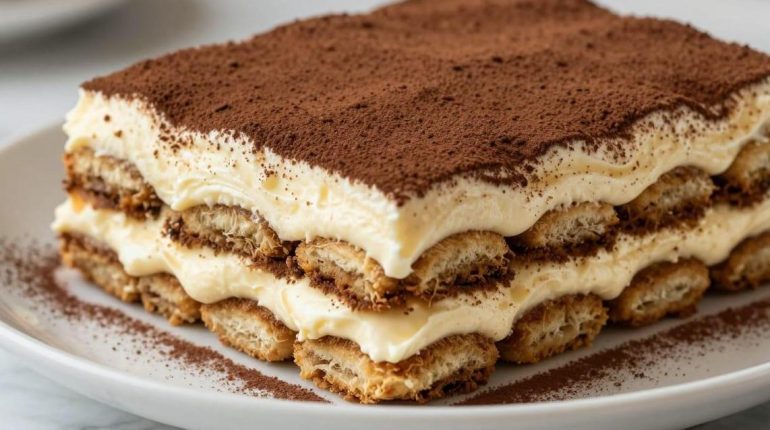
Once these technical gestures are mastered, assembly is carried out by successive stratification in a rectangular dish. The first layer of soaked biscuits forms the base, immediately covered with a generous layer of carefully smoothed mascarpone cream. This alternation is repeated a second time, until the ingredients are exhausted, all crowned by the rest of the cream. This layered architecture allows for a balanced distribution of flavors in every bite.
The finishing with sifted cocoa brings the final visual touch. The sieve disperses a fine and regular powder over the entire surface, creating an elegant chromatic contrast between the creamy white and the deep brown. This bitter layer perfectly balances the sweetness of the mascarpone and marks the authenticity of the Italian dessert.
Resting is the most decisive step. Minimum four hours in the refrigerator, ideally a full night, allows the cream to firm up and the flavors to merge. This maturation time radically transforms the dessert: the coffee aromas progressively penetrate the layers, the texture stabilizes, and the whole gains in cohesion. As the professional adage reveals: “The secret of a successful tiramisu lies in the resting time: the more it rests, the more flavorful and perfectly structured it is“.
For the more daring, the speculoos variant replaces traditional ladyfingers with these spiced biscuits, introducing a new caramelized note. The use of an electric mixer also facilitates obtaining a particularly airy and firm cream. These adjustments personalize the experience without betraying the spirit of the dessert.