The Phenomenon Of Nighttime Awakenings: When Your Body Sends Signals
Waking up abruptly at 3 a.m. is no biological accident. Behind this phenomenon lies a precise architecture: that of our sleep cycles, those 90-minute sequences that orchestrate our nights. Each cycle goes through four distinct phases—from light sleep to deep stages, to REM sleep where dreams are born. An ideal night consists of four to six cycles, forming an uninterrupted chain of physical and mental restoration.
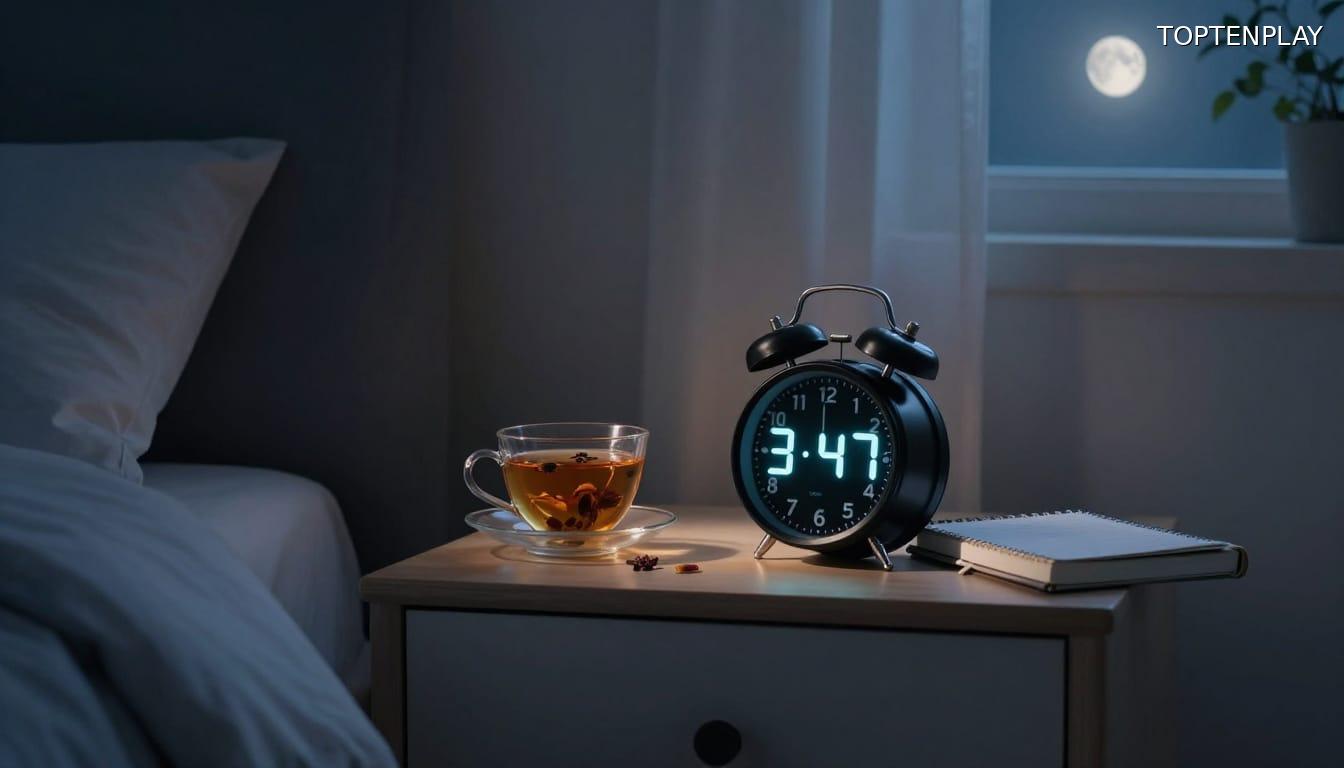
However, between 3 and 4 a.m., this clockwork mechanism hits a critical moment. It is precisely during the transitions between cycles that the brain, in the light sleep phase, becomes vulnerable to disturbances. At this hour, cortisol—the awakening regulator hormone—naturally begins its ascent to prepare the body for dawn. In some individuals, this process speeds up prematurely, creating an unwanted window of wakefulness.
Sleep specialists establish a vital distinction: an occasional awakening is part of normal functioning, but systematic recurrence betrays an imbalance. This repetitive signal indicates that something, at a physiological or emotional level, is disrupting the continuity of the cycles. The body, far from being capricious, communicates in its own way—transforming these dark hours into messengers of a malaise deeper than simple temporary insomnia.
Hidden Causes: Stress, Hormones, And Lifestyle
This cycle dysfunction often reveals an underground battle fought by cortisol. Normally programmed to peak at dawn, this chemical messenger of stress can disrupt its internal clock under the effect of accumulated tension. Therapists thus identify an “emotional awakening window”: between 3 and 4 a.m., the brain processes anxieties repressed during the day, turning the bed into a nocturnal tribunal where professional worries and unresolved personal conflicts parade by.
But the culprits are not limited to psychological torments. Daily habits play a decisive role: coffee taken after 4 p.m. disrupts brain chemistry six hours later, while alcohol, falsely sedative, fragments deep sleep. Late meals mobilize digestive energy at a time when the body should be exclusively regenerating. As for irregular schedules, they blur the circadian rhythm like a frantic compass.
Added to this picture are hormonal imbalances: failing melatonin in some, thyroid fluctuations in others, or menopause which upsets the female chemical balance. Adrenal fatigue, a consequence of chronic stress, exhausts the cortisol-producing glands until their natural cycle is reversed. These invisible mechanisms transform the night into a biological battlefield, where each awakening constitutes the visible symptom of a silent struggle.

The Medical And Energetic Dimension: Beyond Simple Insomnia
These nocturnal disturbances find a fascinating echo in traditional Chinese medicine, which maps time according to an organ clock. Between 3 and 5 a.m., the lungs dominate the energy cycle, a period associated with grief and the difficulty of emotional letting go. From 1 to 3 a.m., the liver governs, an organ linked to accumulated frustrations and buried anger. This ancestral reading, although foreign to Western protocols, is compelling due to its troubling correspondences with modern clinical observations.
However, the medical dimension imposes its rigor. Systematic awakenings at these hours can signal concrete pathologies: sleep apnea which suffocates the organism, gastric reflux rising in a lying position, or chronic pain exacerbated by nocturnal immobility. Anxiety-depressive disorders, for their part, fragment sleep in recurring waves, transforming the night into a succession of exhausting micro-awakenings.
Some see a spiritual dimension, a call for introspection launched by the subconscious. These silent hours, devoid of external stimuli, offer rare mental clarity for meditating or noting down thoughts. Whether or not one adheres to this interpretation, one constant remains: when the body systematically refuses sleep at a fixed time, it demands attentive listening. Concrete solutions then become indispensable to unravel this nocturnal mystery.

Concrete Solutions To Regain Restorative Sleep
Faced with these persistent nocturnal signals, specific levers of action allow you to regain control. Environmental optimization constitutes the first line of defense: total darkness via blackout curtains, temperature maintained between 16 and 19 degrees, silence reinforced by white noise machines if necessary. Screens emitting blue light must imperatively disappear from the bedroom, as their radiation blocks natural melatonin production for up to two hours after exposure.
Regular schedules stabilize the circadian rhythm with formidable efficiency. Going to bed and waking up at the same times, including weekends, gradually recalibrates the internal clock. This discipline, as constraining as it may be, drastically reduces untimely awakenings within three weeks of rigorous application.
The evening routine requires equivalent vigilance. Banish caffeine and alcohol from 4 p.m., space the last meal at least three hours before bedtime, and prioritize soothing activities such as reading or gentle stretching. These adjustments, apparently minor, demonstrate clinically proven power over sleep continuity.
When these measures fail after four weeks of strict application, medical consultation is necessary. A sleep specialist will identify any underlying pathologies requiring targeted treatment. Ignoring chronic awakenings amounts to neglecting a symptom that the body is exhausting itself to signal.