📌 Nasi Goreng
Posted 7 April 2026 by: Admin
A Saturday night, friends showing up, and you want to make something memorable without spending the whole day in the kitchen. Nasi goreng ticks all the boxes. Intense, fragrant, with that deep mahogany color that turns heads the moment you set the dish on the table.
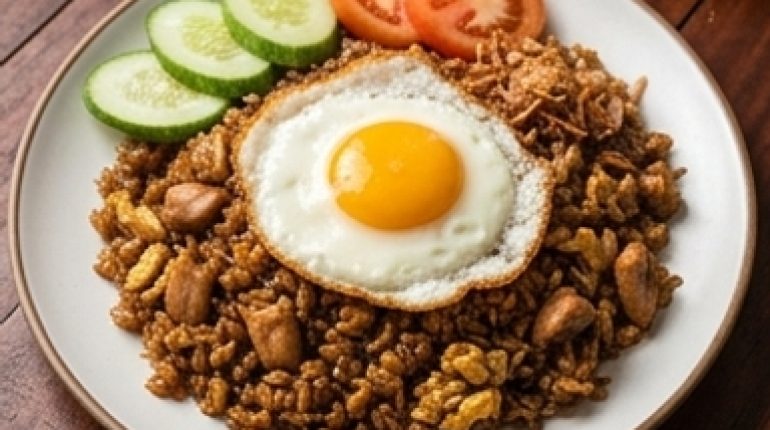
Take a close look at this plate. The rice is a brown that’s almost black in places, where the kecap manis caramelized against the searing wok. The fried egg sits on top, its white still slightly crispy at the edges, its yolk shining like a summer sun. Around it, fresh cucumber slices, tomato half-moons, and a shower of fried shallots that smell like salted caramel from a meter away. It’s the kind of dish that silences a dinner table.
Why you’ll love this recipe
Ingredient Notes
All nasi goreng ingredients together: rice, marinated chicken, terasi shrimp paste, and kecap manis, the sweet-smoky star of the dish.
- Kecap manis : This is the soul of the dish, period. This syrupy, sweet Indonesian soy sauce—something between classic soy sauce and molasses—caramelizes in the wok and gives the rice its iconic mahogany color. Look for brands like ABC or Bango; you can easily find them in Asian grocery stores. If you’re stuck, a mix of half dark soy sauce and half melted brown sugar can work in a pinch, but the original really has no perfect equivalent.
- Shrimp paste (terasi or belacan) : It smells strong. Very strong, when raw. That’s intentional, and it’s normal. Once cooked in the wok with the aromatics, this powerful scent transforms into something much softer and deeper—an umami base that cannot be reproduced otherwise. If you can’t find it in a block, jarred shrimp sauce like Lee Kum Kee works very well and is easier to dose for beginners.
- Day-old rice : This is where many fail. Freshly cooked rice contains too much moisture—it sticks, clumps, and the result is mushy. Rice that has spent a night in the fridge has dried out; each grain is distinct and ready to absorb flavors without turning into a mass. If you couldn’t plan ahead, spread the cooked rice on a tray and put it in the refrigerator for 30 minutes before starting.
- Store-bought fried shallots : Don’t bother making them yourself for this recipe. The ones sold in bags at Asian grocery stores are perfect—already crispy, lightly caramelized, and ready to use. They provide a crunch that contrasts with the soft texture of the rice and a smoky onion flavor that finishes the dish. Use plenty, seriously.
- Thai chilies : Optional, but highly recommended if your guests can handle the heat. They are small and punchy—two are enough to feel something, five will make you break a sweat. Add them at the end of cooking if you want a burst of heat per bite, or at the beginning with the onions for a consistent heat throughout the rice.
Mise en place: the organization that makes everything
Nasi goreng doesn’t forgive improvisation during cooking. Not because it’s hard, but because everything moves very fast in the wok and there’s no room to look for anything once the heat is on. Start by marinating the chicken in soy sauce, cornstarch, and a splash of water—you’ll feel the marinade thicken slightly around the pieces like a sticky veil. Let it rest for 20 to 30 minutes while you prepare the rest. Minced garlic, sliced shallots, measured shrimp paste in a small bowl, kecap manis ready to pour, rice out of the fridge. Everything must be lined up before you turn on the burner. Once organized, the cooking itself takes less than 15 minutes.
Heating the wok: the part everyone misses
Heat is the real secret. A lukewarm wok produces dull, soft rice. A wok heated dry until a light white smoke escapes gives that quick caramelization and slightly smoky finish known as wok hei. You should hear a sharp sizzle when the marinated chicken hits the surface—that’s the right sound, it means it’s truly searing. Let it cook to 80%, then set aside. In the same heat, sauté garlic and shallots for 30 seconds, no more. Add the shrimp paste and crush it against the bottom of the wok with the spatula—it will melt, brown, and the whole kitchen will smell like something rich and deep that your guests will notice from the living room.
The rice moment: fast and fearless
The rice goes into the wok all at once. Work it with the spatula to break up any clumps and coat it in the aromatic base, then pour in the kecap manis. Watch the color change in real-time: the rice goes from white to golden brown, then to that deep, shiny mahogany. Now the chicken goes back in. If you want to incorporate the eggs directly into the rice, push everything to the sides, let the eggs cook quickly in the center, then mix. Green onions go in last, off the heat, to keep their freshness and green color. Taste it. Adjust with a splash of kecap manis or a pinch of salt based on your instinct.
The egg on top: non-negotiable
Across Indonesia, nasi goreng is served with a fried egg. Not soft-boiled, not scrambled—fried, with that crispy, lace-like golden brown edge and a still-runny yolk. Heat a small pan with very little oil over high heat, crack the egg in, and cover for 30 seconds. The white should be set, the yolk still shiny and soft. This is what will naturally mix with the rice when your guests start eating, creating a rich golden sauce without you having to do anything extra. This detail separates an okay version from a memorable one.
Tips & Tricks
- Never use rice cooked the same day—residual moisture makes the rice sticky and mushy in the wok. Day-old refrigerated rice is non-negotiable for separate grains and beautiful caramelization.
- Shrimp paste smells very strong when you open the package, but don’t leave it out for that reason—it builds the entire depth of the dish. During cooking, the smell completely mellows out and becomes rounded, almost sweet.
- If cooking for 4 people or more, do two separate batches rather than one large one. Too much rice in a wok causes the temperature to drop, you lose the caramelization, and the rice steams in its own moisture instead of searing.
- Prepare the garnishes before you start cooking—cucumber, tomato, and fried shallots. Nasi goreng is ready in minutes and cools fast: you don’t have time to be chopping vegetables while the rice is waiting.
Can I make nasi goreng without a wok?
Yes, but you must use the largest pan you have, stainless steel or cast iron, and heat it to the max before adding anything. The wok isn’t mandatory—intense heat is. Avoid non-stick pans which cannot handle very high temperatures.
I can’t find kecap manis, what can I replace it with?
Mix 3 tablespoons of dark soy sauce with 2 tablespoons of brown sugar and heat until completely dissolved. It’s a good emergency substitute—the result is slightly less syrupy, but it works. If you cook Asian food often, the original is really worth the trip to an Asian grocery store.
How do I store and reheat leftovers?
Nasi goreng keeps for 2 days in the refrigerator in an airtight container. To reheat, use a pan or wok over high heat with a small teaspoon of water or oil—the microwave makes the rice soft and mushy. Fresh garnishes (cucumber, tomato, egg) should be prepared at the time of serving.
Can I prepare it in advance for guests?
Cooked rice can be prepared the day before—it’s even recommended. The chicken marinade can be done in the morning. However, the wok cooking must be done at the last minute: nasi goreng loses its texture and smoky edge if it sits too long. Count on 15 minutes flat before sitting down to eat.
How do I make it vegetarian?
Replace the chicken with firm tofu cut into cubes and pressed well to remove excess water—it sears very well in the wok and absorbs flavors effectively. For the shrimp paste, use a tablespoon of miso paste or vegetarian oyster sauce instead to maintain the umami depth of the dish.
What is the difference between this and classic Chinese fried rice?
The difference is fundamental. Chinese fried rice relies on soy sauce, sesame, and vegetables. Nasi goreng is built on kecap manis (sweet-syrupy soy sauce) and fermented shrimp paste, which give it that dark mahogany color and smoky umami depth not found in Chinese-inspired fried rice.
Nasi Goreng
Indonesian
Main course
The national fried rice of Indonesia, glazed with kecap manis and scented with shrimp paste, served with a crispy fried egg and fresh garnishes.
Ingredients
- 400g chicken breast or thigh, cut into cubes
- 1 c.s. soy sauce
- 1 c.c. cornstarch
- 1 c.s. water
- 600g day-old cooked rice (about 200g raw rice)
- 3 whole eggs (mixed into the rice)
- 4 extra eggs (for serving fried eggs)
- 4 garlic cloves, finely minced
- 2 medium shallots, finely sliced
- 2 c.c. terasi or belacan shrimp paste
- 5 c.s. kecap manis (Indonesian sweet soy sauce)
- 3 scallion stalks (green onion), sliced
- 2-3 Thai chilies, sliced (optional)
- 3 c.s. neutral oil (sunflower or peanut)
- 4 c.s. fried shallots in bag (for serving)
- 1 cucumber, sliced into rounds (for serving)
- 2 tomates, cut into wedges (for serving)
Instructions
- 1Mix the chicken cubes with the soy sauce, cornstarch, and water. Let marinate for 20 to 30 minutes at room temperature.
- 2Prepare all ingredients and place them in separate bowls before turning on the heat—once in the wok, everything happens very fast.
- 3Heat the wok to maximum heat until light white smoke appears, then add 2 tablespoons of oil. Sear marinated chicken until golden brown and 80% cooked. Set aside.
- 4In the same wok over high heat, add the remaining oil and sauté garlic, shallots, and chilies (if using) for 30 seconds.
- 5Add the shrimp paste and crush it against the bottom of the wok with the spatula. Cook for 30 seconds until it browns slightly.
- 6Add the cold rice all at once. Work it with the spatula to break up clumps and coat with the aromatic base.
- 7Pour the kecap manis over the rice. Mix quickly by lifting the rice from the bottom—the color should turn deep mahogany. Return the chicken to the wok.
- 8Push the rice to the sides of the wok, crack the 3 eggs in the center, scramble them quickly, then mix into the rice. Add green onions, turn off the heat and mix one last time.
- 9In a separate pan with very little oil over high heat, make 4 fried eggs—set white, runny yolk. Prepare the fresh garnishes.
- 10Plate the rice in shallow bowls, place a fried egg on each, then distribute the fried shallots, cucumber, and tomato around.
Notes
• Rice must absolutely be cooked the day before and stored in the fridge—fresh rice is too wet and sticks to the wok. In an emergency, spread it on a tray for 30 minutes in the refrigerator.
• Storage: 2 days in the fridge in an airtight container. Reheat in a pan with a drizzle of oil over high heat, never in the microwave.
• Seafood variation: replace the chicken with 300g peeled shrimp. Reduce initial cooking to 1-2 minutes—shrimp cook very fast and toughen if they stay in the wok too long.
Nutrition Facts (per serving, estimated)
| 530 kcalCalories | 31gProtein | 56gCarbs | 19gFat |