Saturday morning, when there’s no rush. The garlic hitting the hot pan makes that characteristic little ‘psshh’, ginger follows a second later, and already the whole kitchen smells deep and warm. This napa cabbage stir-fry is ready in 25 minutes, but it’s the kind of recipe you make when you want to take your time—not when you’re in a hurry.
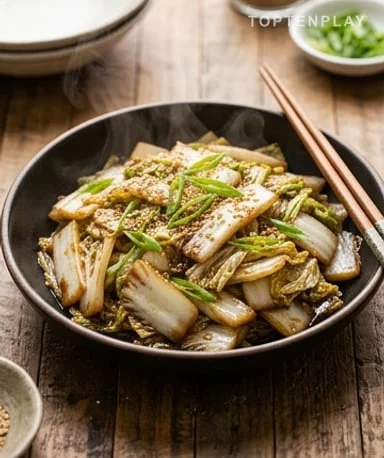
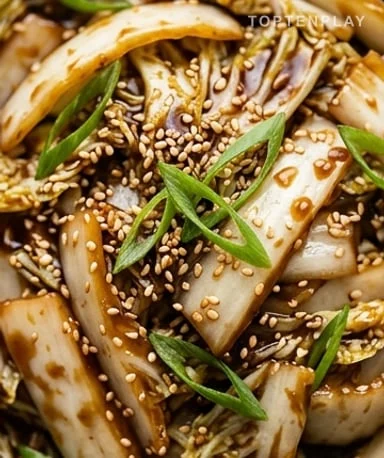
On the plate, the cabbage ribbons are tender but not mushy, translucent at the edges and still slightly crisp at the core. The hoisin sauce forms a dark, glossy lacquer that clings to every leaf. You see the golden sesame seeds scattered seemingly at random, the bright green scallion rings cutting through the deep brown. It smells of salted caramel, hazelnut, and something zesty from the fresh ginger.
Why you’ll love this recipe
Ingredient Notes
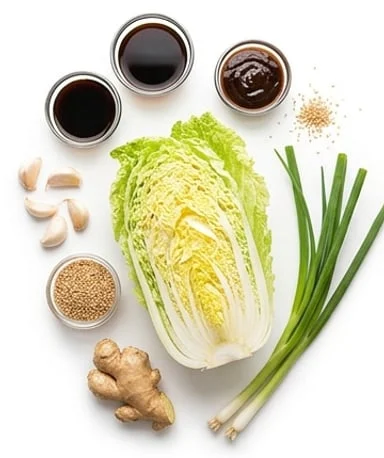
All the ingredients before starting: fresh napa cabbage, garlic, ginger, and the Asian sauces that make all the difference.
- Napa cabbage : The pale, elongated cabbage with crinkly leaves and wide white ribs—not the compact green cabbage. If you can’t find it at the supermarket, Asian grocery stores always have it. Look for a firm, heavy head with leaves that don’t bend when you touch them. Limp leaves mean the cabbage has been sitting on the shelf too long.
- Hoisin sauce : A thick, almost syrupy sauce made from fermented soybeans and sweet spices. Nothing really replaces it in this recipe. Brands like Lee Kum Kee or Kikkoman are both good. Find it in the Asian sauce aisle of any well-stocked supermarket.
- Fresh ginger : Don’t use powdered ginger here. Powder lacks the same bite and fresh, pungent aroma. A small piece of rhizome is enough—about 2 cm. You can grate it directly without peeling if the skin is thin.
- Toasted sesame oil : This is different from neutral sesame oil. Toasted sesame oil is dark, almost amber, and smells intensely of roasted hazelnut. Don’t use it for stir-frying—it burns too quickly. It’s only drizzled at the end for flavor.
- Low-sodium soy sauce : Regular soy sauce can make the dish too salty very quickly, especially combined with hoisin. Use reduced-sodium soy sauce—Kikkoman does it well. Adjust at the end if needed, but you can’t go back.
What napa cabbage has that other vegetables don’t
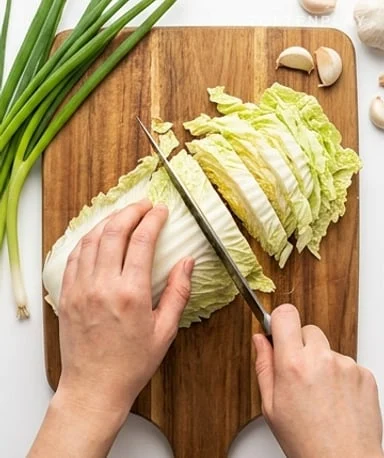
Napa cabbage—also called Chinese cabbage or pe-tsai—is sweeter than its compact green cousin. Its leaves are tender, slightly crinkly, with fleshy white ribs that remain crisp even after cooking. This contrast in texture makes the stir-fry interesting. Under your fingers, the raw leaves are almost silky, slightly damp. When slicing into ribbons, you clearly see the difference between the green leafy part—which cooks in under two minutes—and the white rib that can handle much more heat. Don’t separate them. Cook them together. One tenderizes the other, and that’s precisely why it works.
The part everyone messes up: when to stir-fry the aromatics
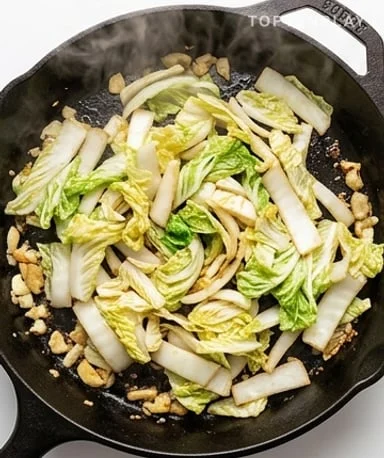
The pan must be really hot. Not warm with a drizzle of oil. Really hot, to the point where regular oil would start to smoke. When the garlic and ginger hit it, the sound should be a sharp sizzle—not a whisper. If it’s gently simmering, the pan isn’t hot enough and you’ll poach the aromatics instead of searing them. One minute, no more, stirring constantly to avoid burning the garlic. As soon as it smells like hazelnut and fresh ginger—that pungent, warm aroma that catches in your throat—the cabbage goes in. All at once. Don’t do it in two batches.
Building the sauce without getting lost
The hoisin sauce, soy sauce, rice vinegar, and a pinch of brown sugar go into the pan at the same time as the cabbage. Not after. At the same time. This allows the sauce to reduce as the cabbage cooks and to cling properly. Rice vinegar adds a subtle acidity, almost transparent, that balances the sugar and umami of the hoisin. Without it, the dish would be a bit heavy. Eight minutes over medium-high heat, stirring regularly. The cabbage will release some water—that’s normal—and the sauce will take it up to form that shiny lacquer, a deep brown like dark caramel, that coats the leaves. The scallions go in one minute before the end, just so they stay fresh and bright green.
Sesame oil: the mistake everyone makes at first
No one tells you this, but toasted sesame oil is not a cooking oil. It’s a condiment. If you add it at the beginning with the rest, it loses all its aroma in thirty seconds on the heat. It goes at the very end, directly onto the dish in the bowl, in a light drizzle—two teaspoons, no more. The smell that rises then is different: warm hazelnut, almost smoky. That’s what gives the dish its signature. Sesame seeds go on top, and if you have a few seconds, toast them dry in a hot pan for thirty seconds beforehand—they go from neutral beige to a deep gold like toasted bread, and their flavor multiplies.
Tips & Tricks
- Don’t salt the raw cabbage before cooking. Salt draws out water and you’ll end up with a watery pan and cabbage that’s already soft before the sauce has a chance to cling to the leaves.
- If you want to add protein, firm tofu cut into cubes and sautéed separately until golden on all sides works perfectly—add it at the same time as the cabbage. Slices of chicken breast marinated 15 minutes in a little soy sauce also integrate effortlessly.
- Smoked paprika in the list might seem odd for an Asian recipe. It just adds a slight earthy depth in the background. If you don’t have it, skip it—its absence won’t be noticed.
Does sautéed napa cabbage keep well in the refrigerator?
Yes, up to 3 days in an airtight container. To reheat, a few minutes over high heat in a hot pan—definitely not the microwave, which turns it completely soft and destroys all texture. The flavor remains very good, though the slightly crisp ribs will soften.
What can I substitute for hoisin sauce if I can’t find it?
Hoisin sauce is hard to replace identically. In a pinch, mix 2 tablespoons of soy sauce with 1 teaspoon of honey and 1/2 teaspoon of peanut butter. The result will be less thick and less complex, but it works. Ideally, keep a jar of hoisin in your pantry—it lasts months and works in many Asian recipes.
How can I prevent the cabbage from releasing too much water during cooking?
Two non-negotiable rules: don’t salt the raw cabbage before cooking, and use a really hot pan. Salt draws out moisture before cooking even starts. A pan that isn’t hot enough will braise the cabbage instead of searing it—result: a watery bottom and limp cabbage. High heat, well-preheated pan, and stir often.
What can I substitute for napa cabbage if I can’t find it?
Bok choy works very well, with a slightly reduced cooking time because it’s more tender. Regular green cabbage also works, but allow 3–4 extra minutes of cooking to soften the ribs. Savoy cabbage is a third option, milder and slightly crinkly—it releases less water than green cabbage.
Can I prepare this stir-fry in advance?
It’s possible, but this dish is really best straight from the pan. If you want to save time, prep everything ahead: cabbage cut, garlic and ginger minced, sauce mixed in a bowl. Store separately in the fridge, and the actual cooking takes only 15 minutes.
What pan should I use for optimal results?
Ideally a wok or a large heavy-bottomed cast iron or stainless steel pan. Nonstick pans don’t get hot enough to properly sear the vegetables—you lose the stir-fry effect and get a somewhat steamed result. If that’s all you have, turn the heat to maximum and work in small batches.
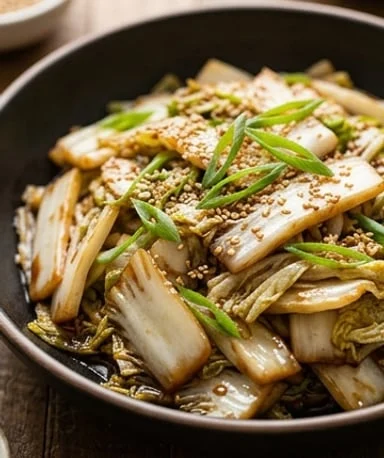
Napa Cabbage Stir-Fry with Garlic, Ginger, and Hoisin Sauce
Asian
Side dish
Tender ribbons of napa cabbage coated in a shiny hoisin-soy lacquer, perfumed with garlic and fresh ginger. Ready in 25 minutes, one pan.
Ingredients
- 1 head (about 800g) napa cabbage
- 4 cloves garlic, finely minced
- 15g (about 2 cm) fresh ginger, grated
- 2 scallions (green onions), sliced
- 30ml (2 tbsp) hoisin sauce
- 30ml (2 tbsp) low-sodium soy sauce
- 15ml (1 tbsp) rice vinegar
- 5g (1 tsp) brown sugar
- 1/2 tsp red pepper flakes
- 1/2 tsp smoked paprika
- 30ml (2 tbsp) neutral oil (sunflower or grapeseed)
- 10ml (2 tsp) toasted sesame oil
- 1 tbsp sesame seeds
Instructions
- 1Remove the outer leaves of the cabbage, cut off the base, then slice into 2 cm wide ribbons.
- 2In a bowl, mix together hoisin sauce, soy sauce, rice vinegar, and brown sugar. Set aside.
- 3Heat the neutral oil in a wok or large skillet over high heat until very hot.
- 4Add garlic, ginger, and red pepper flakes. Stir-fry for 1 minute, stirring constantly.
- 5Add the cabbage, pour in the sauce, and add the smoked paprika. Toss to combine and cook for 8 minutes over medium-high heat, stirring regularly.
- 6Add the scallions and cook for another 1 minute.
- 7Plate the stir-fry, drizzle with toasted sesame oil, and sprinkle with sesame seeds.
Notes
• Storage: up to 3 days in the refrigerator in an airtight container. Reheat over high heat in a pan, not in the microwave.
• For a complete main dish, add firm tofu cut into cubes and browned separately, or slices of chicken breast marinated 15 minutes in a little soy sauce.
• Sesame seeds benefit greatly from being dry-toasted for 30 seconds in a hot pan just before adding—their nutty flavor becomes much more pronounced.
Nutrition Facts (per serving, estimated)
| 165 kcalCalories | 4gProtein | 13gCarbs | 11gFat |