📌 Mushroom risotto and duck breast: the scoring technique for perfectly crispy fat
Posted 1 January 2026 by: Admin
Preparing Duck Breasts – Excellence Through Technique
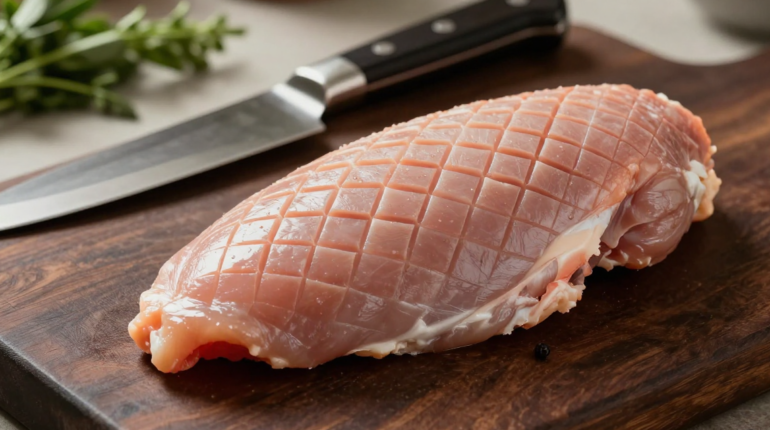
The signature of a great dish begins with a precise gesture: diamond scoring the fat of Le Gaulois duck breasts. This meticulous scarification, performed with the tip of a knife, is not merely aesthetic. It allows the fat to melt uniformly during cooking, creating golden, crispy skin while preserving the tenderness of the meat.
Seasoning takes place before any cooking, directly on the scored breasts. A professional rule that every chef respects: salt and pepper penetrate the meat better at room temperature.
Then comes the cooking, a technical revelation that distinguishes the amateur from the connoisseur. The breasts start skin-side down, without any added fat. For exactly fifteen minutes, the duck fat gradually melts, transforming the pan into a natural oil bath. This method guarantees controlled cooking: lacquered skin, crunchy to the bite, protecting a pink and melting flesh.
This approach requires patience and monitoring. The initial scoring makes perfect sense: it accelerates the fat melting while sculpting those caramelized patterns that create the visual beauty of the dish. While the duck cooks slowly, other preparations are orchestrated in parallel.
The Risotto – Mastering Italian-Style Cooking
While the duck releases its fat, another orchestration begins. In a saucepan, the minced onion joins 20g of butter mixed with a drizzle of olive oil. This association is not accidental: the butter provides creaminess, the oil prevents burning. The aromatic base builds slowly, preparing the ground for the rice.
The risotto rice enters the scene. Coated in fat, it becomes translucent under the effect of the heat. This is the precise moment when the white wine intervenes, deglazing the pearly juices. The alcohol evaporates, leaving only the aromas.
Then begins the ritual that separates authentic risotto from its pale imitations: the progressive hydration with vegetable broth. One ladle poured. Attentive observation. The liquid boils, reduces, and disappears into the grains. Only then, a new ladle. Never before complete absorption. This dialogue between the cook and the rice, repeated until the broth is exhausted, creates that characteristic creamy texture.
This method requires constant monitoring. It is impossible to step away from the stove. Each addition of broth must be measured, each absorption phase controlled. The risotto dictates its rhythm. Fifteen to twenty minutes of active presence, eyes fixed on the pan, the wooden spoon tracing regular circles. Meanwhile, the mushrooms wait for their moment.
The Mushroom Garnish – The Forest Touch
While the risotto absorbs its broth ladle after ladle, the mushrooms do not remain inactive. Finely sliced, they join a pan where 20g of butter melts with minced garlic. This parallel cooking is not a luxury, but a technical necessity. The mushrooms release their water, concentrating their aromas under the effect of the golden butter, while the garlic diffuses its pungent notes.
This simultaneous orchestration transforms the kitchen into a theater of operations. On one side, the duck crackles skin-side down. On the other, the risotto demands constant attention. In the center, the mushrooms reduce gently, their forest scent filling the room. Three cooking processes, three rhythms, one single goal: perfect synchronization.
The incorporation of the mushrooms into the risotto marks the decisive turning point. Their melting texture blends with the natural creaminess of the rice. The Parmesan follows immediately, bringing that umami salinity that magnifies the whole. The final seasoning adjusts the balances. Each element finds its place in this composition where nothing is left to chance.
Timing becomes critical. The mushrooms cooked while the risotto was being monitored, optimizing every minute. No downtime, no unnecessary waiting. Everything converges toward the moment when the three preparations simultaneously reach their peak, ready for a service that suffers no delay.
Final Assembly – Immediate Service to Preserve Textures
The Parmesan melts into the still-simmering risotto, the garlic mushrooms disperse their forest notes. This precise moment tolerates no hesitation. Serve without delay: this instruction is no trivial advice. It seals the fate of the dish, preserving what fifteen minutes of meticulous cooking have built.
The skin of the Le Gaulois duck, made crispy by cooking without added fat, begins to lose its crunch from the first seconds off the heat. The risotto, meanwhile, continues to absorb its liquid, risking a transition from creamy to compact. The buttered mushrooms cool, their silky texture setting. Every second counts.
The plate first welcomes the risotto, generously spread, its still-pearly grain visible on the surface. The duck breasts join this creamy base, their golden scoring contrasting with the milky white of the rice. The thermal encounter causes a fleeting alchemy: heat rises from the risotto, envelopes the duck, and maintains the whole in an ideal temperature bubble.
This perfect synchronization of the three elements reveals why cooking requires as much technique as intuition. The creaminess of the risotto absorbs the duck juices, the mushrooms bring their umami depth, and the Parmesan binds everything together. A fragile, magnificent balance that only fully exists in those first minutes after plating.