📌 Mushroom Madeira sauce: the French technique in 25 minutes to enhance your meats
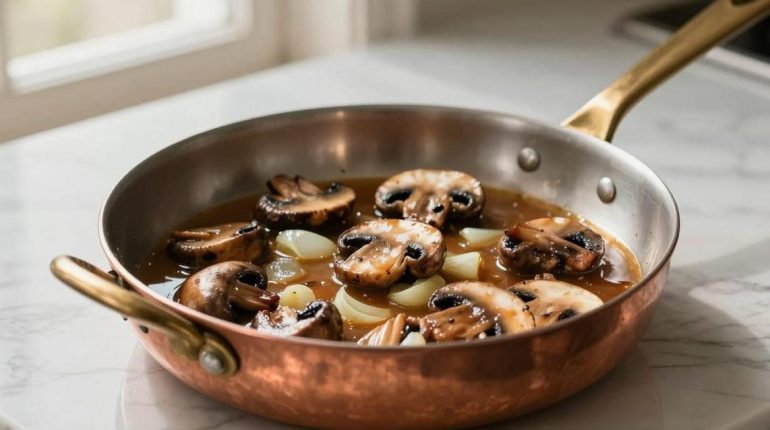
Posted 13 March 2026 by: Admin
Mushroom Madeira Sauce: An Institution Of French Gastronomy
In traditional French kitchens, certain preparations span decades without losing their prestige. Mushroom Madeira sauce embodies this culinary excellence that instantly transforms an ordinary meal into a refined gastronomic experience.
This sauce reveals a bold alliance between two flavor worlds: the fragrant depth of Portuguese Madeira wine and the woody flavor of button mushrooms. When these ingredients merge in a controlled reduction, they create a smooth texture that delicately coats the meat without overpowering it.
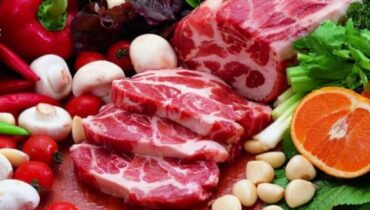
Chefs favor this preparation to accompany noble cuts: medium-rare beef fillet, rare tournedos, melting veal escalopes, or roasted poultry. Its slightly sweet taste subtly contrasts with the tender texture of the meat, creating a sought-after flavor balance for festive meals.
The secret lies in the reduction technique that concentrates the Madeira aromas. This fortified wine then develops a remarkable complexity, while the mushrooms sautéed in butter with shallots release an irresistible fragrance that forms the aromatic base of the sauce.
This recipe also appeals through its disconcerting simplicity. In just a few minutes, with accessible ingredients, it metamorphoses a basic dish into a creation worthy of Michelin-starred tables, proving that culinary elegance does not necessarily rhyme with technical complexity.
The Recipe Revealed: Ingredients And Equipment For 4 Servings
This reputedly sophisticated preparation actually relies on a surprisingly short list of ingredients. Six elements are enough: 100 grams of button mushrooms, two shallots, 50 grams of butter, one tablespoon of flour, 20 centiliters of beef stock, and 10 centiliters of Madeira wine. Salt and pepper complete the seasoning.
The required equipment is limited to the essentials: a pan or saucepan, a knife with its board, a whisk, and a wooden spoon. Nothing exceptional, nothing inaccessible. This simplicity contrasts with the elitist perception often associated with classic French sauces.
The timing reveals remarkable efficiency. Ten minutes of preparation, fifteen minutes of cooking: the total does not exceed 25 minutes. This short timeframe allows this sauce to be integrated into a daily meal without disrupting the culinary organization.
The difficulty level classified as easy confirms the accessibility of this recipe. No advanced technique is required, no gesture reserved for professionals. Success depends more on the attention paid to cooking times than on any technical virtuosity.
This technical demystification proves that a sauce worthy of gourmet restaurants requires neither an endless shopping list nor specialized equipment. The preparation secrets lie elsewhere: in mastering the steps and respecting certain fundamental rules that guarantee the sought-after velvety texture.
Preparation Secrets Step By Step
Mastering this sauce begins with a counter-intuitive gesture: never wash mushrooms under water. This practice soaks them with moisture and dilutes their flavor. A damp cloth or a brush is enough to remove impurities. The finely sliced pieces will then release their aromas during cooking.
The minced shallots melt in the butter for two to three minutes until translucent. The mushrooms join them for five minutes of cooking, stirring regularly. They release their water, then brown slightly. This browning develops the characteristic woody notes.
Incorporating the flour requires one minute of cooking to neutralize its raw taste. The broth is then added gradually, whisking continuously to prevent lumps. This vigilance determines the final smooth texture.
The decisive moment occurs with the Madeira wine. The sauce then simmers for five to seven minutes over low heat. This reduction concentrates the complex flavor of the Portuguese fortified wine, its slightly sweet mildness, and its deep aromas. The volume decreases, the intensity increases. This chemical transformation creates the sought-after velvety smoothness.
The finished sauce should have a glossy consistency, slightly thick but fluid. If too dense, adding broth corrects it. If too liquid, a few extra minutes of reduction are enough. These final adjustments allow the texture to be adapted to the meats it will accompany, whether grilled or roasted.
Uses, Variants, And Storage
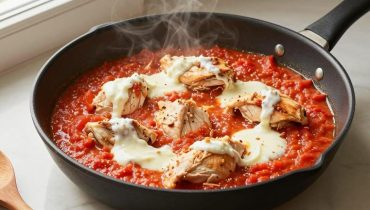
This sauce naturally accompanies noble meats: beef fillet, tournedos, duck breast, poultry escalope. Drizzled over a grilled steak or a roasted piece, it instantly transforms a daily dish into a gastronomic meal. Mashed potatoes admirably absorb its velvety texture, while roasted vegetables, fresh pasta, or rice create balanced pairings.
Three variants expand its repertoire. Adding two tablespoons of heavy cream at the end of cooking produces a milder, creamier version. Fresh parsley or thyme introduces an additional aromatic dimension. As for shallots slightly caramelized before adding the mushrooms, they intensify the flavor depth with their sweet notes.
Storage lasts for two to three days in the refrigerator in an airtight container. Reheating is done over low heat in a saucepan, possibly with a little broth to regain the original consistency. This ease of advance preparation is perfect for festive meals.
With about 160 calories per serving, this classic sauce brings flavor and elegance without excess. Its transformative power lies in its ability to enhance any meat, proving that a refined preparation requires neither rare ingredients nor inaccessible techniques. A few simple elements, attention to reduction, and French gastronomy invites itself to the table.