📌 Mouclade charentaise: why this recipe for creamy curry mussels surpasses classic marinières
Posted 10 March 2026 by: Admin
The Mouclade Charentaise: Culinary Treasure Of The Atlantic Coast
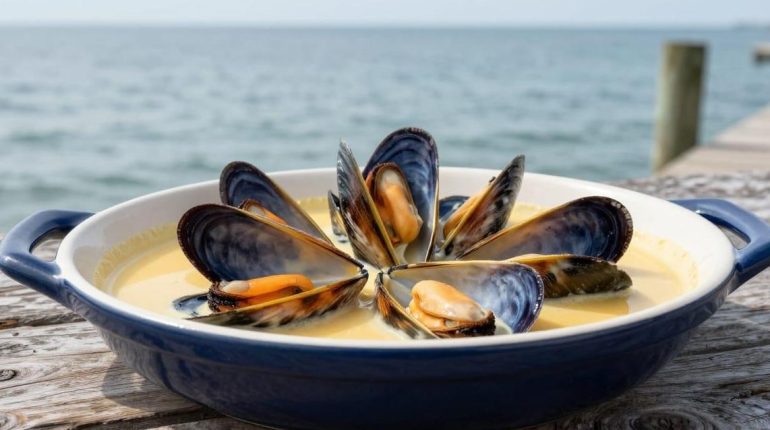
On the coasts of Charente-Maritime, between La Rochelle, the island of Oléron, and the island of Ré, a specialty captures the maritime soul of the region: the mouclade charentaise. This emblematic dish differs radically from moules marinières by its creamy sauce thickened with egg yolks, offering a velvety texture and a slightly golden color that define its taste identity.
The originality of this recipe rests on a unique terroir. Bouchot mussels, raised on wooden piles driven into the sea, develop particularly fleshy and tasty meat thanks to this ancestral method. This vertical farming technique guarantees exceptional shellfish, the indispensable foundation of a successful mouclade.
The combination of the briny taste of the mussels and the spicy sweetness of the curry creates a surprising balance of flavors. This presence of oriental spices in an Atlantic recipe is explained by the history of French ports: maritime trade with spice-producing countries gradually integrated curry into local culinary traditions, transforming this distant influence into a regional signature.
The mouclade thus embodies the living heritage of the Charente coastline, a harmonious marriage between local marine resources and the legacy of the trade routes that shaped the gastronomic identity of these coastal territories.
Anatomy Of An Accessible Recipe: Essential Ingredients And Techniques
Behind this regional specialty lies an encouraging reality: the mouclade charentaise can be prepared in just 25 minutes. For 4 people, 1.5 kg of fresh mussels, 20 cl of heavy cream, 2 egg yolks, a few shallots, and a teaspoon of curry are enough to compose this dish with a strong gastronomic character.
The technique relies on two decisive actions. First imperative: filter the cooking liquid after opening the mussels. This step removes grains of sand and impurities, transforming the fragrant liquid into a crystalline base for the sauce. Second key to success: incorporate the egg yolks off the heat. This method guarantees the characteristic velvety texture without the risk of coagulation, creating the creaminess that distinguishes the mouclade from ordinary preparations.
The progression is simple: aromatics sautéed in butter, mussels cooked quickly covered for 5 minutes, preparation of the creamy curry sauce enriched with the filtered juice, then final thickening with the beaten yolks. Each step follows naturally, without complex techniques or specialized equipment.
This accessibility contrasts with the refined image of the dish. The difficulty level remains “easy,” demonstrating that an authentic maritime preparation requires neither culinary training nor hours of work. The creamy signature of the mouclade thus becomes accessible to all cooks, transforming a regional heritage into a feasible daily recipe.
Secrets To Success And Pitfalls To Avoid
The final quality depends first on the initial selection. Mussels must have closed, intact shells without apparent cracks. A simple test determines freshness: any open mussel that refuses to close when tapped must be discarded immediately. This rigor in sorting prevents health risks and undesirable bitterness.
Cleaning requires meticulousness. Scraping each shell, removing protruding beards, rinsing thoroughly under cold water: these methodical actions guarantee the absence of sand in the final preparation. A botched step is paid for at the time of tasting, transforming pleasure into unpleasantness.
The most frequent error concerns the cooking time. As soon as the mussels open after their 5 minutes over high heat with regular stirring, they are ready. Prolonging the cooking produces rubbery meat that cancels out all the attention paid to the other steps. This boundary between perfect cooking and degraded texture is played out in a few seconds.
The dosage of curry also requires discernment. The spicy powder should subtly perfume the creamy sauce without overpowering the natural briny taste of the mussels. A teaspoon is enough for 4 people, creating this characteristic harmony between milky sweetness and aromatic notes. Excess would transform the mouclade into an ordinary curry dish, erasing its maritime identity. The right balance enhances each component without one element dominating the other.
Variations And Gastronomic Extensions
The traditional accompaniment favors toasted bread, which captures every drop of creamy sauce and extends the taste experience beyond the mussels themselves. White rice is the classic alternative, absorbing the fragrant juice while providing a neutral base. Steamed potatoes offer a third, more rustic path, which further anchors the dish in its Atlantic terroir.
Creative variants respect the original structure while modulating the aromatic nuances. Adding a glass of dry white wine during cooking intensifies the maritime dimension. Saffron advantageously replaces curry for a more refined version, tinting the sauce a deep gold. The incorporation of finely sliced leeks or carrots transforms the dish into a complete version, reducing the need for an accompaniment.
Storage remains limited: 24 hours maximum in the refrigerator in an airtight container. Reheating requires gentleness, with the possible addition of cream to restore creaminess. However, immediate tasting remains recommended to preserve the texture of the mussels and the aromatic freshness of the sauce.
The nutritional profile reveals a remarkable balance: 320 calories per portion, 28 grams of protein, rich in iron and vitamins. This composition places the mouclade in the category of gourmet dishes without nutritional guilt. Its convivial character, conducive to family or friendly sharing, makes this Charente specialty much more than a simple recipe: a gastronomic ritual anchored in the French maritime identity.