The sound of the blender at seven in the morning. The scent of freshly squeezed lemon rising suddenly, sharp and direct. This green nopal tonic has become a ritual—the kind you end up missing when you skip it for a day.
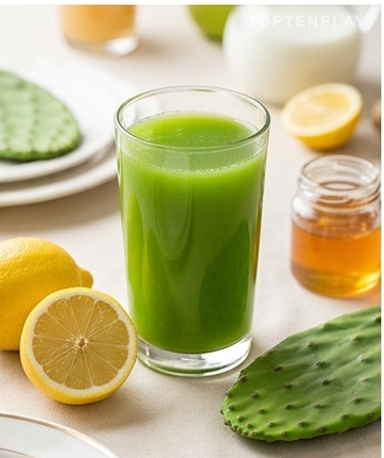
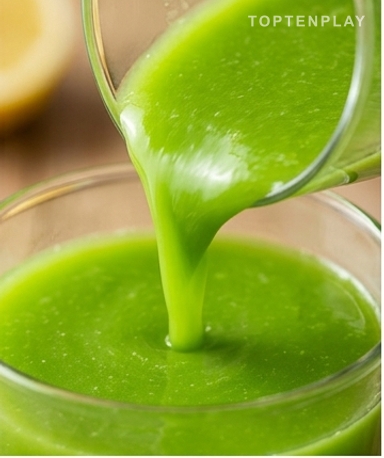
In the glass, the color always surprises. A deep grass green, almost opaque, with a light foam on the surface if you drink it without delay. The smell is fresh and vegetal—the nopal brings something very soft, almost neutral, and the lemon arrives right behind to brighten everything up. At the first sip, it’s light, slightly tangy, with that freshness in the aftertaste that wakes up the palate without aggression. No confusing exotic flavor. Just green, vivid, and a real sense of a fresh start.
Why you’ll love this recipe
Ingredient Notes
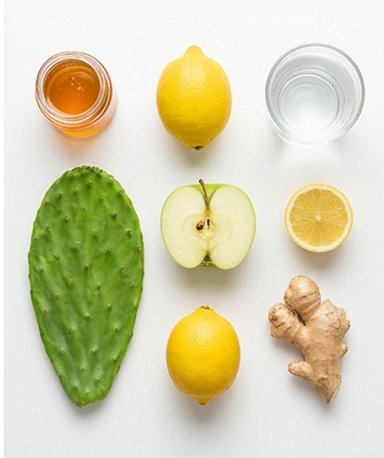
All the tonic ingredients: fresh nopal, lemons, green apple, ginger, and optional honey.
- Nopal : This is the flat paddle of the prickly pear tree—the cactus vegetable. Choose a tender, bright green paddle, without brown spots or softness. The spines are normally removed before sale, but still run your hand over it carefully, a few often remain. If you can’t find fresh, jarred nopal exists—rinse it well before use, as it is often preserved in brine.
- Lemon : Fresh is mandatory. Bottled lemon has a flat and slightly chemical flavor that ruins the whole point. A bright yellow lemon, heavy in the hand, gives enough juice for one serving. For this tonic, a generous dose is better than a timid one—it’s the lemon that gives the character.
- Ginger : Optional but really good. A piece of 1 to 2 cm is enough—it brings a slight warmth and a little zing in the aftertaste that contrasts with the freshness of the lemon. If you are sensitive to spices in the morning, start with half.
- Honey : Not mandatory if you like pure acidity. A teaspoon of liquid honey—preferably acacia honey, it is discreet—is enough to round off the edges. Stevia also works if you prefer it sugar-free.
Cleaning the nopal—the only real effort
This is where it all starts. Rinse the paddle under cold water while holding it by the side, then run a peeler over both sides to remove the small residual spines. You will feel the surface slightly sticky under your fingers—this is the nopal’s natural mucilage, nothing unusual. The smell at this stage is very green, almost like freshly cut grass. Then cut into small 2-3 cm cubes, no need for surgical precision. Five minutes, no more.
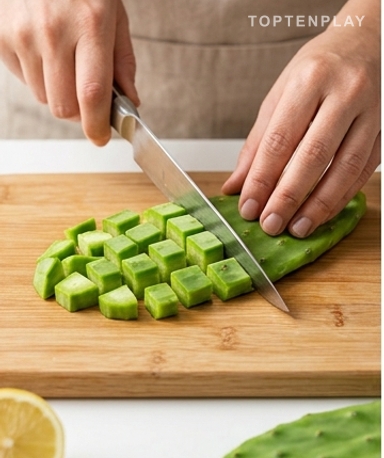
In the blender, all together
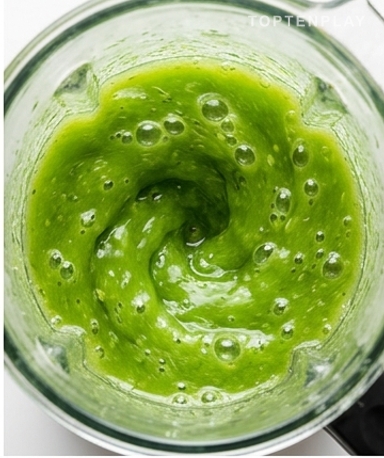
Add the nopal cubes, squeezed lemon juice, water, and extras if you are using them—chopped green apple, or grated or thinly sliced ginger. Blend at maximum power for 30 to 40 seconds. The mixture will go from pale green to dark grass green, and you will hear the texture change under the blades—more fluid, less resistant. If your blender struggles a bit, push the pieces back toward the blades with a spatula and restart. You don’t need a high-end blender, but it helps.
Strain or keep—it’s your call
Passed through a fine sieve or not, this tonic is frankly different from one version to another. Strained, it is light, almost translucent, and very easy to drink. Unstrained, it is thicker, more filling, with that slightly silky texture unique to nopal—some love it, others prefer it without. To start, strain it. Then, adapt according to how you feel. One last thing: drink it immediately. It oxidizes quickly and its beautiful color turns gray-green after twenty minutes. It still works, but it’s less appetizing.
Tips & Tricks
- Prepare it at the last minute. Unlike orange juice, the nopal-lemon tonic oxidizes quickly—its color fades after half an hour in the refrigerator. Two minutes of preparation in the morning is better than preparing it the night before.
- If it’s your first time with nopal, reduce the quantity by half for the first week. The mucilage can surprise the digestion—start small, increase gradually.
- The half Granny Smith apple is highly recommended. It brings a natural sweetness and a slight crunch to the scent of the mixture, without masking the lemon. Don’t peel it: the skin adds color and fiber.
Where can I find fresh nopal?
Latin American grocery stores are your best bet—they are easy to find in large cities. Some organic supermarkets also offer it, especially in the summer season. As a last resort, jarred nopal (world food aisle) works fine, but rinse it thoroughly to remove the brine before using it.
Can I prepare this tonic in advance and keep it in the fridge?
No, it really should be prepared and drunk immediately. The tonic oxidizes quickly—its beautiful green color turns a dull gray in less than thirty minutes. The taste remains drinkable, but the appearance becomes unappealing. Two minutes of preparation in the morning is worth it.
Is it mandatory to strain the mixture?
No, it’s a matter of preference. Strained, the tonic is light and drinks like a juice. Unstrained, it is thicker and more filling thanks to the fibers. For a first time, strain it—it’s easier to enjoy. Then, adapt to what suits you.
Can I replace the nopal if I really can’t find any?
Nopal is difficult to replace exactly, but a combination of cucumber + a little spinach gives a morning green juice quite close in freshness and lightness. It’s not the same nutritionally, but it’s a valid alternative for the morning routine.
How often can I drink this tonic?
One glass a day in the morning is the usual dose. To start, try it for 7 to 10 days in a row to observe how your body reacts, then adapt. If you are sensitive to fiber, start with half a nopal paddle and increase gradually.
What kind of blender do I need to blend nopal correctly?
A classic blender is more than enough—nopal is a tender vegetable that blends easily. No need for a high-end blender. If your appliance is really low power, cut the nopal into very small cubes and add a little more water to help it.
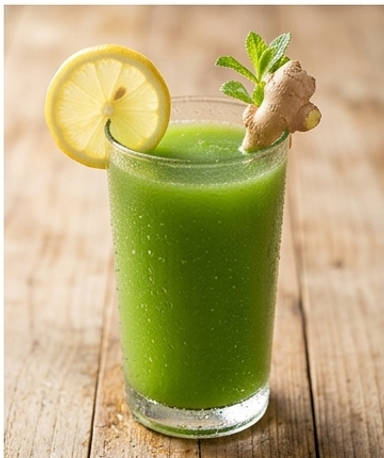
Morning Nopal Lemon Tonic
Latin American
Drink & Tonic
A simple and invigorating green juice made from nopal cactus paddle and fresh lemon, to be drunk right after waking up. Five minutes of preparation, zero cooking.
Ingredients
- 1 paddle (about 100g) fresh nopal, spines removed
- 250 ml water
- 2 lemons (freshly squeezed juice)
- 1 tsp (7g) liquid honey (or a pinch of stevia)
- 1 piece of 1-2 cm fresh ginger (optional)
- ½ Granny Smith green apple (optional)
Instructions
- 1Rinse the nopal paddle under cold water and remove any residual spines with a peeler or a knife. Cut into small 2-3 cm cubes.
- 2Squeeze the lemons and pour the juice into the blender with the nopal cubes and water.
- 3Add the honey and, if using, the sliced ginger and green apple pieces (unpeeled).
- 4Blend at maximum power for 30 to 40 seconds until a smooth, bright green mixture is obtained.
- 5Strain through a fine sieve if you prefer a light texture, or drink directly to keep all the fiber.
- 6Consume immediately.
Notes
• The tonic oxidizes quickly—its green color turns gray in less than 30 minutes. Always prepare it at the last minute, just before drinking.
• Jarred nopal: if you can’t find fresh, canned nopal (world food aisle) works. Rinse it well with clear water before use to remove the brine.
• Storage: this tonic cannot be stored. There is no make-ahead option for this recipe.
Nutrition Facts (per serving, estimated)
| 55 kcalCalories | 1gProtein | 13gCarbs | 0gFat |