A failed cranberry cake is almost always too dry or too sweet. Here, cream cheese solves the problem without complicated techniques: it gives a tender crumb, a slight tang, and enough structure to cut nice slices.
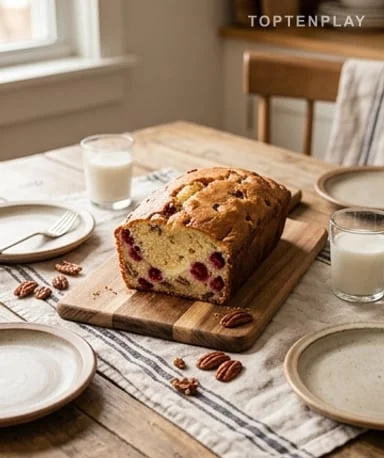
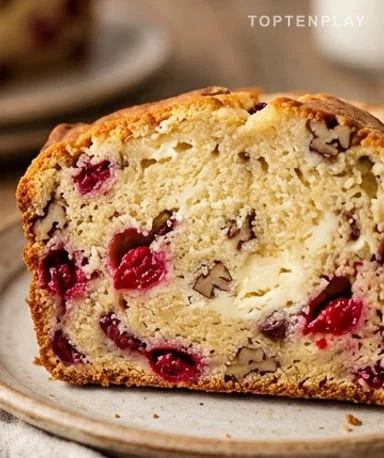
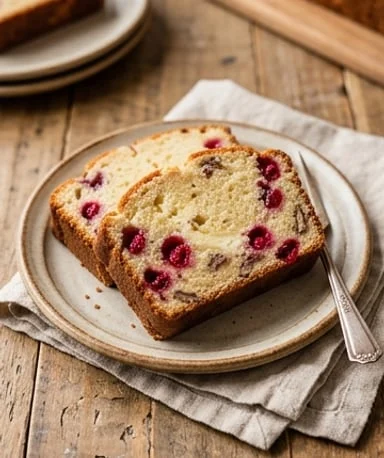
When it comes out of the oven, the top should be golden, slightly domed, with a few cranberries piercing the crust like little red spots. When you slice it, the blade goes through a soft, moist but not pasty crumb. The smell is sweet, buttery, with that subtle vanilla scent and the fruity acidity that wakes everything up.
Why you’ll love this recipe
Ingredient Notes
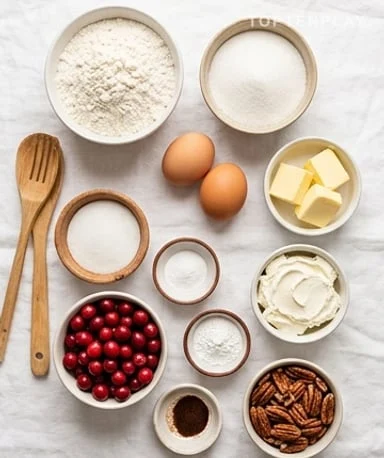
Cream cheese, cranberries, vanilla, butter and a little crunch if you add pecans.
- Plain cream cheese : It gives moisture and a slight tang that prevents the cake from becoming heavy. Choose a thick cream cheese, like a plain spreadable kind, and avoid versions that are too liquid, which make the batter soft in the center.
- Cranberries : They provide the tangy, juicy touches that bring the crumb to life. Fresh or frozen, they work great; if frozen, add them still cold to limit red streaks in the batter.
- Butter : It brings a round flavor and melting texture, especially on the golden edges of the cake. Use it very soft, not melted, so it blends properly with the sugar and gives a more even crumb.
- Flour : It structures the cake and allows it to hold in neat slices. Regular wheat flour is fine; sift it if it has lumps, as clumps are quickly felt in such a moist batter.
- Vanilla : It rounds off the tartness of the cranberries without stealing the show. Use vanilla powder, the seeds of a pod, or an alcohol-free vanilla sugar for a clean, sweet aroma.
- Pecans : They add crunch and a toasted note that contrasts with the tender crumb. They are optional; replace them with walnuts, roughly chopped almonds, or omit them for a smoother cake.
Prepare the ingredients before mixing
Take the butter, eggs, and cream cheese out a bit ahead of time, because a smooth batter starts with ingredients at similar temperatures. The butter should be soft under your finger, not oily, and the cream cheese should relax easily with a spatula. This preparation prevents little white pieces in the batter and gives a more even crumb after baking. Butter or line the pan with parchment paper, leaving two strips hanging over the sides to unmold without breaking the golden crust.
Work the base without seeking perfection
Mix the soft butter with the sugar until you get a pale, slightly creamy texture that clings a little to the sides of the bowl. Add the cream cheese and mix just enough to smooth it out; don’t turn the batter into foam. The eggs then go in one by one, as they incorporate better and prevent the batter from separating. If the mixture looks slightly grainy at this point, that’s fine: the flour will bring it all together.
Add the flour with restraint
Pour in the flour, baking powder, and a pinch of salt, then mix gently with a spatula or on low speed. The right sign is a thick, satiny batter, still a bit heavy, but without dry traces at the bottom of the bowl. If you overmix, the gluten develops and the cake becomes firmer, almost elastic. Stop as soon as the batter is uniform, even if it doesn’t look perfectly smooth.
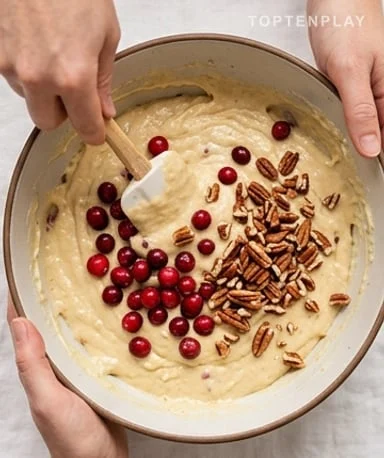
Fold the cranberries into the batter
Add the cranberries last, along with the pecans if using, and incorporate them with wide movements. The goal is to distribute them without crushing them, to keep those little tangy pockets that burst under the tooth. If the cranberries are very juicy, quickly toss them with a spoonful of flour before adding; this limits them from sinking to the bottom of the pan. The batter should remain marbled with red in places, not turn uniformly pink.
Bake gently then let rest
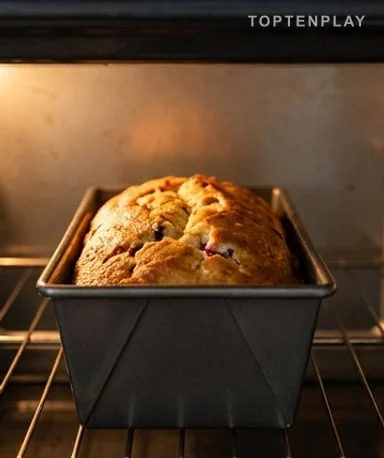
Pour the batter into the pan, smooth the top without pressing too much, then bake until the cake is nicely golden and a skewer comes out clean with a few moist crumbs. The baking is quite long because the cream cheese makes the batter richer and denser than an ordinary cake. If the top colors too quickly, place a sheet of parchment paper over it without pressing. Let it cool in the pan before unmolding, as the warm crumb is fragile and may crack before it has set.
Tips & Tricks
- Do not overmix after adding the flour, as that’s the quickest way to lose moisture and get a tight crumb.
- Check the doneness in the center of the cake, not the edges, because the edges brown quickly while the heart stays moister due to the cream cheese.
- Let it cool at least partially before slicing, because the crumb finishes setting and the cranberries stay cleaner on the cut.
- Keep the cake well wrapped once cold, because its moist texture depends on the humidity retained in the crumb.
Can I use frozen cranberries?
Yes, and it’s even very convenient. Add them still frozen to the batter to prevent them from releasing too much juice and coloring the whole crumb.
Why is my cake dry?
It probably overbaked or the batter was overmixed after adding the flour. Take it out of the oven as soon as a skewer comes out with a few moist crumbs, not completely dry.
Can I replace the cream cheese?
Yes, with a thick plain spreadable cheese. Avoid runny fromage blanc, which can give a moist, undercooked center.
Are pecans mandatory?
No, they only add crunch and a toasted note. You can replace them with walnuts, almonds, or omit them for a simpler cake.
How to store this moist cake?
Let it cool completely, then wrap it well or place it in an airtight container. It stays best for 2 to 3 days at room temperature, with a still tender crumb.
Moist Cream Cheese and Cranberry Cake
American
Dessert
A simple, tender and slightly tangy cake, with a rich crumb thanks to cream cheese and cranberries that wake up every slice.
Ingredients
- 220g flour
- 10g baking powder
- 1 pinch salt
- 120g soft unsalted butter
- 150g sugar
- 180g plain spreadable cream cheese
- 3 eggs
- 1/2 tsp vanilla powder
- 180g fresh or frozen cranberries
- 60g chopped pecans, optional
Instructions
- 1Preheat the oven to 170°C and line a loaf pan with parchment paper.
- 2Mix the flour, baking powder, and salt in a bowl.
- 3Beat the soft butter with the sugar until creamy.
- 4Add the cream cheese, then incorporate the eggs one by one.
- 5Add the vanilla, then fold in the dry ingredients without overworking the batter.
- 6Add the cranberries and pecans, then gently mix with a spatula.
- 7Pour the batter into the pan, smooth the top, and bake for about 60 minutes.
- 8Check doneness with a skewer: it should come out clean with a few moist crumbs.
- 9Let cool for 15 minutes in the pan, then unmold and cool on a wire rack.
Notes
• If the cranberries are frozen, do not thaw them before adding.
• Cover the cake with a sheet of parchment paper if the top browns too quickly.
• Vanilla powder can be replaced with alcohol-free vanilla sugar.
• Wait until the cake is well cooled before cutting to get neat slices.
Nutrition Facts (per serving, estimated)
| 285 kcalCalories | 5gProtein | 34gCarbs | 15gFat |