The Sidecar is often associated with chic bars, overpriced cognac, the 1920s, and American captains pulling up in sidecars in Paris. These images give the impression that it’s a drink reserved for a very specific crowd. In reality, it’s just three ingredients, a shaker, and five minutes.
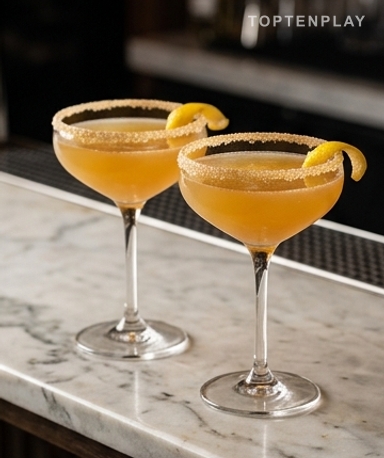
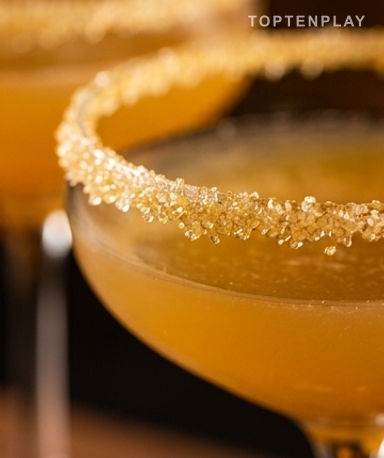
In the glass, the color resembles acacia honey — pale yellow with golden reflections. The cracked rim of raw sugar catches the eye: irregular granules, light amber like caramel at the thread stage. The first sip hits you with a sharp acidity — the lemon is right there, not hiding — before the orange rounds everything out. It’s balanced in a way that few non-alcoholic drinks truly manage.
Why you’ll love this recipe
Ingredient Notes
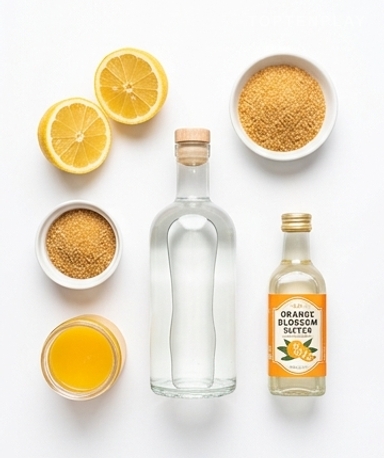
Fresh lemon, orange juice, orange syrup, and non-alcoholic spirit: everything you need for a perfect sidecar.
- Non-alcoholic spirit (Lyre’s Cognac Grande Champagne type) : This is the backbone of the drink. Lyre’s Cognac has real depth — notes of dried fruit, a light warmth on the palate — without the effects of alcohol. You can find it in specialty shops or online. If you can’t find it, 90 ml of white grape juice with a teaspoon of apple cider vinegar gives something similar — less elaborate, but it works.
- Fresh lemon : Mandatory. Bottled lemon juice gives a flat, slightly bitter acidity that breaks the balance. A hand-squeezed lemon is bright, almost sharp — exactly what this recipe calls for. About one medium lemon for two glasses.
- Orange juice + orange blossom water : This duo replaces Cointreau. The orange juice brings sugar and roundness, while the orange blossom water adds that slightly floral fragrance found in orange liqueurs. Half a teaspoon of orange blossom water is enough — it’s concentrated, don’t overdo it.
- Raw sugar (turbinado) : For the rim of the glass. Turbinado has larger crystals than white sugar — they stick better and give that irregular golden look that really changes things compared to an ordinary sugar rim. Technically optional. Hard to go without once you’ve seen the effect.
The question of the sugar rim
It’s optional, says the original recipe. We’re not forcing you. But here’s what happens: the raw sugar sticks to the damp rim of the coupe, forming an irregular crust, and when the light hits the glass, it gives off a golden glow like light caramel. Simply run a lemon wedge around the rim of the glass, then roll that rim in a shallow plate filled with sugar. The sugar should only cover the outside — if you get it inside, every sip will be too sweet. Set the glasses aside while you prepare the rest.
Shake without mercy
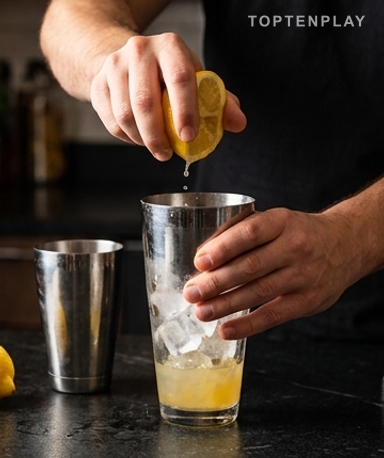
Pour the lemon juice, orange juice, orange blossom water, and non-alcoholic spirit into the shaker with a good amount of ice — it should be at least two-thirds full. Close it and shake. Really shake, not just three polite seconds. The metal should become uncomfortable to hold, frost should appear on the outside, and the sound of the ice cubes hitting the sides should become duller and more compact. It takes about fifteen seconds. This thermal shock is what slightly dilutes the drink and gives it that silky texture on the surface.
The pour
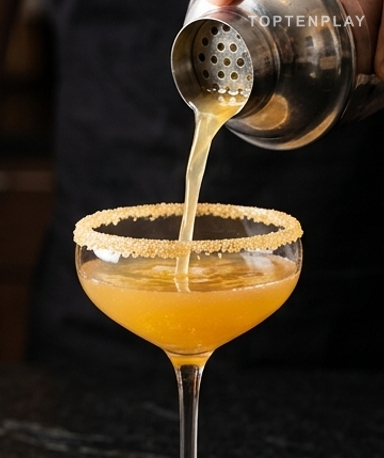
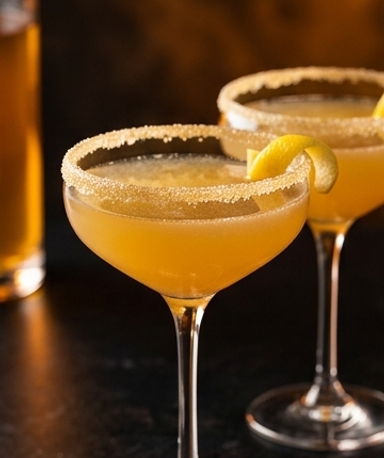
Strain directly into the coupes through the shaker’s strainer — or a small sieve if your shaker doesn’t have one. The liquid arrives cold, almost at zero degrees, with a few micro-bubbles on the surface that disappear in seconds. Taste before serving. Too acidic? A few drops of orange juice. Too flat? A bit more lemon. A twisted lemon zest placed on the rim finishes the glass neatly.
Tips & Tricks
- Chill your coupes in the freezer 10 minutes before serving. A cold glass keeps the drink fresh longer, and the condensation that forms when serving makes a great impression.
- Don’t prepare it in advance. This mocktail is meant to be drunk within five minutes. Dilution continues as the ice melts in the shaker — if you wait, you’ll end up with something too watery.
- Orange blossom water varies greatly from brand to brand. Some are light, others very intense. Start with a quarter teaspoon and adjust based on what you have at home.
Can I replace the Lyre’s Cognac with something more accessible?
Yes. Mix 90 ml of white grape juice with a teaspoon of apple cider vinegar — you get a tangy base with slight depth. It’s less elaborate than Lyre’s, but it works well for an everyday sidecar. The orange blossom water then becomes even more important to compensate.
Can I prepare sidecars in advance for several people?
No. This mocktail doesn’t like to wait — dilution continues after shaking, and in 15 minutes the result is too watery. What you can do in advance: prepare the sugared glasses and measure the ingredients into a pitcher. When ready to serve, pour into the shaker with ice and shake.
My sidecar is too acidic. How can I fix it?
Add a few drops of orange juice directly into the glass and stir gently. Next time, reduce the lemon juice to 20 ml instead of 30 ml — it’s a matter of taste and lemons vary in acidity by season.
Is turbinado sugar really different from white sugar for the rim?
Visually, yes — the larger crystals of turbinado give an irregular rim with an amber glow that white sugar doesn’t replicate. Flavor-wise, the difference is minimal. If you don’t have it, light brown sugar or cane sugar will do the trick.
Can I use glasses other than coupes?
Absolutely. A martini glass works perfectly. Otherwise, a low stemmed glass or even a small rocks glass with ice — the sidecar is classically drunk without ice in the glass, but for a mocktail, ice keeps it fresh longer if you drink slowly.
Mocktail Sidecar
American
Non-alcoholic drink
The non-alcoholic version of the 1920s classic — bright lemon, fragrant orange, raw sugar on the rim. Ready in five minutes.
Ingredients
- 90 ml non-alcoholic spirit (Lyre’s Cognac Grande Champagne type)
- 30 ml fresh lemon juice (about 1 medium lemon)
- 45 ml fresh orange juice
- ½ teaspoon (2.5 ml) orange blossom water
- 30 g raw turbinado sugar (for the rim)
- 1 wedge lemon (to moisten the rim)
- 200 g ice cubes
Instructions
- 1Run a lemon wedge around the rim of each coupe, then roll the rim in a plate of turbinado sugar to form an even crust.
- 2Pour the Lyre’s Cognac, lemon juice, orange juice, and orange blossom water into a shaker filled two-thirds with ice cubes.
- 3Close the shaker and shake vigorously for 15 seconds, until the metal is cold and uncomfortable to hold.
- 4Strain through the strainer directly into the sugared coupes. Do not pour the ice cubes.
- 5Add a twisted lemon zest to the rim of the glass and serve immediately.
Notes
• The coupes can be sugared in advance and kept in the refrigerator until serving time.
• Without Lyre’s: replace with 90 ml white grape juice + 1 teaspoon apple cider vinegar.
• To scale up: keep the 3:1:1.5 ratio (spirit / lemon / orange) and prepare in batches of 2 glasses — never prepare in advance.
Nutrition Facts (per serving, estimated)
| 95 kcalCalories | 0gProtein | 23gCarbs | 0gFat |