📌 Miso Salmon en Papillote
Posted 2 April 2026 by: Admin
What is real luxury on a weeknight? A dinner that takes fifteen minutes to prepare, impresses everyone at the table, and leaves almost nothing to wash. Miso salmon en papillote ticks all those boxes — it’s Japanese home cooking at its smartest.
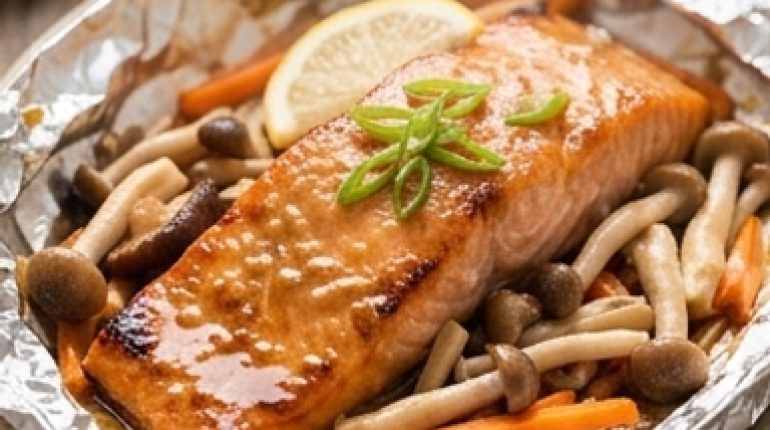
When you open the parchment or foil, a puff of steam rises suddenly — hot, fragrant, with that blend of caramelized miso and shiitake mushroom that has cooked in its own juices. The salmon is a pearly pink that turns slightly amber at the edges, where the paste began to brown like light caramel. Under the fork, the flesh separates into large, shiny, almost melting flakes. The mushrooms and julienned carrots have absorbed all the cooking liquid — they are candied, dense, and concentrated.
Why you’ll love this recipe
Ingredient Notes
Everything needed for a Japanese parcel: salmon, white miso, Kewpie mayo, shiitake, shimeji, and carrot.
- Salmon with skin : Choose thick, center-cut fillets with the skin on. It forms a natural barrier between the fish and the bottom of the parcel — preventing sticking and protecting the flesh during steaming. You might not eat it, but it does its job.
- White miso (shiro miso) : This is the mildest, least salty miso. It can be found in Asian grocery stores or organic sections. If you only have red or mixed miso, start with one tablespoon and taste the paste before spreading — red is much more powerful and can easily become overwhelming.
- Kewpie Mayo : This is the Japanese mayo in a tube with the pointy red cap. It’s rounder and slightly sweeter than classic mayo, with a real umami depth. In the recipe, it binds the miso and keeps the salmon moist. If you can’t find it, mix regular mayo with a few drops of rice vinegar. Not identical, but it does the job.
- Shiitake and shimeji : Shiitake brings a woody, almost smoky note. Shimeji is more delicate, with a texture that remains slightly firm even after cooking. Together, they absorb the salmon’s cooking juices. You can replace them with button mushrooms — you just lose a bit of that depth.
- Dashi broth : It replaces the sake from the original recipe. It creates the steam inside the parcel, eliminates fish odors, and boosts the umami. Half a tablespoon. No need for more.
The paste — 30 seconds, seriously
Mix the white miso and Kewpie mayo in a small bowl until you get a smooth paste. It’s creamy, slightly thick, with that fermented and rounded scent that already makes you hungry. Taste it before moving on. Too salty? Add a spoonful of mayo. Want more depth? A little more miso. This paste does all the work for the flavor — take thirty seconds to adjust it to your liking.
Assembling the parcel
Cut generous sheets of aluminum foil, wider than you think you need. Spread a small knob of softened butter in the center of each sheet — this prevents the onions from sticking and adds a discreet richness to the base. Lay down the onion rings, place the salmon fillet skin-side down, and spread the miso-mayo paste generously. Distribute the mushrooms and julienned carrots on top, slip in a lemon slice, and drizzle with a dash of dashi broth. Fold the edges firmly. A well-sealed parcel keeps its steam in — that’s the difference between melting salmon and dried-out salmon.
In the oven — and you’re at the table
Preheat oven to 220°C, middle rack, 15 to 18 minutes depending on the thickness of the fillets. The pouches will puff up slightly from the internal steam — that’s a good sign. To open, point the opening away from you before unfolding: the first puff of steam is scorching. Top with a few slices of green onion and serve directly. No need to transfer to a plate. The parcel is the plate.
Tips & Tricks
- Assemble the parcels up to an hour in advance and keep them in the fridge on a baking sheet. Just slide them into the oven during drinks — you won’t have to touch anything until serving.
- Open the parcels at the table, not in the kitchen. The aroma that spreads around the table at the moment of opening is half the experience. Don’t deprive yourself of that.
- If you want to check the doneness without a thermometer, press gently on the side of the fillet with the back of a fork. It should resist slightly but yield to pressure — if it’s still soft and translucent, it needs two more minutes.
Can the parcels be prepared in advance?
Yes, it’s even recommended. Assemble them up to 2 hours in advance and keep them on a tray in the fridge. Take them out 10 minutes before baking so they aren’t too cold — this ensures more even cooking.
How do I know if the salmon is cooked without a thermometer?
Press gently on the side of the fillet with the back of a fork. It should resist slightly but give way — if it’s still translucent and soft in the center, it needs 2 more minutes. The flesh should flake easily without being dry.
Can I cook the parcels in a pan instead of the oven?
Absolutely. Place the parcels in a large lidded pan over medium heat. Cook for 12 to 15 minutes depending on the thickness of the salmon. This is a common method in Japanese cooking (hoiru yaki on the stovetop) and works very well.
Can I use frozen salmon?
Yes, provided you thaw it completely in the fridge overnight and pat it very dry with paper towels before assembling. Excess moisture would dilute the miso-mayo paste and make the cooking less precise.
What can I use instead of Kewpie mayo if I can’t find it?
Mix 2 tablespoons of classic mayo with 1 teaspoon of rice vinegar and a small pinch of sugar. It’s not identical, but you get the roundness and slight acidity of Kewpie. It’s also easily found online or in Asian grocery stores.
Can I vary the vegetables in the parcel?
Absolutely. Thinly sliced zucchini, bell pepper strips, fresh spinach, pak choi — anything that steams quickly works. Avoid hard vegetables like potatoes or raw beets, as they won’t cook enough in 18 minutes.
Miso Salmon en Papillote
Japanese
Main course
Salmon fillets coated in a miso-mayo glaze, steamed with mushrooms and carrots in an airtight parcel. Ready in 30 minutes, with only one pot of rice to wash.
Ingredients
- 2 fillets (approx. 160g each) salmon with skin, center cut
- 2 tbsp (30g) white miso (shiro miso)
- 2 tbsp (30g) Kewpie mayo
- 80g shiitake mushrooms, stems removed and caps sliced
- 100g shimeji mushrooms, separated into small clusters
- 1 small (80g) carrot, julienned
- 1 small (80g) yellow onion, sliced into rings
- 2 lemon slices
- 1 tbsp (15ml) dashi broth
- 15g unsalted butter
- 2 sprigs of chives or green onion, sliced
- salt and black pepper to taste
Instructions
- 1Preheat the oven to 220°C (fan oven). Cut two generous pieces of aluminum foil (approx. 35 x 40 cm).
- 2Mix the white miso and Kewpie mayo in a bowl until smooth. Taste and adjust if necessary.
- 3Spread a small knob of softened butter in the center of each foil sheet.
- 4Place the onion rings on the butter, then the salmon fillet skin-side down.
- 5Generously spread the miso-mayo paste over the top of each fillet. Distribute the mushrooms and julienned carrots, add a lemon slice, and drizzle with a little dashi broth. Season lightly with salt and pepper.
- 6Fold the edges of the foil hermetically, pressing each fold well. The parcels must be completely sealed.
- 7Place the parcels on a baking sheet and bake for 15 to 18 minutes depending on the thickness of the salmon.
- 8Remove from the oven, open carefully (opening facing away from you) to let the steam escape. Sprinkle with green onion and serve immediately, with the parcel placed directly on the plate.
Notes
• Storage: Salmon en papillote keeps for 1 day in the fridge in an airtight container, but it loses texture when reheated. This dish is truly best prepared and eaten the same day.
• Make ahead: Parcels can be assembled up to 2 hours in advance and kept in the fridge. Take out 10 minutes before baking.
• Fish variation: Cod, halibut, or sea bass also work very well with this miso-mayo paste. Adjust cooking time according to the thickness of the fillets.
Nutrition Facts (per serving, estimated)
| 490 kcalCalories | 39gProtein | 13gCarbs | 31gFat |