📌 Mini Irish Beef Pies: The double pastry technique that guarantees the perfect crunch
Posted 17 January 2026 by: Admin
The DNA Of Irish Pies: Tradition And Comfort In Miniature Format
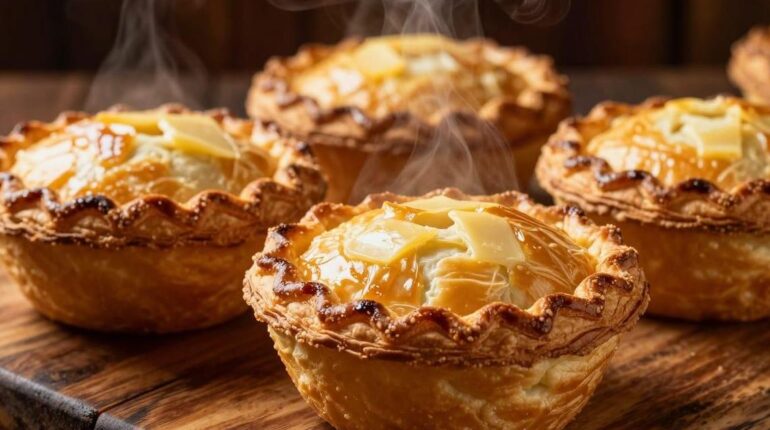
In the cozy atmosphere of Irish pubs, beef pies have embodied the very essence of culinary comfort for generations. This recipe transposes that spirit into a clever individual format: twelve mini pies where rustic origins meet careful pastry architecture. Three distinct layers make up this reinvented classic. The base rests on a buttery shortcrust pastry that delicately lines each mold, housing a beef filling slow-cooked with aromatics. The whole is topped with a puff pastry hat that puffs and browns in the oven until it forms a crispy shell.
This layered construction transforms each bite into a contrasted sensory experience: the airy crunch of the puff pastry gives way under the fork, revealing the melting tenderness of the shortcrust pastry and the generosity of a thick filling with deep notes. The balance between opposing textures—crispy, soft, juicy—defines the identity of these pies, while the buttery notes unify the whole.
Their versatility makes them indispensable: they are equally suited to a comforting family dinner, a convivial buffet, or a cozy evening in front of a steaming dish. The true feat lies in this alliance between apparent simplicity and real depth of flavor, the signature of a cuisine that values the essential without artifice. Each element fulfills its function with precision to create a dish where tradition and modern practicality naturally coexist.
The Filling At The Heart Of Success: Simmering Technique And Aromatic Depth
The success of these pies rests primarily on the methodical preparation of their beef filling. The process begins with cooking the aromatics: the chopped onion is sautéed for three to four minutes in olive oil until translucent, followed by the garlic which releases its aromas in thirty seconds. This aromatic base constitutes the essential flavor foundation. The 450 grams of ground beef then join the pan, where careful cooking transforms them into a golden preparation, regularly crumbled with a wooden spoon.
The decisive step occurs with the addition of the trio of tomato paste, Worcestershire sauce, and flour. The latter coats each piece of meat to create a natural binder that will transform the broth into a smooth sauce. One hundred and twenty milliliters of beef broth are added, accompanied by a teaspoon of dried thyme. The simmer must be maintained for exactly ten minutes, the time necessary for the flour to perform its thickening work and for the flavors to merge into a dense and coherent preparation.
This controlled simmering technique guarantees a consistency that is neither too liquid—which would soak the pastry bases—nor too dry. The resulting sauce generously coats the meat while remaining bound enough to be distributed evenly in the molds. Final seasoning with salt and pepper precedes a rest off the heat, allowing the filling to cool slightly before its integration into the pastry architecture.
The Two-Pastry Architecture: Assembly And Texture Secrets
The textural contrast that distinguishes these pies comes from the strategic use of two types of pastry with complementary properties. The shortcrust pastry, cut into generous circles, first lines the cups of the pre-greased muffin tin. This base must delicately hug the bottom and sides without perforation, creating a shell that is both resistant and melting, which will subtly absorb the juices of the filling without collapsing. The puff pastry then acts as a lid, cut into slightly wider discs to allow for a hermetic sealing of the edges.
The central incision made on each lid is a crucial technical detail: it allows steam to escape during cooking, preventing moisture from softening the puff pastry. The egg wash, generously applied with a brush, provides that shiny finish characteristic of professional pastries while promoting even coloring. At precisely 190°C, the oven transforms these assemblies into golden creations for twenty to twenty-five minutes. The puff pastry fills with air and becomes crispy, while the shortcrust base retains its buttery softness.
This interplay of textures—airy crunch against dense melting—is only achieved by scrupulous respect for temperature and cooking time. An oven that is too hot would burn the tops before the bases are cooked; too cool, it would produce soft and pale pies. Resting for a few minutes before unmolding allows the structure to firm up, guaranteeing portions that hold perfectly once placed on the plate.
Yield And Practicality: 12 Pies In 40 Minutes Flat
This recipe demonstrates that culinary excellence and efficiency are not mutually exclusive. Forty minutes are enough to produce twelve mini pies, from the first onion cut to the final unmolding. The first fifteen minutes are dedicated to preparing the filling and assembling the pastries, while the next twenty-five belong to the oven. This mastered timing allows these pies to be integrated into a busy weekday schedule without sacrificing the quality of a homemade dish.
The generous yield allows for several strategic uses. For a family dinner of four, three pies per guest constitute a hearty main course, ideally accompanied by a creamy mashed potato or English-style peas. In a buffet or cocktail party format, these individual portions prove particularly practical: no cutting necessary, simplified service, consumption without cutlery. The average calorie count of 275 kilocalories per pie remains reasonable given the nutritional density, allowing the meal to be balanced with light vegetable sides.
Storage also proves advantageous. Prepared in advance, these pies can be reheated in a traditional oven for ten minutes at 180°C, regaining their original crispness. This flexibility transforms an apparently modest recipe into a real culinary asset for those seeking to combine Irish authenticity with modern pragmatism.