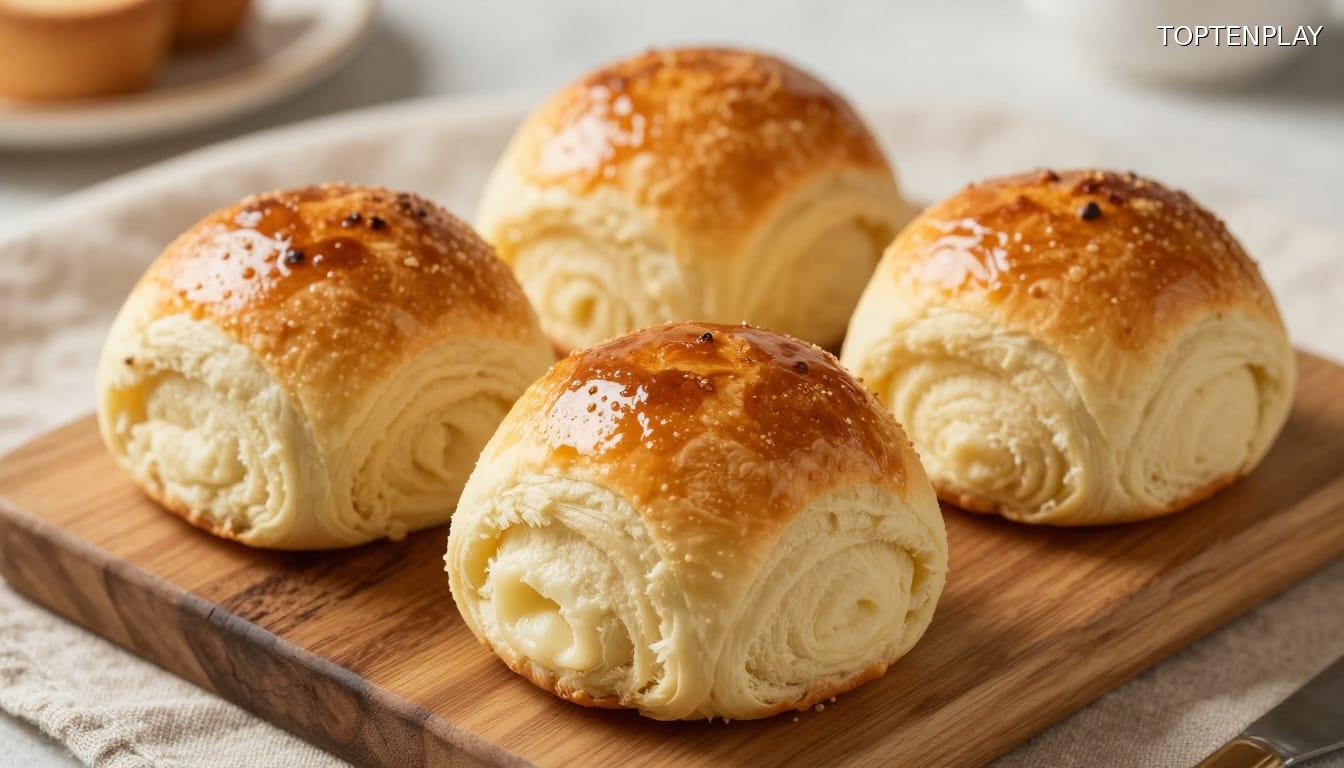
The Secrets of a Soft Brioche: What Makes These Rolls Irresistible
There are few culinary pleasures as immediate as taking a tray of golden, steaming brioche rolls out of the oven. But what distinguishes these milk brioche rolls from traditional brioche isn’t down to chance — it’s a matter of skillfully measured balance.
Where classic brioche can sometimes seem too dense or too sweet, these rolls occupy a very particular culinary territory: not quite bread, not quite pastry. Their crumb is light without being excessively airy, their texture tender without being fragile, and their sweetness present enough to please the palate without weighing down the meal. Special enough for an occasion, neutral enough for everyday life.
This versatility is precisely what gives them a status of their own. At breakfast with butter and jam, as an accompaniment to dinner, or filled for homemade sliders — these rolls adapt without ever disappointing. They move through meals and seasons with elegant discretion.
Another considerable asset: their accessibility. The recipe requires neither professional skill nor years of experience behind a workbench. The techniques remain simple, the steps clear, and the results worthy of an artisanal bakery. It is precisely this paradox — simplicity of execution, excellence of result — that makes these rolls a must-discover, ingredient by ingredient.
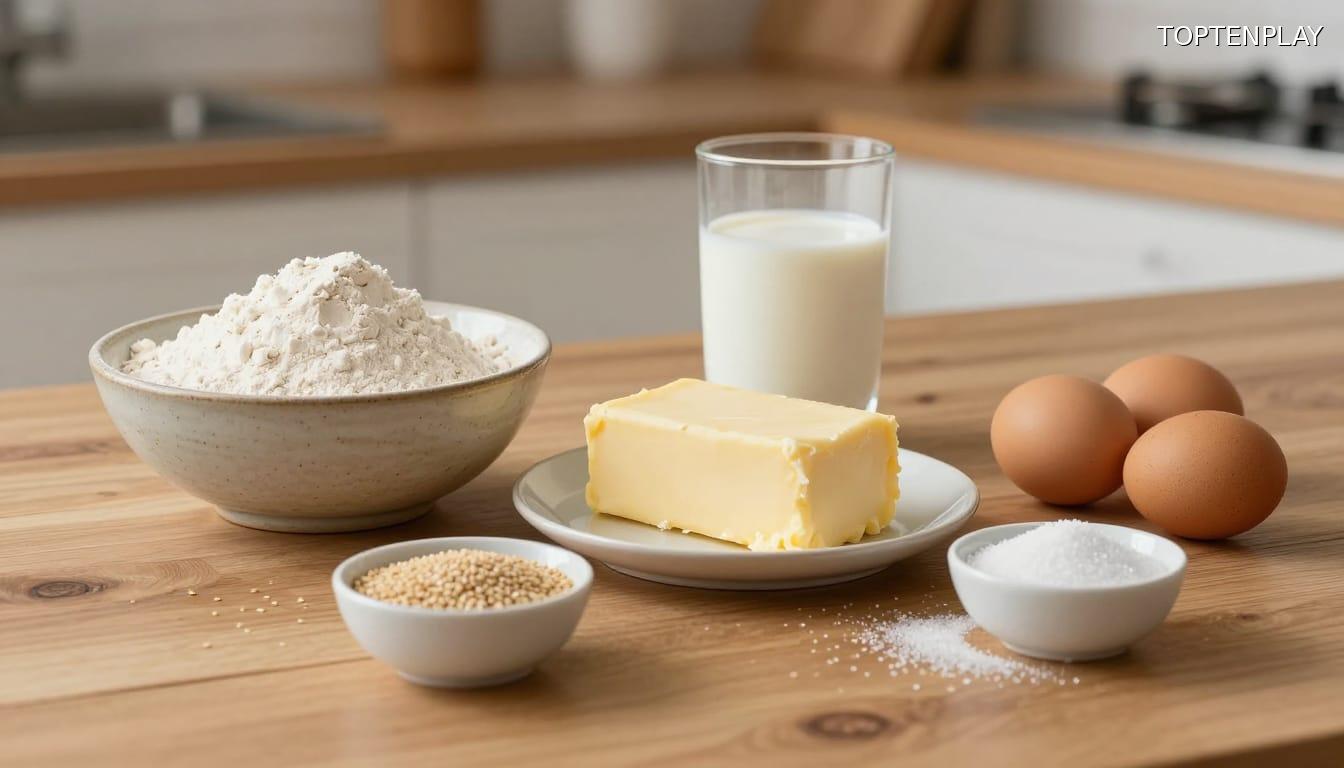
The Ingredient List: Pantry Simplicity, Chef-Worthy Result
This paradox between simplicity and excellence begins precisely at the ingredient stage. Because behind this result worthy of an artisanal bakery lies a list of disconcerting accessibility — products that most kitchens already possess.
Everything rests on four fundamental components: 3.5 cups of flour, 1 cup of warm milk, 1/4 cup of unsalted butter, and a packet of active dry yeast. An egg, sugar, salt, and a dash of vegetable oil complete the set. Nothing hard to find, nothing intimidating.
But each ingredient plays a precise role. Warm milk brings the characteristic tenderness to the crumb. The egg enriches the texture and gives it that appetizing golden color. The butter is responsible for the signature softness — that immediate melt-in-the-mouth quality at the first bite that distinguishes a real brioche from simple sandwich bread.
For the glaze, an egg yolk diluted in a spoonful of milk is enough to obtain that shiny, almost lacquered finish that makes all the difference when coming out of the oven. Optionally, sesame seeds, poppy seeds, or a few crystals of coarse sugar allow you to personalize each batch according to the occasion.
Understanding the role of each component is already mastering half the recipe — and realizing that the equipment, too, is not at all intimidating.

The Ideal Equipment: What You Really Need (And What You Can Avoid)
If the ingredient list is reassuring, the equipment list is definitively convincing. Making milk brioche rolls worthy of a professional bakery requires no investment in specialized equipment — and that is one of the great strengths of this recipe.
Essentials consist of a few everyday objects: a large mixing bowl, measuring cups and spoons, a clean towel, and a baking dish. A pastry brush to apply the glaze completes this minimalist arsenal. That’s it.
The question of the stand mixer often comes up. While it simplifies kneading thanks to its dough hook, it remains optional. A simple wooden spoon and a bit of elbow grease produce exactly the same result. Technique takes precedence over the tool — a truth that every amateur baker eventually integrates.
This principle of democratization is at the heart of the recipe: no specific mold, no professional thermometer, no equipment reserved for chef’s kitchens. Ordinary kitchens, with their ordinary equipment, yield extraordinary results.
This total accessibility — from ingredients to equipment — is no accident. It reflects a coherent culinary philosophy: rolls that adapt to every home, every pace of life, every level of practice. A philosophy that fully reveals itself when considering their place in daily life.
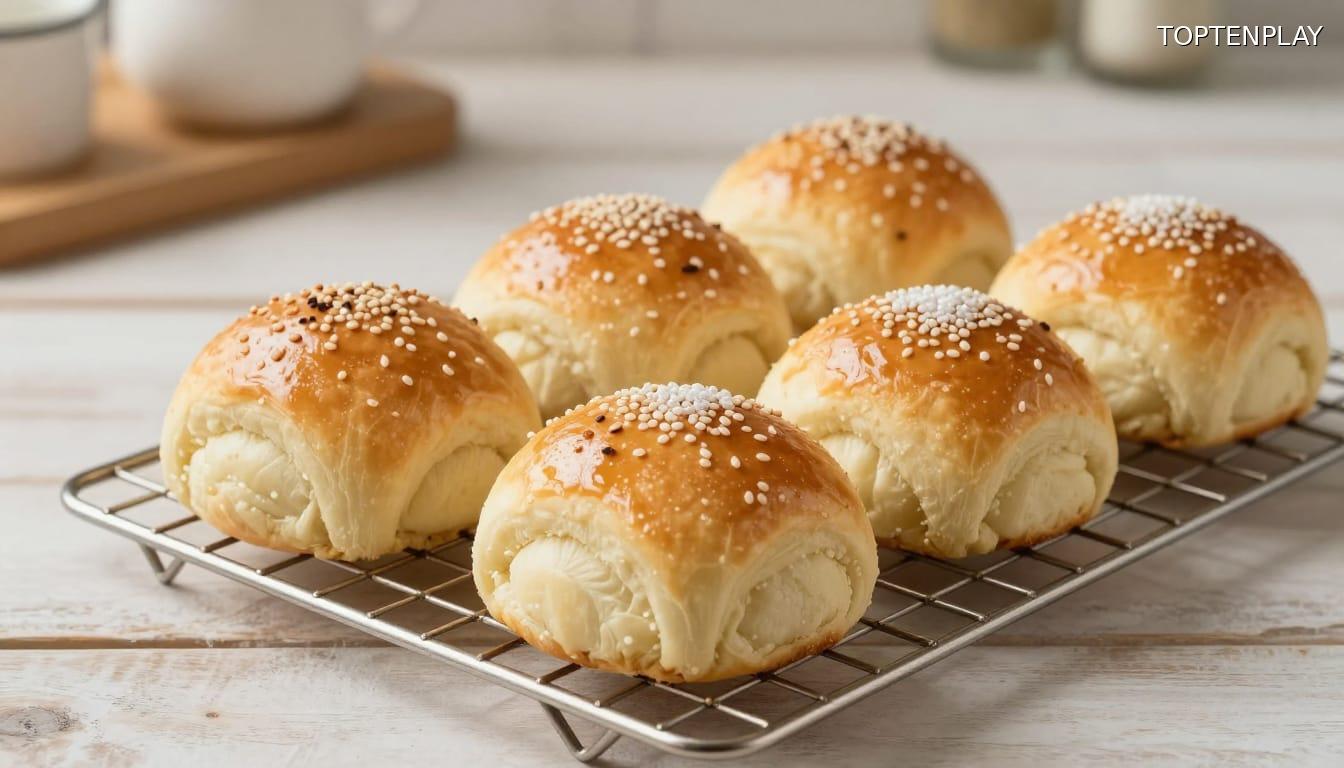
Why These Rolls Deserve a Permanent Place in Your Kitchen
This everyday philosophy takes on its full meaning when we address the actual practicality of these milk brioche rolls — because their value doesn’t stop at the oven door.
First decisive asset: their total compatibility with freezing. Prepare a batch on Sunday, freeze the cooled rolls, and have fresh, soft bread all week with a few minutes of reheating. An investment of one hour that pays off for several days — impeccable logic for families and regular hosts.
Their reliability constitutes a second strong argument. Unlike many temperamental bakery recipes, these rolls produce reproducible results with every batch. Beginners get a result worthy of a real bakery on the first try. Experienced bakers appreciate a solid base that they can vary freely.
As for versatility, these rolls naturally fit into every moment of the day: family breakfasts, dinner accompaniments, slider bases for gatherings. A single recipe, dozens of concrete uses.
This is not a recipe you test once and then forget. It is a pillar — one that you master, that you personalize with sesame seeds or granulated sugar, that you systematically bring out when you want to impress effortlessly. The kind of classic that, once integrated into your repertoire, never leaves it.