Many people imagine that buñuelos are a complicated specialty, reserved for Mexican holidays and experienced hands. In reality, it’s just dough, frying, and cinnamon sugar. Nothing else.
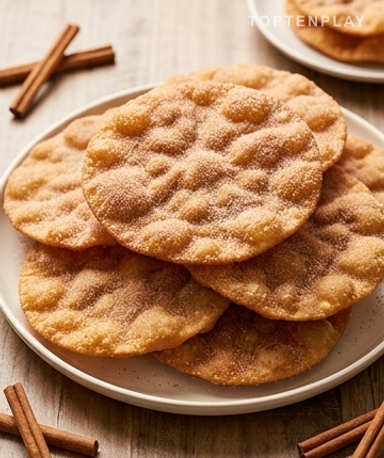
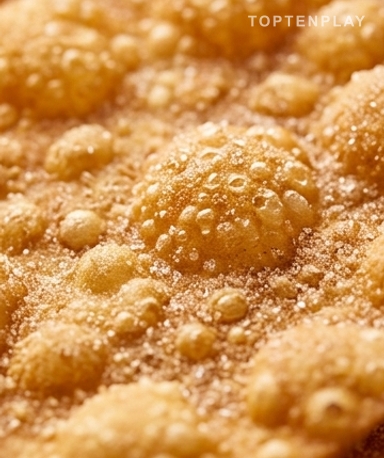
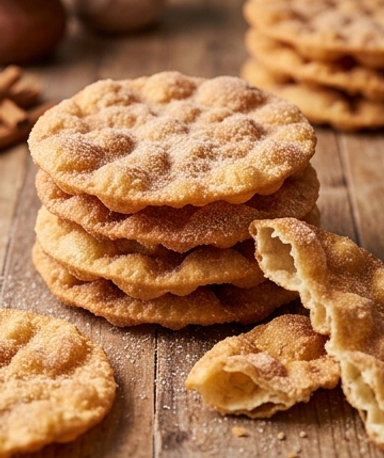
Hold one between your fingers. It’s light, almost fragile — the dough puffed up in places during frying, creating those small crispy pockets that crackle under your teeth. The color is golden like light caramel, with paler areas where the dough was a bit thicker. It smells like warm cinnamon and clean oil, that mixture that instantly takes you back to an open-air market. The sugar clings slightly to your skin, still warm.
Why you’ll love this recipe
Ingredient Notes
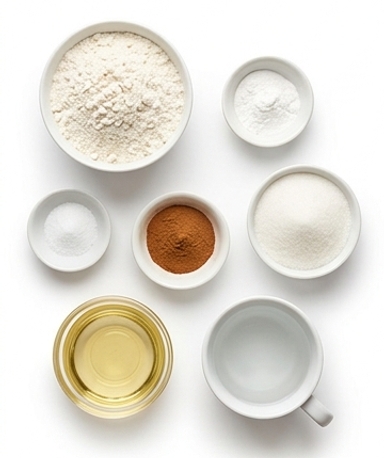
Seven pantry ingredients are enough to prepare these authentic Mexican fritters.
- All-purpose flour : Classic T55, sifted once before measuring. This simple step prevents lumps and results in a smoother dough that is easier to roll out. No need for special flour.
- Baking powder : This is what creates the little bubbles in the dough when it hits the hot oil. Half a teaspoon is enough — no need to overdo it, the heat does the rest. If you’re out, a pinch of baking soda works in a pinch.
- Frying oil : A neutral oil with a high smoke point: sunflower, peanut, or corn. No olive oil — its flavor is too strong and completely changes the result. You’ll need about 600 ml for proper frying in a deep pan.
- White sugar + cinnamon : Mix half a cup of sugar with one to two teaspoons of ground cinnamon. The proportion is personal — some want the cinnamon to dominate, others prefer just a hint. Taste the mixture before coating the buñuelos.
Knead for ten minutes — really ten minutes
Mix the dry ingredients in a large bowl, add the warm water and oil, then work with a wooden spoon until the dough comes together. Turn it out onto a floured surface and start kneading. For the first few minutes, it resists — grainy under your palms, not pleasant. Around the eighth minute, something changes: it becomes smooth, slightly elastic, a bit tacky but not really sticking. This change in texture is the gluten developing. This is what will allow the dough to be rolled into thin discs without tearing during frying. Don’t skip this step.
Let it rest for thirty minutes — that’s where it all happens
Form a ball, put it back in the bowl, cover with a clean towel. Thirty minutes minimum. The dough relaxes, the gluten eases up, and the difference in rolling is spectacular: where you would have had constant resistance, you get a supple disc that stretches effortlessly. Use this time to set up your station: a large clean towel to place the discs, your deep pan, tongs, and the bowl of cinnamon sugar within direct reach. Once you start frying, you no longer have time to look for anything.
Roll each ball until you can almost see through it
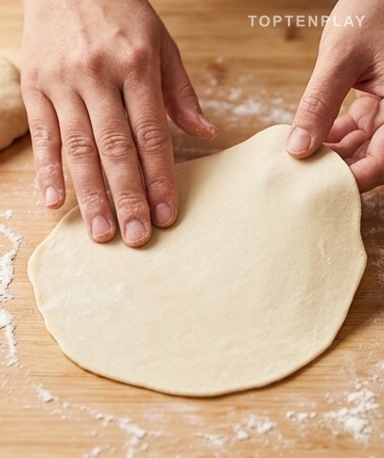
Divide the dough into eight equal balls. For each buñuelo, you want a disc of 20 to 25 cm — as thin as you can get it without tearing. If you stop too soon, it will be thick and chewy after frying, without those characteristic bubbles. Place the discs on the towel without overlapping them: they stick together easily. A little flour under each disc if necessary. It is this thinness that creates the irregular blisters that make the texture so enjoyable.
One minute in the oil, not two
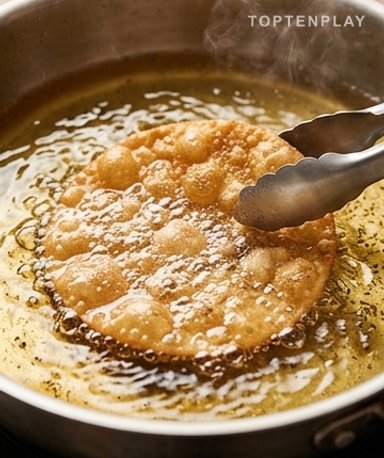
Heat the oil to 175 °C. If you don’t have a thermometer, dip the end of a wooden handle: when small bubbles form steadily around it, it’s ready. Slide a disc into the oil — you’ll hear a gentle sizzle, almost a whisper, not an aggressive crackling. The dough immediately begins to cover itself with small blisters, taking on that light caramel golden hue. Flip with tongs, thirty seconds on the other side, remove to a rack. Just one at a time. Two in the pan and the temperature drops, the frying becomes soggy, and the buñuelos absorb the oil.
Coat while it’s piping hot
This is when the sugar really sticks. On a still-hot buñuelo placed on the rack, generously sprinkle the cinnamon-sugar mixture, flip, and repeat on the other side. The heat slightly melts the crystals into the crevices of the dough — they cling, they don’t slide off. If you wait for it to cool, the sugar falls off; it just doesn’t work the same. Serve within ten minutes.
Tips & Tricks
- Don’t put the rolled-out discs back in the fridge — cold dough shrinks upon contact with the oil and the buñuelos puff up unevenly. Work at room temperature.
- If your dough tears when you roll it, it hasn’t rested enough. Put the ball back under the towel for five more minutes, and the problem goes away.
- You can replace half of the white sugar with brown sugar for a warmer coating with a hint of molasses. It really changes the final result — rounder, less sharp.
Why aren’t my buñuelos bubbling when fried?
The dough probably wasn’t kneaded enough or didn’t rest long enough. Kneading develops the gluten which, combined with the baking powder and hot oil, creates those characteristic blisters. Also, make sure the oil is exactly 175 °C — too cold, and the dough absorbs the oil instead of puffing.
Can I prepare the dough the day before?
Yes, no problem. After kneading, form the ball, wrap it in plastic wrap, and refrigerate until the next day. Take it out 30 minutes before rolling — cold dough shrinks and tears, it needs to return to room temperature.
How do you store buñuelos?
In an airtight container at room temperature, they last for 2 days — but the crunchiness decreases after 24h. To refresh them, a few minutes in the oven at 160 °C perks them up well. Avoid the fridge; humidity softens them permanently.
Can they be baked instead of fried?
Technically yes, but the result is very different: baked buñuelos remain flat, without bubbles, with a texture closer to a cracker than a crispy fritter. Frying is truly at the heart of this recipe — it’s hard to bypass it without losing the essence.
How thick should the dough discs be?
As thin as possible — ideally 1 to 2 mm. It’s often said you should almost be able to see through them. Dough that’s too thick results in hard, doughy buñuelos in the center. If the dough resists and shrinks, let it rest for another 5 minutes under a towel before trying again.
What can I use instead of all-purpose flour?
Standard T55 flour is ideal. You can use T65, but the dough will be slightly less supple. Gluten-free flours are not suitable here — gluten gives the dough its elasticity and allows it to be rolled into thin discs without tearing.
Mexican Cinnamon-Sugar Buñuelos
Mexican
Dessert
Discs of dough fried until crispy and coated in cinnamon sugar. A traditional Mexican dessert with seven pantry ingredients.
Ingredients
- 240g (2 cups) all-purpose flour, sifted
- ½ teaspoon baking powder
- ½ teaspoon salt
- 120ml (½ cup) warm water
- 2 tablespoons neutral vegetable oil (for the dough)
- 600ml (2½ cups) sunflower or peanut oil (for frying)
- 100g (½ cup) white sugar
- 2 teaspoons ground cinnamon
Instructions
- 1Mix the sugar and cinnamon in a small bowl, set aside.
- 2In a large bowl, combine the flour, baking powder, and salt.
- 3Add the warm water and 2 tablespoons of oil, mix until a shaggy dough forms.
- 4Turn the dough onto a lightly floured surface and knead for 10 minutes until smooth and slightly elastic.
- 5Form a ball, return to the bowl, cover with a clean towel, and let rest for 30 minutes.
- 6Divide the dough into 8 equal balls. Roll each into a thin disc of 20 to 25 cm.
- 7Place the discs on a clean towel in a single layer, without overlapping them.
- 8Heat the frying oil in a deep pan to 175 °C.
- 9Fry the buñuelos one at a time, 1 minute per side, until light caramel golden in color. Drain on a rack.
- 10Immediately sprinkle with cinnamon-sugar on both sides while still hot.
Notes
• Best within 10 minutes of frying. The crunch decreases quickly — prefer frying at the last moment.
• If the dough shrinks and resists rolling, cover it for another 5 minutes: the gluten needs to relax.
• Express variation: replace the homemade dough with small store-bought flour tortillas — fry them the same way for a similar result in half the time.
Nutrition Facts (per serving, estimated)
| 215 kcalCalories | 3gProtein | 34gCarbs | 8gFat |