📌 Melting Potato Gratin with Gruyère and Cheddar
Posted 29 March 2026 by: Admin
Potato gratin has this weird reputation of being a bit of a boring Sunday dish — heavy, greasy, and bloating. The reality? It’s one of the most honest dishes there is. Cheese, potatoes, and a sauce you make in ten minutes. And the oven does the rest.
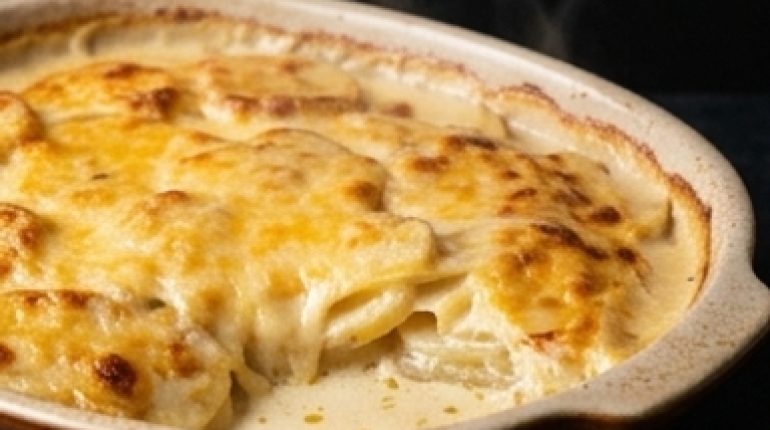
When you take this gratin out of the oven, you smell the cheese first. That scent of warm milk and slightly burnt crust that fills the kitchen even before you set the dish on the table. The surface is golden like light caramel, with small bubbles of sauce that have overflowed the edges and dried into a brown lace. You slide the spatula into the dish, feeling the light resistance of the potato layers that have absorbed all the cream, and the sauce gently closes back into the furrow you’ve just carved.
Why you’ll love this recipe
Ingredient Notes
The basics of a good gratin — firm-fleshed potatoes, Gruyère, cheddar, and a homemade béchamel.
- Potatoes : Yukon Gold or Charlotte, nothing else. Floury potatoes like Bintje tend to disintegrate and soak up all the sauce. Yukon Golds stay firm, hold their slice, and their slightly buttery flesh pairs perfectly with the cheese. No need to peel them if they are well washed.
- Gruyère : Buy it in a block and grate it yourself. Pre-shredded bag cheese is often treated with starch to prevent clumping — this prevents melting and gives a grainy texture. A good cave-aged Gruyère, aged at least 6 months, melts into a silky, fragrant ribbon.
- Cheddar : Extra-mature if you can. Young cheddar is too mild to contribute anything here. You need that tangy, almost sharp taste that contrasts with the sweetness of the béchamel and makes the cheese presence felt.
- Mustard powder : The ingredient no one understands the use of until they leave it out. It doesn’t give a mustard taste — it amplifies the cheese, giving it more presence. Half a teaspoon is enough. If you don’t have any, a small spoonful of Dijon mustard added off the heat works very well.
- Whole milk : No semi-skimmed here. The fat is what gives the sauce its velvety texture and shine. If you want to go further, replace a quarter of the milk with heavy cream. It’s not mandatory, but it certainly doesn’t hurt.
Béchamel, quick and easy
Melt the butter over medium heat in a saucepan. Add the flour all at once and stir. This sandy paste that forms — the roux — must cook for 2 good minutes before adding anything. If you pour the milk in immediately, the flour stays raw and the sauce keeps that floury taste that cuts through even under a layer of cheese. When the roux takes on a light cream color and smells like warm biscuits, you can pour the milk in gradually, whisking constantly. The sauce thickens quickly. Remove from the heat, add the two grated cheeses, mustard powder, salt, and pepper. Mix until everything is melted and perfectly smooth.
Assembly, layer by layer
Butter the dish generously — not just because it tastes better, but because it prevents a massacre when trying to serve the first portions. Arrange a first layer of thinly sliced potatoes, overlapping them slightly like a deck of cards. Add a layer of paper-thin onion rounds. Repeat until the top. Slice thickness really matters: too thick, and they stay firm in the center even after an hour and a half of cooking. A mandoline solves the problem in two minutes. Then pour all the sauce over the top, uniformly.
And now, patience
180°C, covered with buttered aluminum foil (butter side facing the potatoes). For the first hour, the gratin steams — the vapor softens the slices from the inside, gently. Remove the foil for the last 30 minutes. That’s when everything transforms. The cheese that was soft and pale takes on this amber color, in irregular patches, with small almost black dots signaling that caramelization has begun. If the top browns too quickly before the potatoes are cooked, cover it back up without hesitation and finish cooking quietly.
Resting, truly mandatory
Remove from the oven, place on a wire rack. Wait 15 minutes. Not 5, not 10 — 15. The sauce that was bubbling just two minutes ago is setting slightly around the slices. Without this rest, you’ll be serving potato soup. With it, you’ll pull out portions that hold together, with clean, visible layers, just like in magazine photos. The difference between the two is just fifteen minutes of patience.
Tips & Tricks
- Slice the potatoes and onions less than 3 mm thick. Any thicker and you risk uneven cooking: a grilled top while some slices remain firm in the center.
- Melt the cheese off the heat, never in a boiling sauce. Direct heat curdles the proteins, resulting in a grainy texture that can’t be fixed, no matter how much you whisk.
- If preparing the gratin the day before, keep the potatoes submerged in the sauce so they don’t turn black from air contact. Cover tightly, refrigerate, and allow 15 extra minutes of baking time because the dish starts cold.
Can I prepare this gratin the day before?
Yes, it is actually recommended. Assemble the complete gratin with the sauce, cover tightly, and refrigerate until the next day. Take the dish out 30 minutes before baking to let it come to room temperature, and add 15 minutes to the cooking time as the dish starts cold.
Why is my sauce grainy or separated?
This is almost always because the cheese was added while the sauce was still on the heat. Direct heat curdles the cheese proteins. Always remove the pan from the heat before incorporating the cheese, and stir off the heat until fully melted.
How thick should I slice the potatoes?
Between 2 and 3 mm maximum. Any thicker and the center slices will stay firm even after 1h30 of cooking while the top is already grilled. A mandoline gives consistent results in minutes, but a sharp knife also works with a little patience.
What can I use instead of Gruyère?
Emmental works well and melts similarly. Comté is even better if you have it — sharper and more fragrant. Provolone is a mild alternative suitable for palates less accustomed to strong cheeses.
How to store and reheat leftovers?
The gratin keeps for 4 days in the refrigerator in an airtight container. To reheat, cover with foil and bake at 180°C for 20 to 25 minutes. Remove the foil for the last 5 minutes to restore the crunch. Avoid the microwave as it makes the sauce watery.
Can I freeze this gratin?
Yes, once completely cooled. Wrap it carefully in plastic wrap then aluminum foil. It keeps for 2 months in the freezer. Thaw overnight in the refrigerator and reheat covered in the oven at 180°C for 30 to 40 minutes.
Melting Potato Gratin with Gruyère and Cheddar
French
Side Dish
Layers of tender potatoes smothered in a creamy Gruyère and Cheddar béchamel, baked until a golden, melting crust is achieved.
Ingredients
- 1,5 kg Yukon Gold or Charlotte potatoes
- 2 medium onions
- 40 g butter (for the sauce) + a little for the dish
- 40 g flour
- 600 ml whole milk
- 150 g grated Gruyère (preferably home-grated block)
- 150 g grated extra-mature cheddar
- ½ tsp mustard powder
- 1 tsp salt
- ½ tsp freshly ground black pepper
Instructions
- 1Preheat the oven to 180°C. Generously butter a baking dish of approximately 30×20 cm.
- 2Slice the potatoes and onions to 2-3 mm thickness using a mandoline or a knife. Do not peel the potatoes if they are well-washed.
- 3Melt 40 g of butter over medium heat in a saucepan. Add the flour and stir constantly for 2 minutes until it becomes a light golden paste with a biscuit-like aroma.
- 4Gradually pour in the milk while whisking constantly. Cook over medium heat for 5 minutes until the sauce thickens and coats the back of a spoon.
- 5Remove from heat. Add the Gruyère, cheddar, and mustard powder. Stir until completely melted. Season with salt and pepper.
- 6Arrange half of the potatoes in slightly overlapping layers in the buttered dish. Distribute the onions on top. Cover with the remaining potatoes.
- 7Pour all the sauce uniformly over the potatoes, making sure to distribute it well to the edges.
- 8Cover tightly with buttered aluminum foil, buttered side down. Bake for 60 minutes.
- 9Remove the foil and continue baking for 30 minutes, until the top is golden like light caramel with some darker spots.
- 10Let rest for 15 minutes out of the oven before serving so the sauce sets and the portions cut cleanly.
Notes
• Advance preparation: assemble the full gratin, cover tightly, and refrigerate for up to 24 hours. Take out 30 minutes before baking and add 15 minutes to the cooking time.
• Storage: 4 days in the refrigerator tightly covered. Reheat in the oven at 180°C covered for 20-25 minutes, removing the foil for the last 5 minutes to restore the crunch.
• Gourmet variation: replace 150 ml of milk with heavy cream for an even more velvety sauce.
Nutrition Facts (per serving, estimated)
| 410 kcalCalories | 16 gProtein | 43 gCarbs | 19 gFat |