That aroma that fills the kitchen two hours after you’ve closed the lid — that’s slow-cooked beef cheeks. A dish that almost makes itself while you’re busy doing something else. And it hits the table with exactly the desired effect.
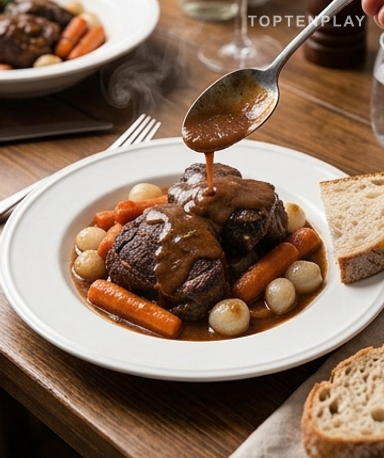
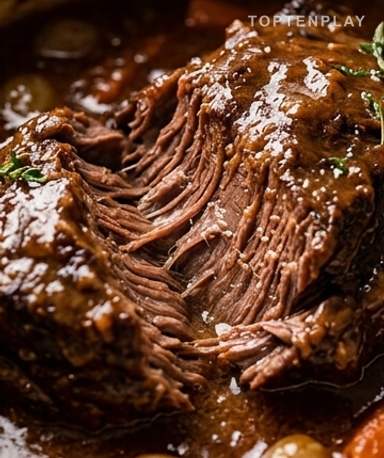
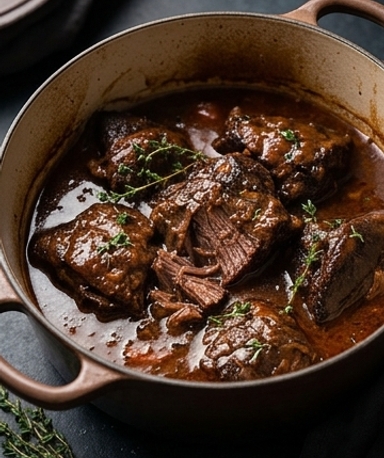
The sauce is a deep mahogany brown, almost glazed. The cheeks have slightly plumped up under the slow heat, their glistening surface revealing a texture that the eye already senses is meltingly tender. Touch it with the tip of a fork: the meat yields without resistance, like tender gelatin. A discreet steam rises, carrying the scent of caramelized meat and reduced apple juice.
Why you’ll love this recipe
Ingredient Notes
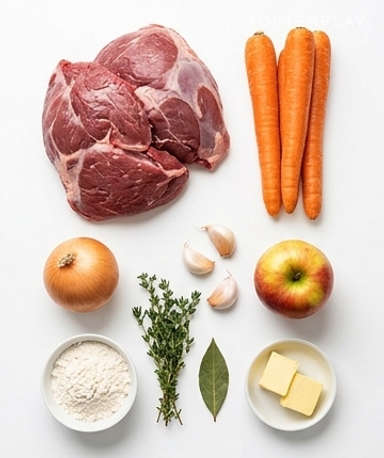
All the ingredients gathered before starting: the beef cheek and its aromatics.
- Beef cheeks : The star cut. The cheek is a highly used muscle, so it’s full of collagen — which gives it that candied texture after long cooking. Allow 200 to 250 g per person. If your butcher doesn’t have them in the window, order 48 hours in advance.
- Unsweetened apple juice : This replaces traditional cider and brings the same fruity lightness, with a subtle acidity that cuts through the richness of the meat. Use cloudy juice, artisanal style if possible. Avoid overly sweet versions — they unbalance the sauce.
- Carrots : Two large carrots cut into thick slices. If too thin, they disappear completely. Too many, and they overpower the meat’s flavor. Two is perfect.
- Bouquet garni : Thyme and bay leaf are the base. Go for the real thing if you can — a few fresh sprigs tied together. Dried thyme works in a pinch, but the result isn’t the same.
- Flour : One tablespoon, cooked for a few seconds with the vegetables. It binds the sauce naturally during simmering. Without it, you end up with a shiny but too thin broth.
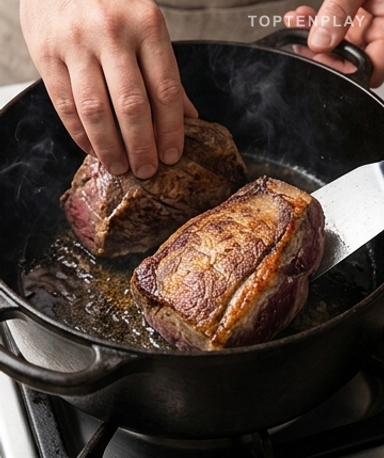
The sear — really important
Heat the pot over high heat until the butter is nut-brown and slightly smoking. Place the cheeks in. The sound should be sharp, a loud and immediate sizzle — if it barely hisses, your heat is too low and you’re boiling instead of searing. Two to three minutes per side, without touching. The crust that forms should be a golden brown like light caramel. This reaction gives the sauce its depth. Once well-colored, remove the cheeks and set them aside on a plate.
The base that makes the sauce
In the same pot, without cleaning it, sauté the sliced onion, carrots, and minced garlic. The caramelized bits stuck to the bottom will gradually release and flavor the vegetables — don’t lose them. Five to seven minutes over medium heat. The onion should become translucent with some slightly browned edges. Add the flour, stir for one minute. The smell shifts from ‘sweated vegetables’ to something more toasted and complex. That’s a good sign.
Pour, cover, disappear
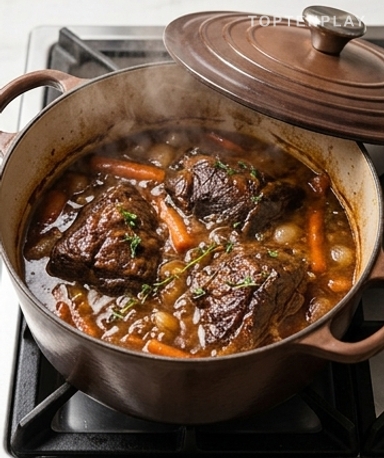
Return the cheeks to the pot. Pour in the apple juice while scraping the bottom well with a wooden spoon — this gesture recovers all those caramelized juices where the flavor is concentrated. Add the bouquet garni. If you have an apple lying around, chop it up and throw it in — it melts into the sauce and adds a discreet roundness. The liquid should come halfway up the cheeks, not drown them. Cover. Very low heat, two and a half hours minimum.
The test that doesn’t lie
After two and a half hours, poke the meat with the tip of a knife. It should glide in like soft butter, without any resistance. If it still catches, lid back on and twenty more minutes. Every cheek is different depending on the animal, its age, and thickness. Don’t watch the clock. Watch the meat.
The sauce, the final touch
Remove the lid and evaluate the sauce. Too thin? A few minutes over medium heat uncovered — it will concentrate, thicken, and become glossy. Remove the bouquet garni. Taste and adjust the salt. Let it rest for ten minutes before serving: the juices redistribute in the meat, the sauce cools slightly, and everything settles together. This rest matters.
Tips & Tricks
- Prepare this dish the day before if possible — gently reheated the next day, the sauce is denser, the meat even more succulent, and you have zero stress on the day.
- If your sauce seems bland at the end, check the salt before adding anything else — it’s almost always the salt.
- Button mushrooms added halfway through cooking absorb the sauce and become incredibly flavorful. A great way to enrich the dish without changing its soul.
- Serve with a generously buttered mash or wide tagliatelle — you need something capable of carrying the sauce, not just accompanying it.
Can I prepare beef cheeks in advance?
Yes, it is even recommended. Prepared the day before, the flavors develop more and the sauce thickens naturally. Store in the refrigerator in the pot, reheat gently over very low heat the next day, adding a splash of water if necessary.
Can I cook beef cheeks in a pressure cooker?
Yes, a pressure cooker reduces the time to about 45 minutes under pressure. The result is slightly different — the texture is a bit less ‘confit’ than with traditional long cooking, but it remains very good for when time is short.
How do I know if the cheeks are truly cooked?
Insert the tip of a knife into the flesh: it must enter without any resistance, like soft butter. If it still catches slightly, continue for another 20 minutes. Don’t trust the clock alone — every piece is different.
Can I freeze this dish?
Absolutely, it freezes very well. Portion the meat with its sauce in airtight containers and freeze for up to 3 months. Thaw in the refrigerator overnight, then reheat gently while stirring regularly.
What if I can’t find beef cheeks at the butcher?
Order them 48 hours in advance — most butchers can get them easily. As a substitute, chuck roast or blade steak work well for this type of slow cooking, though the texture will be slightly different.
What should I serve with slow-cooked beef cheeks?
A generously buttered potato mash is the classic side — it absorbs the sauce perfectly. Wide tagliatelle also work very well. Avoid rice, which doesn’t hold the sauce as well.
Melt-in-your-mouth slow-cooked beef cheeks
French
Main course
A generous slow-cooked dish where beef cheek becomes incredibly tender after three hours of gentle cooking. A sauce flavored with apple juice, carrot, and bouquet garni that almost makes itself.
Ingredients
- 900g beef cheeks (approximately 200-225g per person)
- 500ml unsweetened apple juice (preferably cloudy, artisanal style)
- 1 yellow onion, sliced
- 2 carrots, cut into thick slices
- 2 garlic cloves, minced
- 1 tbsp flour (approx. 15g)
- 1 tbsp neutral oil (sunflower or grapeseed)
- 20g butter
- 1 bouquet garni (thyme, bay leaf, parsley stalks)
- 1 apple, chopped (optional)
- 100g button mushrooms, sliced (optional)
- Salt and freshly ground black pepper
Instructions
- 1Season the beef cheeks generously with salt and pepper on all sides.
- 2Heat the oil and butter in a large pot over high heat until the butter is slightly smoking.
- 3Sear the cheeks for 2 to 3 minutes per side until a golden-brown crust like light caramel forms. Set aside on a plate.
- 4In the same pot, sauté the onion, carrots, and garlic over medium heat for 5 to 7 minutes, scraping the juices from the bottom.
- 5Add the flour, stir for 1 minute. Add the mushrooms at this stage if using.
- 6Return the cheeks to the pot. Pour in the apple juice, scraping the bottom well with a wooden spoon.
- 7Add the bouquet garni and apple pieces if using. The liquid should reach halfway up the meat.
- 8Cover and simmer over very low heat for 2h30 to 3h, or in the oven at 160°C.
- 9Check doneness: a knife should sink in without resistance. Continue for 20 minutes if necessary.
- 10Remove the lid, let the sauce reduce for a few minutes over low heat if it is too thin.
- 11Remove the bouquet garni, taste, and adjust seasoning. Let rest for 10 minutes before serving.
Notes
• Ideally prepare the day before: the flavors develop more after a night in the fridge, and the sauce thickens naturally.
• Storage: 3 days in the refrigerator in a closed container, or 3 months in the freezer with the sauce.
• For an even richer sauce, add 1 tablespoon of tomato paste at the same time as the flour.
Nutrition Facts (per serving, estimated)
| 410 kcalCalories | 42gProtein | 16gCarbs | 19gFat |