📌 Maple Glazed Salmon and Cranberry-Pineapple Relish
Posted 7 April 2026 by: Admin
This is the kind of dish you prepare on a Friday evening in December, when the desire to make something refined finally wins over the week’s fatigue. Twenty minutes of cooking. A glaze that smells of warm maple syrup as soon as it hits the oven. And this cranberry-pineapple relish that tastes unlike anything you’ve had before but radically transforms the plate.
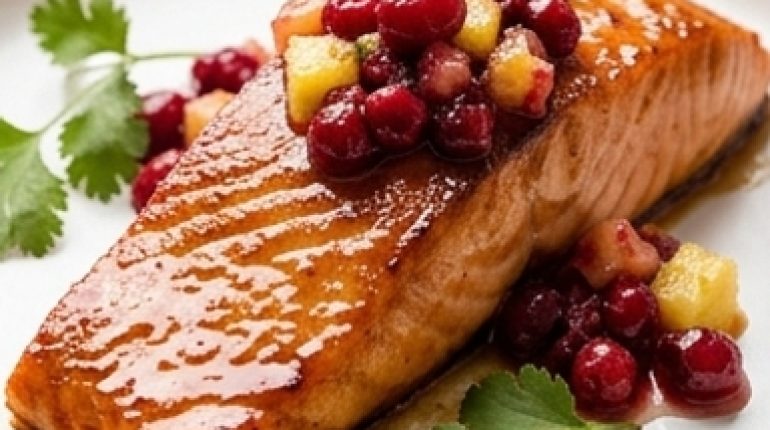
The salmon emerges from the oven with a brilliant mahogany hue — somewhere between light caramel and dark red lacquer, depending on the thickness of the glaze. The surface is slightly sticky under the spatula, taut like a varnish. Beside it, the garnet relish pops with pale yellow flecks, and the sweet-tart scent of cranberries cooked in orange juice still lingers in the kitchen. When the fork enters the flesh, it separates into large pink flakes without any resistance.
Why you’ll love this recipe
Ingredient Notes
All ingredients gathered for this festive dish: fresh salmon, maple syrup, cranberries, and pineapple.
- Maple Syrup : Quality really changes the result here. An amber-grade syrup (called ‘Grade B’ in some countries) is bolder, with woody caramel notes that hold up better during cooking. Very light versions tend to become bland once reduced. Avoid flavored table syrups — it’s just colored glucose; it won’t behave the same way in the glaze.
- Dijon Mustard : Its role is to cut the sweetness of the syrup and provide structure. Without it, the glaze slides right off the fish. Use a strong mustard — not a mild or grainy version. Grainy mustard changes the glaze’s texture, and mild barely does the job.
- Cranberries : Fresh or frozen, both work. Fresh ones yield a slightly firmer relish. Frozen ones release more juice when cooking and thicken the sauce faster. Outside of October-December, go straight for frozen — they are often better than imported out-of-season fresh ones.
- Soy Sauce : The discreet ingredient that provides all the depth. It brings the umami that would be missing if you only used syrup and mustard. One tablespoon. No more — otherwise the salmon tastes like a wok dish instead of maple glaze.
Start with the relish, not the salmon
Most people rush to the salmon. Big mistake. The relish needs 10 minutes on the heat and a bit of time to cool down — always start with it. In the saucepan, the cranberries burst with a small dry pop, then release their bright red juice which mixes with the orange juice and honey. The smell is immediately tart and sweet, almost like jam setting. Remove from heat, let cool. The diced pineapple keeps some of its crunchy freshness as long as it’s added off the heat. Fresh cilantro goes in at the very end — not before, or it will cook and lose its vibrancy.
The glaze: the only moment where proportions really matter
Mixing the maple syrup, Dijon, soy sauce, and garlic powder takes 2 minutes. Whisk well — you’re looking for a smooth, slightly coating texture, not runny like water. If your syrup is very thin, the glaze will be too fine and run off onto the baking sheet. Brush the fillets generously, not skimping on the edges. That’s where caramelization will be most intense — heat concentrates sugar faster on the sides than on the flat surface.
Cooking: the only time you really need to watch
190°C, 12 to 15 minutes depending on the thickness of the fillets. Halfway through, take out the tray and apply a second layer of glaze. This second pass is what gives that deep lacquered look, with slightly charred edges like a piece of sugar starting to turn. The salmon is ready when the fork enters without resistance and the flesh starts to fall apart on its own. It should stay pink at the center — not dark orange, not opaque through the entire thickness. If you wait until it’s fully cooked, it’s too late: you’ll have a dry fillet.
Plating that makes a difference without effort
One fillet per plate. The relish goes directly on top or on the side — on top, it melts slightly on the hot fish and creates a mix of temperatures that makes every bite more interesting. On the side, it stays neat, visually contrasting, and cleaner at the table. This hot-lukewarm interplay in the same forkful — hot lacquered salmon, barely cooled relish — is what sets this dish apart from simple fish in sauce. Serve immediately.
Tips & Tricks
- Do not overcook the salmon — it’s the most common mistake with this dish. The flesh must remain pink at the center. If a fork enters without resistance, it’s ready, regardless of what your eyes tell you.
- Double the relish recipe and keep the rest in the fridge. It lasts 4 days and goes as well with grilled chicken as it does over fresh cream cheese.
- If your cranberries are particularly tart — this varies by batch and season — add an extra half-spoon of honey at the very end of cooking the relish rather than at the start. You’ll have better control over the result.
Can I use frozen cranberries instead of fresh?
Yes, both work very well. Frozen cranberries release more juice during cooking, which thickens the sauce a bit faster. Outside of the season (October-December), frozen are often the best choice without compromising on taste.
Can I prepare the relish in advance?
Absolutely, and it’s even recommended. The relish keeps for up to 4 days in the refrigerator in an airtight container. The flavors develop better after a few hours of resting — prepare it the day before for a stress-free dinner.
How do I know if the salmon is perfectly cooked without drying it out?
Insert a fork into the thickest part of the fillet: if it enters without resistance and the flesh starts to flake, it’s ready. The flesh should stay pink in the center, not opaque orange all the way through — that’s a sign of overcooking.
Can I replace the maple syrup with honey?
Yes, honey works as a substitute in equal amounts. The glaze will be slightly less bold and more floral, with slightly faster caramelization. Watch the cooking one or two minutes earlier in this case.
What side dishes go well with this dish?
Basmati or jasmine rice absorb the glaze that runs onto the plate very well. Sweet potato mash also works well, with a sweetness that complements the tartness of the relish. For a lighter meal, a green salad with a lemony vinaigrette is more than enough.
How to store and reheat leftovers?
The cooked salmon keeps for 1 day in the refrigerator, but it’s truly best on the day — when reheated, it often becomes dry. For the relish, reheat gently for 2 to 3 minutes over low heat, adding a splash of orange juice if the sauce thickened too much in the cold.
Maple Glazed Salmon and Cranberry-Pineapple Relish
North American Fusion
Main Course
Salmon fillets coated in a sweet and savory maple syrup and Dijon mustard glaze, served with a fruity, slightly tart cranberry-pineapple relish. A festive dish ready in 35 minutes.
Ingredients
- 4 fillets (approx. 150g each) salmon
- 60ml (¼ cup) maple syrup
- 30g (2 tbsp) Dijon mustard
- 15ml (1 tbsp) soy sauce
- 1 tsp garlic powder
- salt and pepper to taste
- 100g (1 cup) fresh or frozen cranberries
- 80g (½ cup) fresh pineapple, finely diced
- 60ml (¼ cup) orange juice
- 20g (1 tbsp) honey
- ¼ tsp ground cinnamon
- 1 tbsp fresh cilantro, chopped
- 1 pinch salt
Instructions
- 1Preheat oven to 190°C and line a baking sheet with parchment paper.
- 2In a saucepan over medium heat, combine cranberries, pineapple, orange juice, honey, cinnamon, and a pinch of salt. Cook for 8 to 10 minutes until cranberries burst and the sauce thickens slightly.
- 3Remove the relish from heat, let cool slightly, then stir in the fresh chopped cilantro.
- 4In a bowl, whisk together maple syrup, Dijon mustard, soy sauce, garlic powder, salt, and pepper until smooth.
- 5Place salmon fillets on the tray and brush generously with half of the glaze.
- 6Bake for 12 to 15 minutes depending on thickness. Halfway through, apply a second layer of glaze to the fillets.
- 7Check for doneness: the fork should enter without resistance and the flesh should stay pink at the center. Serve immediately with the relish.
Notes
• Make ahead: the relish can be prepared up to 24 hours in advance and stored in the refrigerator. Reheat for 2 to 3 minutes over low heat before serving.
• For a more pronounced caramelized effect, place the fillets under the broiler for 2 minutes at the very end of cooking — watch closely.
• The relish keeps for 4 days in the fridge and also goes very well with grilled chicken or on cream cheese crackers.
Nutrition Facts (per serving, estimated)
| 370 kcalCalories | 30gProtein | 20gCarbs | 17gFat |