This is the dish you pull out on a Saturday night when you want people to remember dinner. No complicated techniques, no special equipment. Just fresh langoustines, a bisque made from what you would have thrown away anyway, and burrata that melts on its own over the hot pasta.
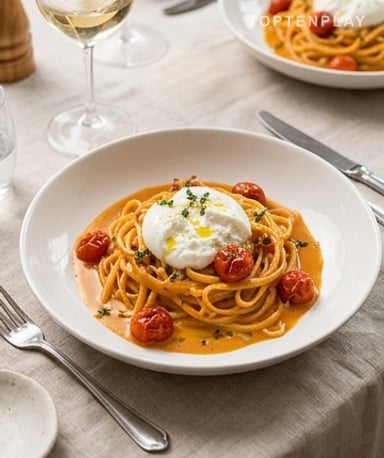
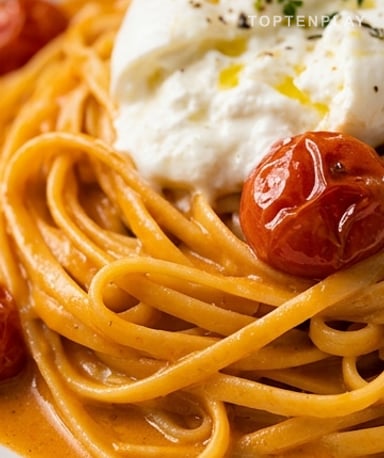
On the plate, the linguine are coated in a deep orange sauce, almost coppery, with bright reflections where the olive oil surfaces. The confit cherry tomatoes have this glossy look, half-caramelized, half-melting. In the center, the burrata has slightly collapsed under the heat of the pasta, releasing a milky white cream that mingles with the bisque in ivory streaks. It smells of the sea, iodized and rich, with a thread of lemon zest that cuts through.
Why you’ll love this recipe
Ingredient Notes
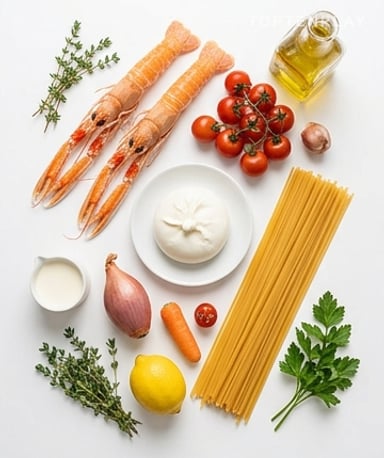
Fresh langoustines, creamy burrata, confit cherry tomatoes, and aromatic herbs: the ingredients for a pasta dish that truly stands out.
- Langoustines : Take them whole and unpeeled — this is non-negotiable. The shells and heads are where all the flavor hides for the bisque. They should smell like clean sea, not fish. If they smell strong, move on.
- Burrata : A fresh burrata from the fridge, not an old one that’s been lying around for five days. Never reheat it: it melts passively upon contact with the heat of the pasta. Cut it roughly, almost by hand, to keep irregular pieces that melt at different rates — much prettier on the plate.
- Confit cherry tomatoes : Homemade if you have time, store-bought otherwise. Choose those preserved in olive oil rather than in brine — they have more character and integrate better into the sauce.
- Fish stock : It serves as the deglazing liquid instead of the traditional cognac. A concentrated fish stock from the store — cubes or sachets — works perfectly. Dilute it slightly in some hot water before pouring over the shells so as not to stop their cooking abruptly.
- Linguine : Not spaghetti, not tagliatelle. The flat section of linguine catches the creamy bisque just right. Cooked al dente in water, they finish cooking in the sauce — that’s where they absorb all the flavor.
Don’t throw away the shells
The bisque starts here. Separate the heads from the bodies by hand — it cracks slightly, that’s normal — and remove the eyes with a flick of the thumb. Heat a drizzle of oil in a saucepan until it shimmers, then throw in the shells and heads. The contact produces a brief, sharp sizzle that tells you the temperature is right. Crush the heads with a ladle without mercy: that’s where the orange coral matter comes out that will color and perfume the entire bisque. Add the roughly chopped carrot and shallot, thyme, parsley, then deglaze with your diluted fish stock. Let reduce over low heat for about twenty minutes, strain carefully, then reduce again for another five minutes. The bisque should lightly coat the back of a spoon — neither liquid nor thick. Finish with the heavy cream off the heat.
Chop the langoustines just before, not earlier
Raw tartare is delicate. Cleanly peel the tails and chop them with a knife — irregular pieces about one centimeter, not a puree. The flesh is firm, slightly translucent, with that white-pink color that turns gray if you take too long. Season immediately: olive oil, salt, pepper, grated lemon zest. The zest is important — its citrusy perfume cuts through the richness of the bisque and keeps the tartare lively. Cover with plastic wrap placed directly on the flesh and refrigerate until the last moment.
The pasta finishes in the bisque, not on the plate
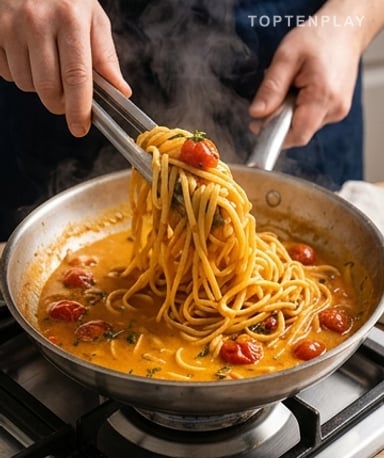
Cook the linguine in a large amount of heavily salted water — the water should really taste like the sea. Stop cooking two minutes before the time indicated on the package. Reserve a ladle of pasta water before draining, it’s your lifeline. Pour the pasta directly into the hot bisque over medium heat and mix vigorously for two minutes: the linguine absorb the sauce, the sauce clings to the linguine, everything amalgamates into a shiny, creamy thing. If it thickens too much, a few spoons of pasta water are enough to fix it. Off the heat, add the confit tomatoes and a drizzle of raw olive oil.
Place the tartare at the last second
Arrange the linguine in a nest in warm shallow bowls, then immediately top with the langoustine tartare. The heat of the pasta warms it slightly without cooking it — that’s exactly what we’re aiming for. Distribute the burrata in irregular pieces around and on top of the tartare. It begins to melt upon contact with the steam, its edges soften and let flow a pure white cream that mingles with the orange bisque in small rivulets. A sprig of fresh thyme on top. A few drops of olive oil. It’s done.
Tips & Tricks
- Make the bisque the day before if you’re entertaining: it keeps for 48 hours in the fridge and reheats in five minutes over low heat. On the day, you’ll be relaxed and it will show on the plate.
- Don’t season the tartare too early. Salt starts to ‘cook’ the raw langoustine flesh as for ceviche, and in twenty minutes the texture changes completely. Season at the last moment, just before plating.
- If you want an even more concentrated bisque, blend the shells after straining and press them through a fine sieve again — you recover a last layer of flavor. It takes five minutes more and really changes the result.
Can the bisque be prepared in advance?
Yes, and it’s even recommended. The bisque keeps for up to 48 hours in the refrigerator in a sealed container. On the day, reheat it over low heat while stirring before finishing the pasta in it — it will only be more concentrated.
Can langoustines be replaced with something else?
Absolutely. Raw prawn tails or king prawns work very well as tartare. For the bisque, use their shells the same way — the principle is identical, the flavor slightly different but still excellent.
Can frozen langoustines be used?
Yes, provided they are thawed slowly in the refrigerator the day before, never at room temperature or under hot water. The texture of the tartare will be a bit less firm than with fresh langoustines, but the result remains very good.
How to know if the bisque has reduced enough?
Dip the back of a spoon into the bisque and run your finger over it: the trace should remain clean without the liquid covering it. Too liquid, it won’t cling to the pasta. Too thick, it will weigh them down — in that case, thin it out with a bit of linguine cooking water.
Can the langoustines be cooked instead of served raw?
Absolutely. Pan-fry the peeled tails for 1 minute per side in a drizzle of very hot oil — they should remain pearly in the center. Place them on the pasta just before serving instead of the tartare. It’s a more accessible version if raw food is an issue.
How to store leftovers?
The raw tartare does not keep — it must be consumed within the day. The bisque and sautéed pasta (without tartare or burrata) keep for 24 hours in the refrigerator and reheat in a pan with a splash of water. Add fresh burrata only at serving time.
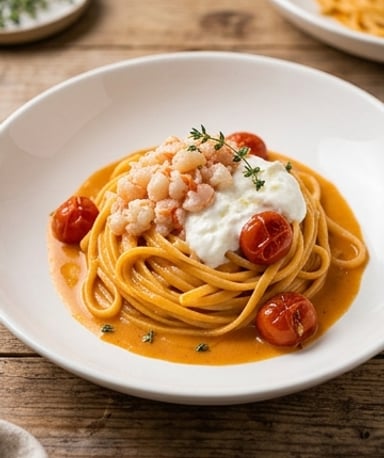
Linguine with Langoustines, Melting Burrata, and Confit Cherry Tomatoes
Italian
Main course
Linguine coated in an intense homemade bisque, topped with raw langoustine tartare and burrata that gently melts over the hot pasta. A dish that impresses without requiring special technique.
Ingredients
- 320g linguine
- 9 whole unpeeled langoustines (about 380g)
- 150g fresh burrata
- 180g confit cherry tomatoes (jar, in olive oil)
- ½ zest of an unwaxed lemon
- 3 tablespoons extra virgin olive oil
- salt and pepper
- —— For the bisque
- 50g carrot (about ½ carrot)
- 1 shallot
- 2 sprigs of fresh thyme
- ½ bunch flat-leaf parsley
- 1L water
- 50ml concentrated fish stock diluted (cube or sachet)
- 100ml heavy cream
- 2 tablespoons extra virgin olive oil
Instructions
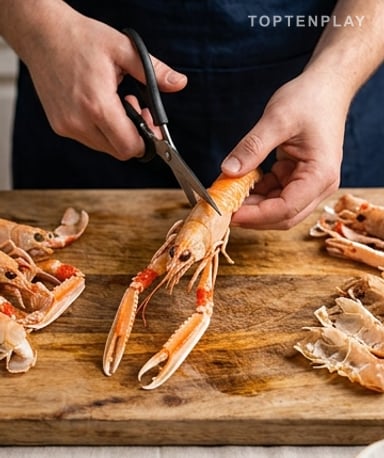
- 1Separate the heads from the tails of the langoustines by hand. Remove the eyes. Cut the shells along the belly with scissors and extract the meat. Reserve the meat in the fridge, keep all shells and heads.
- 2In a saucepan, heat 2 tablespoons of olive oil. Sauté the roughly chopped shallot and carrot with the thyme until lightly colored.
- 3Add the langoustine shells and heads. Roast for 3-4 minutes, crushing the heads with a ladle to extract the orange matter.
- 4Add the parsley, pour in the diluted fish stock and water. Bring to a simmer and let reduce by half over low heat (about 20 minutes).
- 5Strain the bisque through a fine sieve, pressing the shells well. Return the liquid to the saucepan and reduce for another 5 minutes. Add the heavy cream, adjust seasoning, and keep warm.
- 6Chop the langoustine meat with a knife into pieces about 1 cm. Season with a drizzle of olive oil, salt, pepper, and lemon zest. Cover with plastic wrap directly on the meat and refrigerate.
- 7Cook the linguine in a large amount of heavily salted boiling water. Reserve a ladle of pasta water before draining, 2 minutes before the indicated cooking time.
- 8Pour the drained linguine into the hot bisque in a pan over medium heat. Toss for 2 minutes. Adjust consistency with pasta water if necessary. Off the heat, add the confit tomatoes and a drizzle of olive oil.
- 9Arrange the linguine in a nest in warm shallow bowls. Top with the langoustine tartare, then distribute the burrata in irregular pieces. Garnish with a sprig of thyme and serve immediately.
Notes
• The bisque can be prepared up to 48 hours in advance and stored in the refrigerator. Reheat over low heat while stirring before finishing the pasta in it.
• Do not season the langoustine tartare more than 15 minutes in advance: salt changes the texture of the raw flesh as in ceviche.
• Pasta cooking water is essential to adjust the consistency of the sauce in the pan — never discard it before plating.
Nutrition Facts (per serving, estimated)
| 645 kcalCalories | 28gProtein | 60gCarbs | 34gFat |