📌 Lime Pound Cake

Posted 19 April 2026 by: Admin #Recipes

Prep Time
20 minutes
Cook Time
65 minutes
Total Time
85 minutes
Servings
10 servings

The lime zest rubbed against the grater—you smell it immediately. A sharp, slightly bitter scent that takes over the entire kitchen in seconds. This pound cake is exactly that promise: simple, direct, and frankly effective.
Advertisement:
Final result
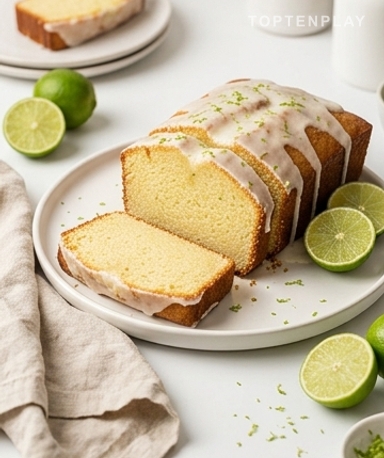
The sliced lime pound cake, with its pearly white glaze and fresh lime zest—hard not to go back for seconds.

In front of you, a thick slice of creamy beige, speckled with tiny green dots. The white glaze has set on the crust, golden like a light caramel, and drips slightly down the irregular edges. The crumb is dense—not compact in a heavy way, rather tight and moist, the kind that resists for a fraction of a second under the fork before yielding. It still smells of warm butter and citrus, even when cooled.

Why you’ll love this recipe

One bowl is enough : No stand mixer, no three different mixing bowls. A whisk, a bowl, your oven. The recipe fits in a single line of washing up.
Lime is not interchangeable : This isn’t just a lemon cake. Lime brings a slightly tart and floral freshness that yellow lemons lack—it truly changes the balance of the cake.
It’s better the next day : Like all dense cakes, the aromas concentrate over 24 hours. The crumb settles, and the lime fragrance settles everywhere. Make it the day before if you can.
The cream cheese makes the difference : That creamy and slightly acidic texture in the crumb? That’s the cream cheese. It replaces part of the butter and gives the cake that specific density that distinguishes it from a simple pound cake.

Ingredient Notes

Ingredients

Advertisement:

All the ingredients gathered: butter, eggs, sugar, cream cheese, and some very juicy limes—that’s all it takes.

  • Softened butter : Truly soft: your finger should sink in without resistance. If you forgot to take it out of the fridge, a few 10-second pulses in the microwave will do. Cold butter will cause your batter to curdle—you’ll see it and feel it under the whisk.
  • Cream cheese : Philadelphia is the most common and works perfectly. No low-fat versions here—the fat is what provides the texture. Take it out of the fridge in advance too; it must be at room temperature before going into the batter.
  • Limes : You’ll need 4 to 5 depending on their size. Choose firm limes with shiny skin—soft ones give little zest and bitter juice. Key Limes are smaller and more fragrant if you can find them. Otherwise, classic Persian/Tahiti limes work great.
  • Icing sugar (for the glaze) : It dissolves in the lime juice without heat—that’s the advantage of icing sugar. Sift it first if you want a smooth glaze. The ideal consistency: it should drip slowly from the tip of the spoon, neither too liquid nor pasty.

Starting the batter

Begin with the butter and cream cheese together in the bowl. Whisk until the mixture becomes pale and airy—this takes 3 to 4 minutes by hand, moving from a yellowish beige to something almost white. Add the sugar gradually, not all at once. Then the eggs, one by one. This is where the zest comes in: all of it, without restraint. This step perfumes the batter deeply, much more than the juice alone would. The kitchen is already starting to smell amazing.

Starting the batter
The key moment: incorporating the lime zest directly into the batter so that every bite is fragrant.

The flour—and above all, don’t overmix

The flour is folded in last, and this is where many ruin their cake. Over-mixing after adding the flour develops gluten, making the cake elastic, almost rubbery. Ten folds with a spatula, maximum. The batter should be homogeneous, but stop as soon as there are no white streaks left. Add the lime juice at this stage—a few tablespoons are enough, not half the fruit’s volume.

Advertisement:

In the tin, and now patience

Butter and flour the cake tin—or use parchment paper if you prefer. Pour in the batter: it’s thick, almost sticky, and barely flows. Smooth the top with a slightly damp spatula. Bake at 160°C fan; this low and slow temperature (60 to 70 minutes) creates that fine golden crust like light caramel without drying out the inside. The toothpick test: it should come out with a few moist crumbs, not clean. Clean means overbaked.

The glaze, while it cools

Take the cake out and leave it in the tin for 15 minutes before unmoulding. On a rack, while it’s still lukewarm—not hot, lukewarm—drizzle the lime glaze over it. At this temperature, the cake absorbs some of the glaze, perfuming the crust from the inside. The rest sets as it cools, forming a thin translucent layer that cracks under the teeth. Wait another 30 minutes before slicing.

The glaze, while it cools
The cake at the end of baking, the golden crust forming and the lime scent filling the kitchen.

Tips & Tricks
  • Add a pinch of salt to the batter even if your recipe doesn’t mention it—it enhances the lime and balances the sugar. Half a teaspoon is enough.
  • If the top browns too quickly and the center isn’t cooked yet, place a piece of aluminum foil over it without pressing down. This slows the browning without trapping steam.
  • For a more intense fragrance: infuse the zest in the melted (lukewarm) butter for 10 minutes before starting. The difference is clear, especially the next day.
Close-up
The dense and moist crumb of the cake, the glaze dripping down the crust—the texture of a successful pound cake.
FAQs
Advertisement:

Can I replace the cream cheese with something else?

Yes, with mascarpone in equal quantities—the texture remains dense and creamy. Ricotta also works but makes the crumb slightly drier. Avoid Greek yogurt or fromage blanc; they are too liquid for this recipe.

How do I know if the cake is fully cooked?

Advertisement:

The toothpick test is the most reliable: it should come out with a few moist crumbs attached, never clean. A clean blade means the cake is over-baked and the crumb will dry out as it cools.

Can I use yellow lemons instead of limes?

Yes, but it won’t be quite the same. Lime has a floral and slightly bitter note that yellow lemons lack. The cake will be good, but less distinctive. If you mix both zests, you’ll get closer.

Advertisement:

How long does this cake keep?

3 to 4 days at room temperature under a cake dome or cling film. In the refrigerator, up to a week—take it out 30 minutes before serving to restore the texture. It freezes very well without the glaze.

My glaze is too liquid, how can I fix it?

Advertisement:

Add sifted icing sugar, one tablespoon at a time, mixing in between. Conversely, if it’s too thick, a few drops of lime juice are enough. The right consistency: it should flow slowly from the spoon in a ribbon.

Can I prepare this cake the day before?

It’s actually recommended. The lime aromas concentrate over 24 hours and the crumb becomes even more tender. Store it without glaze under cling film, and glaze it the morning of serving.

Advertisement:
Lime Pound Cake

Lime Pound Cake

Easy
American
Dessert
Prep Time
20 minutes
Cook Time
65 minutes
Total Time
85 minutes
Servings
10 servings

A dense and moist cake with an intense lime fragrance, topped with a tangy glaze. One recipe, one bowl, and a result that delivers on its promises.

Ingredients

  • 225g unsalted butter, at room temperature
  • 225g cream cheese (Philadelphia type), at room temperature
  • 300g granulated sugar
  • 4 whole eggs
  • 300g all-purpose flour, sifted
  • 1 tsp baking powder
  • ½ tsp fine salt
  • 5 limes (zest of 5 + juice of 3)
  • 1 tsp vanilla extract
  • 150g icing sugar (for the glaze)
  • 3 tbsp fresh lime juice (for the glaze)

Instructions

  1. 1Preheat the oven to 160°C (fan). Butter and flour a 25cm loaf tin.
  2. 2Whisk the softened butter and cream cheese together for 3 to 4 minutes until the mixture is pale and airy.
  3. 3Incorporate the sugar in three stages, whisking well after each addition.
  4. 4Add the eggs one by one, whisking for 30 seconds between each egg.
  5. 5Add the zest of the 5 limes, the juice of 3 limes, and the vanilla extract. Mix well.
  6. 6Add the sifted flour, baking powder, and salt. Fold in with maximum 10 spatula strokes—stop as soon as the flour disappears.
  7. 7Pour the batter into the tin and smooth the top. Bake for 60 to 70 minutes.
  8. 8Check doneness with a toothpick (a few moist crumbs = perfect). Let cool for 15 minutes in the tin before unmoulding.
  9. 9Mix the sifted icing sugar with the lime juice to obtain a glaze that flows slowly. Pour over the still-lukewarm cake.
  10. 10Let cool completely on a rack (at least 30 minutes) before slicing.

Notes

• Even better the next day: flavors develop over 24 hours. Prepare it the day before without glaze, wrap in cling film, and glaze in the morning.

Advertisement:

• Storage: 3-4 days under a dome at room temperature, or 1 week in the fridge well wrapped. Freezes very well (without glaze).

• For a more intense scent, infuse the lime zest in the lukewarm melted butter for 10 minutes before starting the batter.

Nutrition Facts (per serving, estimated)

545 kcalCalories 7gProtein 67gCarbs 28gFat

Advertisement:
Share it!

Thanks for your SHARES!

You might like this

Add a comment:

Latest posts

Mini Croissants Filled with Chicken Salad

Crispy Homemade Brats

Homemade Orange Kefir

Sautéed Red Onions in Olive Oil

Crispy Cornmeal Catfish

Potato Gratin with Beef Meatballs and Mozzarella

Frozen Ravioli Lasagna

Anti-inflammatory Onion Soup with Mushrooms and Gratinéed Croissant

Cream Cheese Mexican Pinwheels

Potluck-Style Layered Salad

Loading...