Light tuna bake — two words that usually raise eyebrows. You might think of a bland diet, an uninspired Monday night, or a tin opened out of desperation. It’s exactly the opposite: it’s one of the most comforting everyday gratins, the kind you make every two weeks without ever getting tired of it.
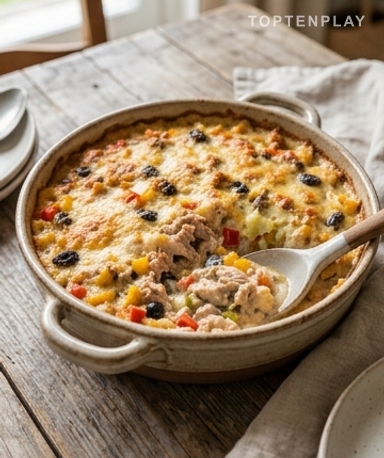
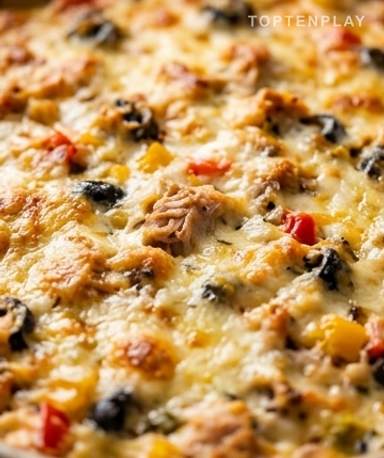
The surface comes out of the oven with a light caramel-colored Gruyère crust, streaked with amber brown in places, slightly blistered. Underneath, the filling is set but still wobbling in the center — like a quiche, but airier. The smell filling the kitchen mixes melted cheese, the warmth of the fish, and that sweet undertone of peppers that have released their moisture in the pan. You almost burn yourself wanting to serve it too quickly.
Why you’ll love this recipe
Ingredient Notes
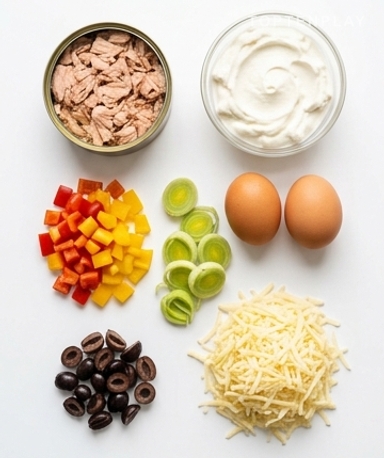
All the ingredients for the light gratin: canned tuna, 0% fromage blanc, fresh eggs, colorful peppers, leek, black olives, and grated Gruyère.
- Canned tuna in water : Always in water, not in oil. Tuna in oil will release fat into the mixture and unbalance the texture. Two 150 g drained cans are more practical than looking for a single 300 g format. Flake it with a fork — coarsely, not into a mush — so you still find pieces to bite into.
- 0% Fat Fromage Blanc : This is what replaces cream and heavy béchamel sauces. The 0% version gives a melting texture very close to crème fraîche once cooked, without any yogurt taste. Avoid ‘faisselle’ (curd cheese), which is too liquid. Take the classic pot version and beat it well with the eggs before incorporating the rest.
- Bell Peppers : Red, yellow, orange — any color works, but avoid green which stays bitter after cooking. The key is to sauté them beforehand: raw in the gratin, they will release too much water and soak the whole mixture. Three to five minutes in a hot pan, and the problem is solved.
- Black Olives : They provide texture and a briny note that contrasts with the sweetness of the rest. Choose pitted marinated olives rather than basic brine ones if you want a bolder taste. Cut them coarsely — into two or three pieces — so they are present without dominating.
- Grated Gruyère : 60 g is the right amount to get a real gratin crust without drowning the rest. Avoid industrial pre-grated Emmental which burns quickly and melts poorly. A hand-grated Gruyère AOP gives an evenly golden, laced surface.
Why I never make this gratin without fromage blanc anymore
For a long time, I made this kind of gratin with crème fraîche. The result was okay, but heavy — we’d finish the meal wondering if it was really a good idea. 0% Fromage blanc changes everything. Once beaten with the eggs, it creates a mixture that rises slightly during cooking, like a subtle soufflé. The final texture is creamy, almost airy, and it has no acidic taste once cooked — zero. The secret is to whisk the mixture well until it is completely smooth and slightly frothy. Thirty seconds is enough.
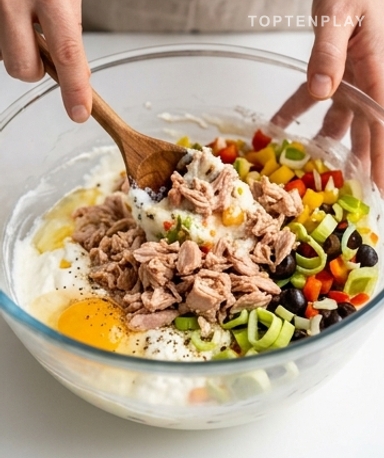
The part everyone fails: the vegetables
This is where most vegetable gratins fail. People throw raw vegetables into the mixture, put it in the oven, and end up with a watery bottom that ruins everything. The sliced leeks and diced peppers must spend five minutes in a hot pan before anything else. On medium-high heat, without fat or with just a drizzle of oil. You hear the hiss of the water evaporating — that’s exactly what we’re looking for. The peppers will lose their raw crunch and take on a more intense color. Let it cool for a few minutes before incorporating into the mixture, otherwise the eggs will start to coagulate too early.
The assembly: a bold mix, a well-filled dish
In a large bowl, everything eventually comes together: the warm vegetables, the flaked tuna, the chopped olives, and the fromage blanc-egg mixture. Mix with a spatula, slowly, so that everything is distributed without crushing the tuna chunks. The preparation should look like a thick, heterogeneous paste — not a smooth liquid, that’s normal. Pour into the lightly oiled dish without trying to flatten it; it levels itself during cooking. Spread the Gruyère by hand over the entire surface, right to the edges, to get a continuous crust.
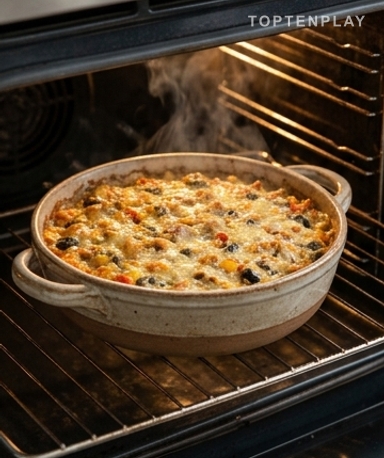
What the oven does to the gratin: what to watch for
At 180°C, the gratin works its magic quietly. The filling rises gently, the Gruyère melts, and then starts to take on that light caramel color we want. If after 35 minutes the top browns too quickly, cover with aluminum foil for the last ten minutes. To check if it’s done: a knife blade inserted in the center should come out almost dry, with just slight moisture. The filling should no longer jiggle when you gently shake the dish. Let it rest for five to ten minutes before cutting — the slices hold together better and you avoid burning yourself.
Tips & Tricks
- Don’t skip pan-searing the vegetables, even if you’re in a hurry — five quick minutes change everything about the final hold. Raw vegetables release their water in the oven and give you a soggy base.
- The dish can be prepared very well the day before: assemble everything, cover with plastic wrap, refrigerate, and bake directly the next day, adding five minutes of cooking time.
- If you want a more pronounced gratin finish, put the dish under the broiler for two to three minutes after normal cooking. Watch closely, it browns fast.
Can this gratin be prepared in advance?
Yes, and it’s even recommended. Prepare the whole mixture the day before, pour it into the dish, cover with plastic wrap, and refrigerate. The next day, bake directly, adding 5 minutes to the cooking time to compensate for the cold.
How to store and reheat leftovers?
The gratin keeps for 3 days in the refrigerator, covered. To reheat, 12 to 15 minutes in the oven at 160°C to get a texture close to the original. The microwave also works, but the top loses its gratin crispness.
Can tuna be replaced with another fish?
Absolutely. Canned salmon works very well and brings a more pronounced taste. Cooked and flaked cod is also a good option. Avoid very delicate fish that disappear during cooking.
Why does my gratin release too much water during cooking?
Almost always because the vegetables were not sautéed in the pan before being incorporated. Leeks and peppers contain a lot of water: without this pan step, they release it into the mixture during cooking. Five minutes on high heat before assembly fixes the problem.
Can fromage blanc be replaced with Greek yogurt or ricotta?
0% Greek yogurt is the best substitute — same texture, same behavior during cooking. Ricotta also works but brings a more pronounced slight milky taste. Avoid heavy thick cream if you want to keep the dish light.
Can this gratin be frozen?
Technically yes, but it’s not ideal. The texture of the fromage blanc and eggs changes slightly upon thawing — the mixture becomes a bit grainy. If you must freeze, do so in individual portions and thaw slowly in the refrigerator the day before.
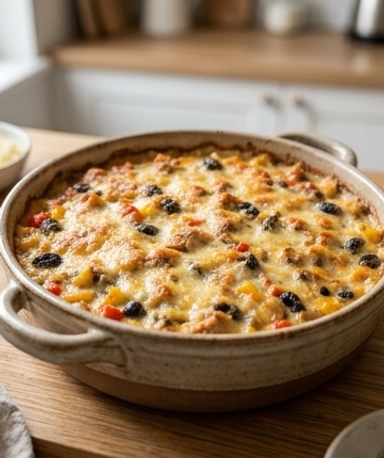
Light Tuna Gratin with Peppers and Olives
Mediterranean
Main Course
A melting, protein-rich gratin made with canned tuna, 0% fromage blanc, bell peppers, and black olives. Light, filling, and ready in an hour.
Ingredients
- 300g canned tuna in water, drained
- 250g 0% fromage blanc (tub version, not curdled cheese)
- 3 eggs
- 250g bell peppers (red or yellow), finely diced
- 130g leek (about 1 medium leek), finely sliced
- 70g pitted black olives, chopped
- 60g grated gruyère
- 1 tsp salt
- ½ tsp ground black pepper
Instructions
- 1Preheat the oven to 180°C. Wash and cut the peppers into regular small dice, finely slice the leek.
- 2Sauté the peppers and leek in a pan over medium-high heat, without fat or with a drizzle of oil, for 5 minutes. Salt and pepper lightly and let cool slightly.
- 3Drain the tuna and flake it coarsely with a fork in a large bowl. Add the chopped olives.
- 4In another bowl, whisk the eggs and fromage blanc until the mixture is smooth and slightly frothy. Season with salt and pepper.
- 5Add the warm vegetables to the bowl with the tuna, then pour in the liquid mixture. Mix gently with a spatula.
- 6Pour the preparation into a lightly oiled gratin dish. Evenly distribute the grated Gruyère over the entire surface up to the edges.
- 7Bake for 35 to 40 minutes, until the top is golden and the center is set. Let rest for 5 to 10 minutes before serving.
Notes
• Advance preparation: assemble the gratin the day before, cover and refrigerate. Bake the next day, adding 5 minutes to the cooking time.
• Storage: 3 days in the refrigerator. Reheat 12 to 15 minutes in the oven at 160°C to regain the gratin texture.
• Variation: replace black olives with rinsed capers for a tangier note, or add 1 tbsp of tomato paste to the mixture for a bolder version.
Nutrition Facts (per serving, estimated)
| 310 kcalCalories | 37gProtein | 9gCarbs | 12gFat |