You know that six-week window where asparagus invades the markets and disappears just as quickly? It’s now. And what if this year, instead of roasting them for the tenth time, you transformed them into a dish that looks like a carbonara — without a single gram of cream?
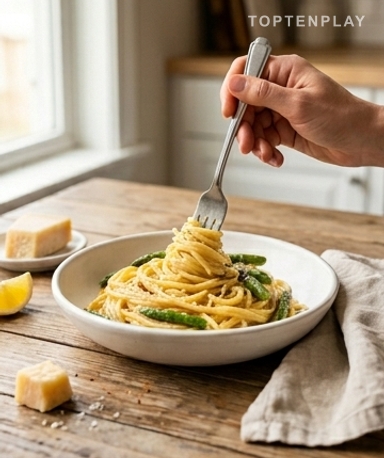
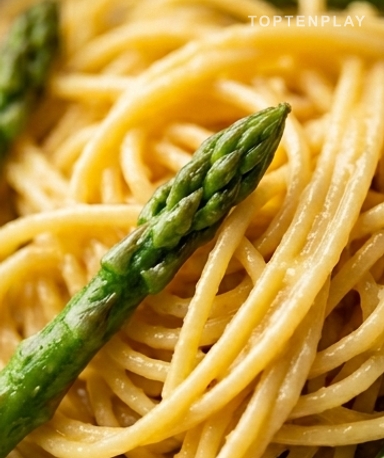
The spaghetti glimmers with a creamy, slightly amber glaze, as if coated in pale gold. The asparagus pieces are a vibrant electric green — firm to the bite, with that grassy and slightly bitter taste found only in May. The parmesan still melts in irregular filaments in the residual heat of the pasta. And the scent rising from the bowl is garlic, olive oil, and something vegetal and spring-like that you can’t really call anything else but: spring on a plate.
Why you’ll love this recipe
Ingredient Notes
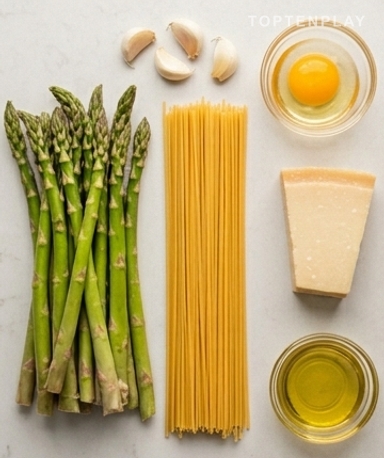
The ingredients for success: fresh asparagus, spaghetti, egg yolk, garlic, and a nice piece of Parmigiano-Reggiano.
- Asparagus : Choose the thin ones. Not the thick ones that look like bamboo stalks — those take forever to cook and end up stringy. Thin spears cook in three minutes, remain tender with a slightly resistant core, and have a much more delicate flavor. To prepare them: a quick rinse under cold water, then snap the base by hand. The stalk breaks exactly where the woody part begins. No need to peel.
- Parmigiano-Reggiano : This is the heart of the sauce. Get the real deal — the one with the name engraved on the rind — and grate it yourself. Pre-grated bagged parmesan contains anti-caking agents that prevent the sauce from binding correctly. A 100g piece is more than enough for four people.
- Egg yolk : Just one yolk for four people, whisked with parmesan and cooking water, creates a silky emulsion. The heat from the pasta gently cooks the yolk — there is no raw egg texture in the result. Just pure creaminess.
- Spaghetti : Long, thin shapes coat better in this sauce than short pasta. Avoid penne or rigatoni here; they wouldn’t hold the creamy emulsion as well. For a gluten-free version, rice or corn spaghetti works very well.
Don’t throw away the asparagus cooking water
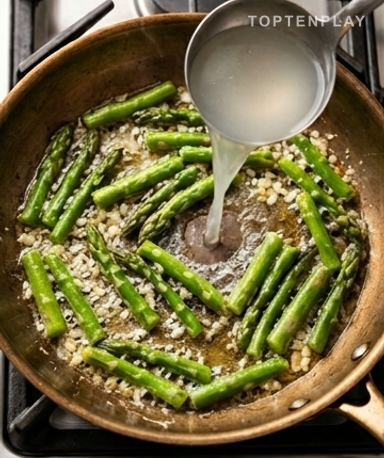
Bring a large pot of salted water to a rolling boil — big bubbles, not a gentle simmer. Submerge the asparagus pieces. Three minutes for thin ones, five for thicker ones. Look for the moment they bend slightly under a fork but still resist in the center. Drain them, but reserve at least a large glass of this water — it’s slightly green, a bit salty, and loaded with starch. This is what will bind the sauce. Then cook the spaghetti in the same water: it saves time, and the pasta absorbs some of the asparagus flavor.
Let the garlic turn blond very gently — not tan, blond
In a large skillet, pour the olive oil and add the crushed garlic while cold. Raise the heat gradually. The garlic should turn blond like very light caramel — not dark gold, not brown. If it colors too much, it becomes bitter and overpowering. When you smell that sweet, slightly toasted garlic aroma rising from the pan, that’s your signal. Add the asparagus, two minutes over medium-high heat to warm them through and let them absorb the scented oil.
Remove the pan from the heat before adding the sauce
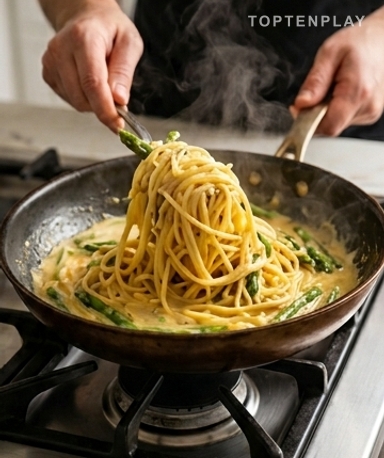
While the pasta is cooking, whisk the egg yolk with the parmesan, salt, pepper, and a quarter cup of the reserved water. The mixture should be smooth, slightly thick, and golden-cream colored. Drain the spaghetti, keeping a little extra water just in case, then toss them directly into the pan with the asparagus — heat off or at the minimum. Pour in the sauce all at once and stir constantly for two minutes. The pasta will steam gently, the sauce will thicken and become silky, clinging to every strand. Too thick? Add a spoonful of cooking water and it’s back on track.
Tips & Tricks
- Prepare the egg yolk-parmesan mixture while the pasta is cooking, not before — it dries out and loses its consistency if it sits too long in the bowl.
- The pan must be off the heat when you add the sauce: the residual heat from the pasta is enough to gently cook the yolk. On too high a heat, the yolk coagulates into small lumps and you get pasta omelet.
- Serve immediately. This dish doesn’t reheat well — the sauce separates and the asparagus turns from electric green to khaki green in a few minutes. It’s a dish meant to be eaten as soon as it leaves the pan.
How do I prevent the egg yolk from turning into scrambled eggs?
It’s all about temperature: the pan must be off the heat or on very low heat when you pour in the egg-parmesan mixture. The residual heat of the pasta is enough to gently cook the sauce. If the heat is too high, the yolk coagulates instantly.
Can I replace the egg yolk?
Yes, if you have an egg allergy, substitute with a tablespoon of butter or extra olive oil. The sauce will be slightly less silky and rich, but it will work. Parmesan remains essential for the texture.
What type of pasta works best for this recipe?
Long, thin formats — spaghetti, linguine, angel hair — coat better with the creamy sauce. Short pasta like penne or rigatoni holds the emulsion less effectively. Gluten-free rice or corn spaghetti also gives great results.
Can I prepare this dish in advance?
The asparagus can be blanched and kept in the refrigerator up to 24 hours in advance. However, the egg yolk sauce must be made at the last moment — it dries out and loses its texture if left to sit. The dish itself should be served immediately after cooking.
How to store and reheat leftovers?
Leftovers keep for 1 day in the refrigerator in an airtight container. To reheat, add 2-3 tablespoons of water or broth and warm over very low heat while stirring. The sauce will become supple again. Microwaving tends to dry out the pasta and turn the asparagus brown.
Can I add a protein to make it a more complete meal?
Absolutely. Garlic sautéed shrimp, diced chicken breast, or turkey bacon fit in very well — cook them in the pan before adding the asparagus. You can also simply increase the pasta quantity to 400g for 4 people if serving without extra protein.
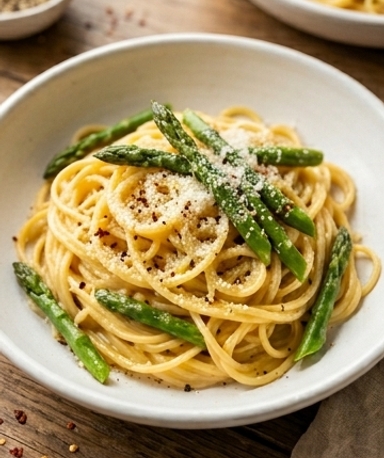
Light Asparagus Carbonara-Style Pasta
Italian
Main Course
A silky egg yolk and parmesan sauce, without a drop of cream. This spring recipe is ready in 30 minutes.
Ingredients
- 320g spaghetti (or linguine)
- 500g fresh thin asparagus
- 2 egg yolks
- 80g finely grated Parmigiano-Reggiano
- 3 garlic cloves, crushed
- 2 tbsp olive oil
- 60ml reserved pasta water (for the sauce)
- to taste salt and freshly ground black pepper
Instructions
- 1Bring a large pot of well-salted water to a boil. Cut the asparagus into 4 cm segments after snapping off the woody ends.
- 2Plunge the asparagus into the boiling water and cook for 3 minutes for thin ones, 5 minutes for thicker ones. Drain and reserve 250ml of the cooking water.
- 3Cook the spaghetti in the same water according to package directions (al dente). Reserve an additional 125ml of water before draining.
- 4In a bowl, whisk the egg yolks with the grated parmesan, 60ml of lukewarm cooking water, salt, and pepper until smooth.
- 5Heat the olive oil in a large skillet over medium heat. Add the garlic and let it turn blond for 2 minutes without browning.
- 6Add the asparagus and sauté for 1 to 2 minutes over medium-high heat to warm them through.
- 7Off the heat, add the drained spaghetti. Immediately pour in the sauce and mix vigorously for 2 minutes until silky and clinging to the pasta.
- 8If the sauce is too thick, stir in cooking water one tablespoon at a time. Serve immediately with extra parmesan and pepper.
Notes
• The pan must absolutely be off the heat before adding the sauce — it’s the only way to prevent the egg yolk from curdling into lumps.
• Asparagus can be blanched up to 24 hours in advance and stored in the fridge. The rest of the recipe is prepared last minute.
• For a more complete meal, add peeled shrimp or diced chicken breast — brown them in the pan with the garlic before adding the asparagus.
Nutrition Facts (per serving, estimated)
| 455 kcalCalories | 19gProtein | 64gCarbs | 13gFat |