You’ve bought a whole Chinese cabbage before, telling yourself you’d make something interesting with it — and it ended up half-wilted in the crisper drawer. This Japanese stir-fry solves that problem. It’s the kind of dish you make on a Saturday afternoon without rushing, with a cup of tea still in hand.
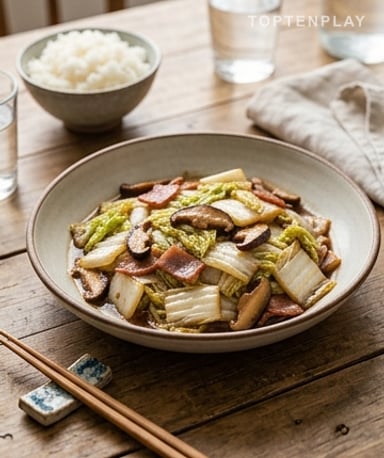
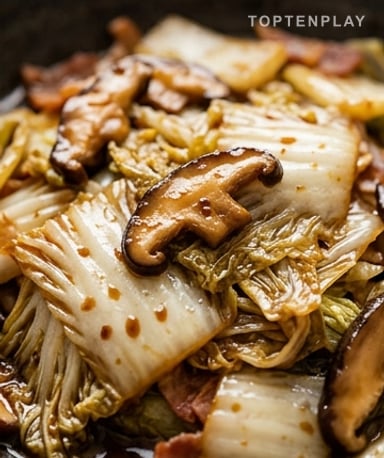
The result in the bowl is always a bit surprising for such a simple dish. The green leaves are meltingly tender, translucent like frosted glass. The white stems still offer a slight resistance under your teeth. The shiitake have taken on a mahogany brown color as they cooked, and the soy sauce has caramelized in the crevices — giving that glossy sheen you see in the photos. The smell oscillates between grilled mushrooms and something slightly smoky thanks to the turkey bacon.
Why you’ll love this recipe
Ingredient Notes
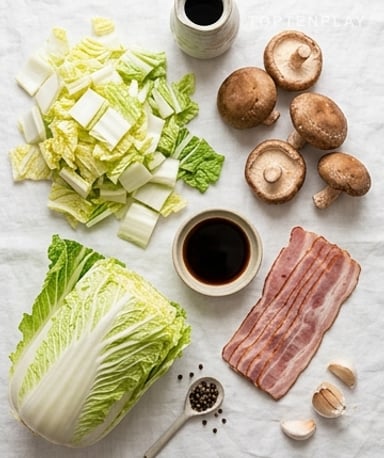
Napa cabbage, shiitake mushrooms, turkey bacon, and a dash of soy sauce: just four ingredients needed.
- Chinese cabbage (napa cabbage / hakusai) : Also called hakusai in Japanese. Its leaves are more tender and milder than green cabbage — they cook quickly and absorb flavors well. Choose one that’s dense, with tight leaves and no brown spots on the edges. Half a cabbage is plenty for four people.
- Shiitake mushrooms : They bring the umami to the dish. Fresh ones have a meaty texture that holds up well in cooking. Dried and rehydrated, they’re even more concentrated in flavor — it’s up to you what you have on hand. Avoid cutting them too thin; they need to keep some body in the wok.
- Turkey bacon : It replaces pork bacon in this recipe. When cooked, it still renders enough fat to perfume the cabbage, with that slightly smoky quality that does all the work. If you can’t find it, a few drops of toasted sesame oil at the very end give a similar effect.
- Soy sauce : Added only at the end of cooking. If you put it in too early, it burns and becomes bitter. One tablespoon, no more — the cabbage already has salt, and so does the bacon.
Prep everything first
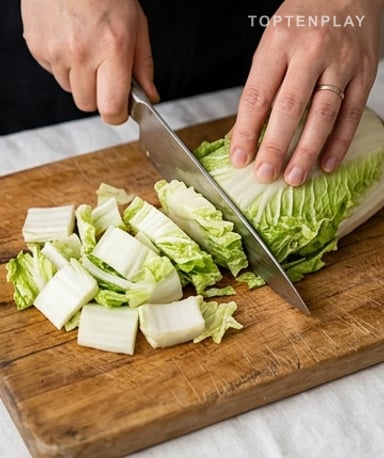
The golden rule of the wok: everything must be ready before you turn on the heat. Separate the thick stems from the green leaves — they don’t need the same cooking time, that’s the whole trick of this recipe. Cut the stems into 4–5 cm pieces. If they’re really wide, split them lengthwise. Cut the leaves into large pieces, roughly; they’ll shrink by half when cooked. Slice the shiitake into 1 cm strips. Cut the turkey bacon into strips. Under the knife, the stems have an almost mineral firmness — they resist for a fraction of a second, then give way cleanly. Arrange everything in separate bowls, then turn on the heat.
The bacon renders in the wok
Start with a dry wok. No oil — the turkey bacon will render its own fat. It crackles from the first second with a sound like crumpling paper, then calms down as the fat coats the bottom. Cook over medium-high heat until the edges are light caramel in color, almost golden but not burnt. That fond in the wok is what will perfume the rest of the dish. Whatever you do, don’t clean it.
Assemble in order
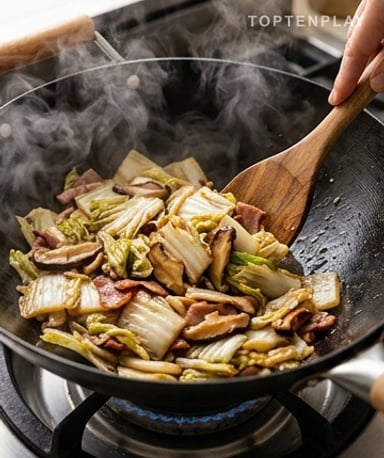
First the thick stems. Sprinkle with a pinch of salt, cover. Cook over medium-low heat for 2 minutes — just enough for the steam to soften those fibrous parts without drowning them. When you lift the lid, a sweet, slightly vegetal aroma rises, a sign that the cabbage has opened up. Add the shiitake and green leaves with the remaining salt. Cover again for 3 to 4 minutes. The leaves will go from bright green to translucent olive green — that’s when they’re perfect, neither soft nor raw.
Season, don’t overdo it
High heat, lid off. Pour the soy sauce over everything and stir quickly to coat each piece in that glossy brown glaze. Ten seconds. A generous amount of freshly ground black pepper, or a pinch of sansho if you have it — that Japanese pepper with a lemony scent that lightly stings the tip of your tongue. Taste before serving. Salt has already been added twice in the recipe, so go easy.
Tips & Tricks
- Don’t mix the stems and leaves from the start: the stems take twice as long to cook. If everything goes into the wok together, you’ll end up with either still-hard stems or mushy leaves — both disappointing.
- The wok must be really hot before adding the vegetables. A timid whisper when they hit the bottom means it’s too cold. You need a loud, immediate sizzle, otherwise the cabbage will steam rather than stir-fry.
- If your wok is small, cook in two batches. A crowded wok no longer stir-fries — it steams, the cabbage releases too much water, and the result is boiled rather than sautéed.
Can I use regular green cabbage instead of Chinese cabbage?
Yes, but the result will be different. Green cabbage has thicker leaves and a stronger flavor — you’ll need to add 3 to 4 minutes of extra cooking time to tenderize it. Chinese cabbage is by far the best choice for this recipe: its natural sweetness pairs perfectly with the shiitake and soy sauce.
I don’t have shiitake mushrooms, what can I substitute?
White mushrooms work perfectly fine, even though the umami will be less pronounced. Oyster mushrooms are also excellent here. If you have no mushrooms at all, carrot strips and a few onion rings add interesting texture, but the character of the dish changes significantly.
How do I store leftovers and reheat them?
The stir-fry keeps for up to 3 days in the fridge in an airtight container. To reheat, use a pan over medium heat rather than the microwave — that way the cabbage doesn’t become too soft and watery. Add a splash of water if the bottom sticks.
Is a wok mandatory, or will a large skillet do?
A large skillet (at least 28–30 cm) works perfectly fine. What matters is the contact surface and heat: the cabbage needs to be able to stir-fry without being crowded. Avoid small pans — the cabbage will release water and the result will be boiled rather than sautéed.
Why does my stir-fry release a lot of water?
Two possible reasons: the wok was too cold at the start, or there were too many vegetables at once. Chinese cabbage contains a lot of water — if the heat isn’t high enough, it expels it instead of retaining it. If that happens, remove the lid and turn up the heat to evaporate the excess.
Can I prepare this dish in advance?
It’s really best served immediately, when the textures are still contrasted. If you need to plan ahead, prep all the chopped ingredients in advance (up to 24 hours in the fridge) and do the cooking at the last minute — it takes barely 15 minutes.
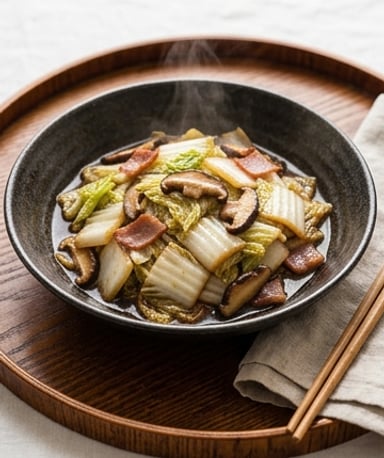
Japanese-Style Chinese Cabbage and Shiitake Mushroom Stir-Fry
Japanese
Side Dish
A quick and flavorful Japanese stir-fry where tender Chinese cabbage meets meaty shiitake and lightly smoked turkey bacon, all coated in soy sauce.
Ingredients
- 700g Chinese cabbage (napa cabbage / hakusai)
- 200g fresh shiitake mushrooms
- 120g turkey bacon, cut into 1 cm strips
- 1 tbsp soy sauce
- ½ tsp salt (divided)
- ½ tsp freshly ground black pepper
- 1 pinch sansho pepper (optional, for serving)
Instructions
- 1Separate the thick stems of the cabbage from the green leaves. Cut the stems into 4–5 cm pieces (split them in half lengthwise if they’re wide), and cut the leaves into large pieces.
- 2Slice the shiitake mushrooms into strips about 1 cm thick.
- 3Heat a dry wok over medium-high heat. Add the turkey bacon and cook until the edges are golden and the fat has rendered.
- 4Add the cabbage stems to the wok, sprinkle with half the salt. Cover and cook for 2 minutes over medium-low heat.
- 5Add the shiitake and cabbage leaves with the remaining salt. Cover and cook for 3 to 4 minutes, until the leaves are tender and translucent.
- 6Remove the lid and turn up the heat. Pour in the soy sauce and toss quickly for 10 seconds to coat. Season generously with pepper and serve immediately.
Notes
• Storage: up to 3 days in the fridge in an airtight container. Reheat in a pan over medium heat to preserve texture.
• Vegan version: omit the turkey bacon and add 1 tsp of toasted sesame oil at the end of cooking to keep the umami and smoky note.
• If your wok is small, cook the cabbage in two batches — a crowded wok steams the vegetables rather than stir-frying them.
Nutrition Facts (per serving, estimated)
| 98 kcalCalories | 8gProtein | 9gCarbs | 4gFat |