📌 Italian Hunter’s Chicken
Posted 15 April 2026 by: Admin
Stewed dishes are the most honest in cooking. No grand gestures, no intimidating techniques — just low heat, good ingredients, and time doing its job. Italian-style hunter’s chicken is exactly that: deep, comforting, and so much easier to get right than its name suggests.
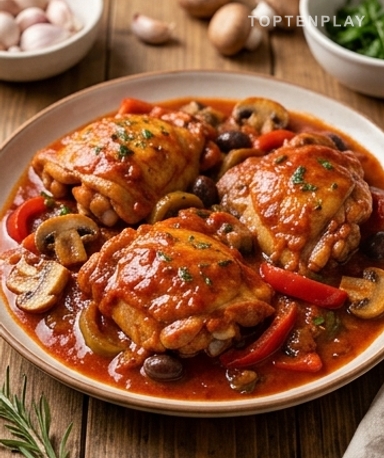
The sauce is an intense brick red, almost garnet, with green herbs rising to the surface. The chicken pieces have that deep caramel color that betrays a good sear — and the skin, where it has candied in the sauce, is beginning to melt into the pot. It smells of thyme, sautéed garlic, and something slightly sweet from the tomatoes that have cooked for a long time. It’s the kind of smell that brings people into the kitchen without needing to call them.
Why you’ll love this recipe
Ingredient Notes
All the ingredients for pollo alla cacciatora: chicken, market vegetables, and a few herbs for a stunning result.
- Chicken : Use thighs or whole legs with bone and skin. The bone adds depth to the sauce during the long cooking time, and the browned skin adds fat and texture. Boneless breasts are a no-go — they dry out, become stringy, and lose all appeal in a stew.
- Crushed tomatoes : Canned is fine and often preferable out of season. Choose a brand where the tomatoes have a deep color, not gray or too watery. In summer with ripe tomatoes, peel them for thirty seconds in boiling water and use them directly — it’s another dimension.
- Chicken broth : It replaces wine here and does the job very well. Use homemade broth if you have it, otherwise a high-quality cube in ten centiliters of hot water. This is what deglazes the pot and picks up all the golden juices stuck to the bottom — never pour it in cold.
- Red bell pepper : Red, not green. Sweeter and milder, it blends better into the sauce and gives it a generous color. Slice it not too thinly — it needs to withstand the long cooking without disappearing completely.
- Herbs : Thyme or herbs de Provence, a bay leaf. No need for more. These Mediterranean herbs resist heat well and gradually flavor the entire sauce. Remove the bay leaf before serving.
Brown the chicken as if it were the only thing that mattered
This is the decisive moment. Heat the olive oil in a large pot over high heat — really high, not medium. Place the chicken pieces skin-side down and don’t touch them. Not at all. Two or three minutes, and the skin will take on a light caramel color with that steady crackling sound that indicates it’s working well. Turn, brown the other side, and set aside. This browning creates a crust that will partially dissolve into the sauce and give it all its depth — this is where the difference between a bland stew and a memorable one is made.
Build the sauce layer by layer
In the same pot — without washing it, that’s the whole point — sauté the sliced onion and minced garlic over medium heat. They should become translucent and slightly golden at the edges, releasing a sweet scent. Add the pepper strips and mushrooms. Let them sweat for five good minutes. Then pour in the hot broth and scrape the bottom of the pot well with a spatula — those little brown bits stuck to the bottom are concentrated flavor that must not be lost. Add the crushed tomatoes, paste, herbs, salt, and pepper. Put the chicken back in. The sauce will turn bright orange at first — that’s normal, it will darken.
Close the lid and forget it for 45 minutes
Low heat. Lid on but not completely airtight — leave a small gap so steam can escape and the sauce can reduce a bit. The pot will whisper softly throughout the cooking, with small bubbles breaking the surface every few seconds. That’s slow cooking: not a violent boil, just a quiet simmer. Stir occasionally. After 45 minutes, the sauce will have thickened, turned a deep brick color, and the chicken will pull away easily from the bone when pricked with a knife.
Add the olives at the last minute — not before
If using black olives, only add them in the last five minutes. Too long in the heat and they lose their bite, becoming soft and slightly bitter. You want them to stay firm, with their own character contrasting with the tomato sauce. Sprinkle with fresh chopped parsley just before serving. The bright green against the brick-red sauce is as much about aesthetics as it is about freshness on the palate.
Tips & Tricks
- Prepare this dish the day before if you can: gently reheated the next day, the sauce will have thickened naturally and the flavors will have truly melded. This is the golden rule of all stews.
- Never completely close the pot during cooking — the sauce needs to reduce slightly. If it’s still too thin at the end, remove the lid and simmer uncovered for five to ten more minutes.
- A pinch of sugar in the sauce if your tomatoes are too acidic — not to sweeten it, just to rebalance. Start with a quarter teaspoon, taste, and adjust.
Can I use chicken breasts instead of thighs?
Technically yes, but the result will be clearly inferior. Boneless breasts dry out during slow cooking and become stringy. Thighs and legs with bone and skin are truly made for this type of stew — the skin protects the meat and the bone enriches the sauce.
How to store and reheat hunter’s chicken?
In the refrigerator in an airtight container, it keeps for 3 days. Reheat over low heat with a lid, adding a splash of water if the sauce has thickened too much. It also freezes very well — up to 3 months in individual portions.
Can I prepare it the day before?
It’s actually recommended. Reheated the next day, hunter’s chicken is significantly better: flavors have had time to mix, the sauce is denser, and the chicken more tender. Prepare it until the end, let cool completely, then refrigerate.
Why is my sauce too runny?
The lid was probably too tight, preventing evaporation. Remove the lid at the end of cooking and simmer over medium heat for an extra 10 minutes. The sauce will thicken naturally without needing to add anything.
What to serve with hunter’s chicken?
Short pasta (penne, rigatoni), creamy polenta, or rice perfectly absorb the sauce. Toasted rustic bread also works very well. Avoid overly thick mashes that overpower the flavors — this dish needs a side that lets the sauce express itself.
Can I make this recipe without mushrooms?
Yes, the recipe stands up very well without them. You can replace them with thick zucchini slices (add them only 20 minutes before the end so they don’t melt) or simply omit them. The tomato-pepper-herb base is more than enough.
Italian Hunter’s Chicken
Italian
Main Course
A great classic of Italian slow-cooked cuisine: tender chicken in a tomato sauce flavored with herbs, peppers, and mushrooms. Simple, generous, comforting.
Ingredients
- 1,2 kg chicken pieces with bone and skin (thighs, legs, or drumsticks)
- 2 c. à soupe (30 ml) olive oil
- 1 (environ 150 g) onion, finely sliced
- 2 garlic cloves, minced
- 1 (environ 200 g) red bell pepper, cut into strips
- 200 g button mushrooms, sliced
- 400 g (1 boîte) crushed tomatoes
- 100 ml hot chicken broth
- 1 c. à soupe (15 g) tomato paste
- 1 bay leaf
- 1 c. à café dried thyme (or herbs de Provence)
- 80 g pitted black olives (optional)
- 1 petite poignée fresh chopped parsley
- Salt and freshly ground black pepper
Instructions
- 1Slice the onion, mince the garlic, cut the pepper into strips and slice the mushrooms.
- 2Heat the olive oil in a large pot over high heat. Brown the chicken pieces on all sides, 3 minutes per side, until they reach a deep caramel color. Set aside.
- 3In the same pot, sauté the onion and garlic over medium heat until translucent, about 3 minutes.
- 4Add the pepper and mushrooms. Sweat for 5 minutes, stirring regularly.
- 5Pour in the hot broth and scrape the cooking juices stuck to the bottom of the pot with a spatula.
- 6Add the crushed tomatoes, tomato paste, bay leaf, and thyme. Season with salt and pepper. Return the chicken pieces to the pot.
- 7Cover partially (leave a small gap) and simmer over low heat for 45 to 50 minutes, stirring occasionally.
- 8Add olives in the last 5 minutes if desired. Adjust seasoning and sprinkle with fresh parsley before serving.
Notes
• Best the next day: prepare this dish in advance, let cool and refrigerate. Reheat over low heat with a splash of water if the sauce has thickened too much.
• Storage: 3 days in the refrigerator, 3 months in the freezer in individual portions.
• Sauce too thin? Remove the lid at the end of cooking and let reduce for 10 minutes over medium heat.
Nutrition Facts (per serving, estimated)
| 430 kcalCalories | 34 gProtein | 13 gCarbs | 24 gFat |