📌 Irish Stew: why the absence of flour and slow cooking change everything about the traditional taste
Posted 31 January 2026 by: Admin
From Necessity To Tradition: Birth Of An Emblematic Dish
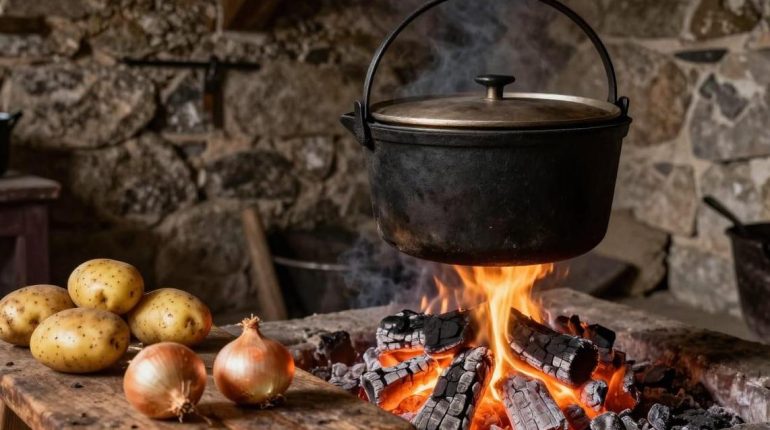
Traditional Irish stew was not born from gastronomic ambition. It emerged from the constraints of an inhospitable land and a subsistence economy. In the stone cottages of rural Ireland, hanging over peat fires, iron pots welcomed whatever was available: potatoes, onions, water, and sometimes a piece of meat. The rocky Irish soil, unsuitable for grains, favored the cultivation of hardy tubers. Sheep and cattle, too precious alive, were only cooked once they were old, their tough flesh requiring hours of simmering to become tender.
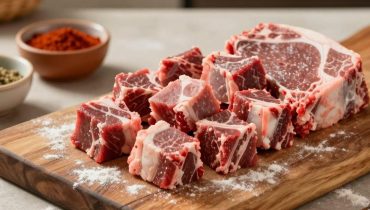
When Irish families crossed the Atlantic, they took the memory of this dish with them, but not always its ingredients. In America, lamb was rare and expensive. Beef, however, was accessible, familiar, and omnipresent. Irish-American mothers thus adapted the ancestral recipe with beef chuck or shanks, without guilt or purist pretension. They were not seeking to preserve a frozen culinary heritage—they were feeding their children. The stew thus survived not through rigid fidelity to a formula, but through fidelity to a principle: transforming the little into enough, the ordinary into the comforting. This capacity for adaptation, far from betraying the heritage, constitutes its very essence.
Authenticity Through Simplicity: Why This Stew Refuses Modernization
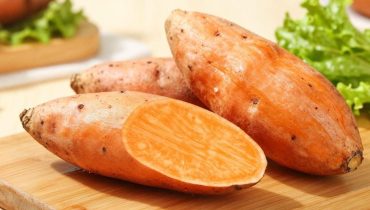
What is disconcerting about authentic Irish stew is precisely what defines it: its categorical refusal of any thickening artifice. No flour, no roux, no cornstarch. Contemporary recipes often try to “correct” this cloudy texture, adding cream or binders. But this opacity of the broth is not a defect to be hidden—it is the signature of a century-old process. Potatoes, especially old starch-rich varieties, naturally break down during prolonged simmering. Some dissolve completely, releasing their starch into the liquid. Others remain intact, offering a contrasting texture between melting pieces and velvety broth.
This progressive transformation cannot be simulated by modern shortcuts. It requires time and an intuitive understanding that old cooks possessed: the stew does not need to be uniform or glossy. It must seem honest. Some strategically layered the potatoes—a thick layer at the bottom of the pot, another over the meat—knowing that the first layer would dissolve while thickening the base, while the second would preserve its shape. No precise measurements, no constant stirring. Just a trust passed down from generation to generation, based on the patient observation of food transformations. This assumed rusticity carries a lesson that the modern food industry has forgotten: perfection lies not in standardization, but in respect for natural processes.
Lamb, Mutton And The Great American Substitution
Historically, Irish stew relied on lamb or mutton, particularly older animals whose tough flesh required hours of cooking to soften. Mutton, in particular, possessed a powerful flavor that mellowed beautifully over the course of simmering. But when Irish families emigrated to America, economic reality radically altered the recipe. Beef was cheaper. Beef was familiar. Beef was available. Shanks, chuck, and braising cuts replaced lamb in the pots of the New World.
Purists might contest this transformation, but Irish-American families were not seeking to preserve a frozen culinary heritage—they were seeking to feed their children. And the stew still worked. Because the heart of Irish stew has never been the protein used, but the process itself: this slow alchemy where meat, potatoes, and onions melt into a cloudy and comforting broth. Whether the flesh came from an Irish sheep or an American beef mattered little, as long as time and patience remained the true ingredients. This pragmatic adaptation illustrates how a traditional dish can evolve geographically without betraying its essence—proving that authenticity lies less in the rigidity of ingredients than in fidelity to a transmitted method, adjusted but never rushed.
Patience As A Secret Ingredient: A Lesson In Slow Cooking
This fidelity to the process finds its purest expression in the cooking time itself. Irish stew does not rush. It cannot. It simmers gently and slowly, often for hours, until the meat yields without resistance and the potatoes begin to break down. Some cooks layered the pot: potatoes at the bottom, meat and onions in the middle, new potatoes on top. The bottom layer disintegrated first, releasing its starch into the liquid to create that characteristic texture without human intervention.
Seasoning remained deliberately simple. Salt and pepper were added sparingly, sometimes only at the end of cooking, as meat and tubers transform their flavors while simmering. What seemed bland after an hour revealed its perfect balance after three. If herbs appeared, they remained discreet—a sprig of thyme, a few parsley leaves—never enough to distract from the stew itself. And like so many ancestral dishes, it gained depth the next day, when the broth thickened further and the aromas fully merged.
In a world of shortcuts and speed, traditional Irish stew reminds us that some riches require time. That flavor is born of patience. That a dish does not need to dazzle to touch. It is the kind of meal you prepare when the cold sets in, when life feels heavy, when you seek something that asks for nothing but time. And perhaps that is precisely why it endures through the centuries—because it forces us to slow down, to observe the slow transformation of simple ingredients into substantial comfort. A cloudy broth, melting potatoes, meat that falls apart: this is what patience produces when given the necessary space.