📌 Involtini di cavolo: how the beef-rice-parmesan filling transforms cabbage into a savory Italian simmered dish
Posted 8 January 2026 by: Admin
The Art Of Preparing Italian-Style Cabbage Rolls
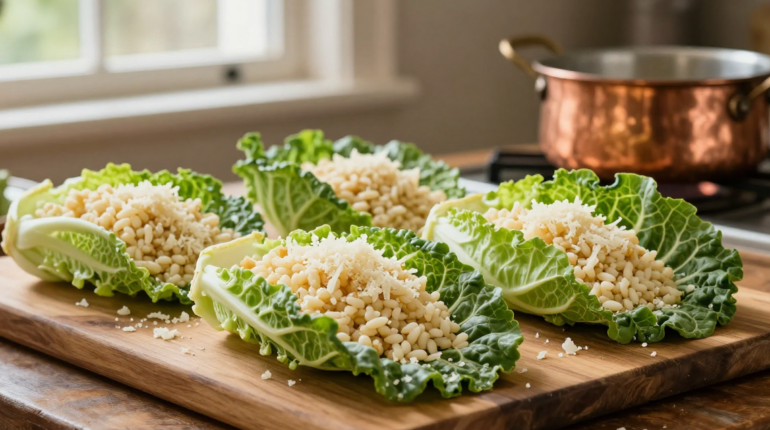
Involtini di Cavolo embody the very essence of Italian family cooking: a simple technique that transforms modest ingredients into a comforting dish. This traditional recipe relies on a generous filling where 450 grams of ground beef unite with arborio rice and grated parmesan, all wrapped in cabbage leaves blanched until tender and malleable.
The key to success lies in the balance between meat and aromatics. Savvy cooks can substitute half of the beef with Italian sausage, adding immediate depth of flavor. This filling, enriched with an egg to bind it all together, welcomes finely chopped onion, crushed garlic, parsley, and fresh basil. The seasoning – salt, pepper, dried Italian herbs – remains intentionally measured to let the natural flavor of the ingredients speak for itself.
Blanching the cabbage leaves is the crucial technical step. Plunged into boiling salted water, they soften without tearing, becoming perfect cases for this Mediterranean preparation. This ancestral method, passed down through generations in Italian kitchens, allows for the creation of compact rolls that will withstand simmering in the tomato sauce. The generosity of the filling and the delicacy of the vegetable envelope create a textural contrast that defines the very identity of this dish.
The Filling: A Savory Blend Of Mediterranean Ingredients
The assembly of the filling reveals all the apparent sophistication of this Italian recipe. At the heart of the preparation, 450 grams of meat combine with a cup of cooked rice – preferably arborio for its firm grain – and half a cup of freshly grated parmesan. This trinity of ingredients constitutes the architecture of the dish, where each component plays a precise role: the meat provides substance, the rice absorbs the cooking juices, the parmesan sets the flavors.
Aromatics distinguish successful Involtini from mediocre versions. Two crushed garlic cloves and a finely diced onion melt into the preparation, while two tablespoons of freshly chopped parsley and one tablespoon of basil – preferably fresh – infuse their characteristic herbal notes. The egg introduced into the mixture acts as a natural binder, ensuring the stuffing maintains its cohesion during simmering.
The final seasoning combines salt, freshly ground pepper, and a teaspoon of dried Italian herbs. This aromatic layering – fresh herbs for liveliness, dried for depth – creates a flavor complexity that fully blossoms during prolonged cooking. The secret lies in moderation: quality ingredients express themselves best when given the necessary space, without an overload of spices that would mask their Mediterranean authenticity.
Homemade Tomato Sauce: The Foundation Of Successful Cooking
The sauce is both the cooking medium and the flavor accompaniment for the rolls. In a saucepan, three sliced garlic cloves sauté in two tablespoons of olive oil until they release their fragrance, without ever browning. This foundational step conditions all the aromatic depth: the garlic must infuse the oil without bitterness, creating an olfactory base that will envelop each cabbage leaf.
The introduction of tomatoes marks the turning point of the preparation. 800 grams of crushed tomatoes join 400 grams of tomato sauce or passata, forming a generous cooking bath capable of immersing the involtini. A tablespoon of tomato paste – optional but recommended – intensifies the color and concentrates the flavors. Adding half a cup of water or broth adjusts the consistency, allowing for prolonged simmering without excessive reduction.
The balance between acidity and sweetness determines the final success. A teaspoon of sugar neutralizes the natural acidity of the tomatoes, while dried oregano and basil breathe in their characteristic Mediterranean notes. Salt and pepper complete the seasoning sparingly. This sauce, simmered for a few minutes before welcoming the rolls, will develop its full complexity during slow cooking, gradually imbuing the cabbage and filling with authentic Italian character.
Finishing And Presentation Italian Style
Once the rolls are carefully arranged in the simmering sauce, cooking takes place over low heat for forty-five minutes to an hour. The simmering liquid gradually envelops each involtino, tenderizing the cabbage while fusing the flavors of the filling with those of the tomato sauce. A semi-open lid allows for controlled reduction, concentrating the aromas without drying out the preparation.
The moment of plating transforms this family dish into a trattoria creation. Each roll, soaked in sauce, is delicately placed on the plate, generously coated with the reduced cooking juices. Finely chopped fresh herbs – basil or parsley depending on availability – bring a touch of greenery contrasting with the deep red of the sauce, awakening the whole both visually and tastefully.
Parmesan constitutes the final signature. Generously grated over the still-steaming rolls, it partially melts on contact with the heat, creating creamy filaments that enrich every bite. This ultimate touch of cheese is not just for decoration: it reinforces the Italian identity of the dish, recalling culinary traditions where parmesan almost systematically crowns simmered preparations. Served immediately, accompanied by rustic bread for dipping, these involtini embody the excellence of a generous and comforting Mediterranean cuisine.