πŸ“Œ Hungarian Goulash

Posted 15 April 2026 by: Admin #Recipes

Prep Time
20 minutes
Cook Time
1h45
Total Time
2h05
Servings
4 servings

A slow Sunday afternoon, a grey sky outside the windows. It’s exactly the moment to put a goulash on the stove. While the pot simmers quietly, you have two hours to do absolutely anything else.
Advertisement:
Final result
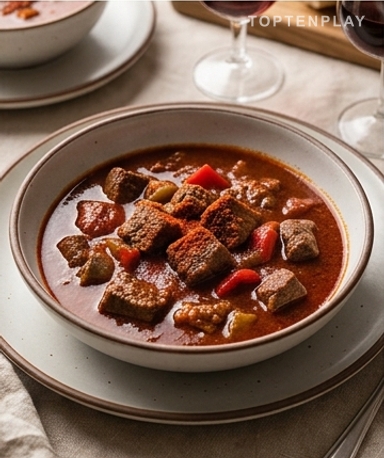
A generous bowl of Hungarian goulash, the red paprika sauce coating ultra-tender pieces of beef.

The sauce is a deep red, almost brick-colored, with oily glints that catch the light. The pieces of beef have surrendered all resistance—they almost fall apart just by looking at them. A warm scent of paprika and melted onions rises from the pot, something between caramel and dried earth. It’s the kind of dish that makes people get up from their sofa without needing to be called.

Why you’ll love this recipe

Almost zero active effort : Twenty minutes of chopping and browning, then the pot does the rest. You just have to check occasionally that it’s not sticking.
It reheats better than it eats on day one : Goulash is one of those rare dishes that benefits from resting a night in the fridge. The flavors concentrate, the sauce thickens slightly. The next day, it’s a whole different story.
Economical for the result : Chuck or shoulder are among the cheapest cuts of beef. Two hours of cooking transforms them into something far better than any noble cut pan-seared.
Adaptable to what you have : Potatoes at the end of cooking, a little caraway if you find some, broth instead of water—not much can go wrong with this recipe.

Ingredient Notes

Ingredients

Advertisement:

Everything needed for an authentic goulash: beef, simple vegetables, and above all, lots of paprika.

  • Sweet paprika : This is the heart of the recipe, not a decorative spice. Get Hungarian paprika if you can find it—it has an aromatic depth that Spanish paprika doesn’t quite have. Count on two healthy tablespoons without stinginess: it’s what gives the color and 80% of the taste.
  • Beef (chuck, shoulder, or shank) : These cuts are made for slow cooking. Their collagen melts during simmering, making the sauce creamy and slightly velvety. Avoid steak or cuts that are too lean—they will become dry and stringy.
  • The onion : Just one large onion, but it really must melt. Not translucent in two minutes—really melt. Eight to ten minutes over medium heat until it becomes soft and slightly colored like brown butter.
  • The broth : Water works, but a beef or vegetable broth clearly makes a difference in the depth of the sauce. A store-bought cube is fine. Homemade is even better. Avoid overly salty broths—you will adjust the seasoning at the end.
  • Caraway : Optional, but very traditional. These small seeds have a discreet anise flavor that cuts through the paprika and gives a more complex dimension to the dish. If you like caraway bread, you’ll love it here too.

Really melt your onions—don’t just soften them

Pour the oil into the pot over medium heat and add your sliced onions. The goal here is patience. No jumping to the next step after 3 minutes just because it starts to smell good. Wait for the onions to become translucent, soft, almost creamy under the wooden spoon. It takes 8 to 10 minutes. These well-melted onions will naturally thicken the sauce and give it its sweet-savory base—they are the foundation of everything.

Really melt your onions—don't just soften them
The crucial moment: paprika in the golden onions over low heat to release its aromas without burning.

Add the paprika off the heat—otherwise you’ll ruin it

This is the most delicate moment of the recipe. Remove the pot from the heat, or turn it down very low, and pour the paprika over the onions. Mix quickly: you’ll feel the aromas explode, something warm and peppery rising suddenly. If the paprika burns, it becomes bitter and there’s nothing more to do. Thirty seconds are enough, then immediately add the meat to stop the cooking.

Advertisement:

Brown the meat—it shouldn’t release water

The beef cubes go into the pot over medium-high heat. Don’t crowd them all at once if your pot is small: do it in two batches. The meat should sizzle upon touching the bottom, a sharp dry sound, not a bubbling of water that steams everything. A light brown crust forms on the surface, and that’s exactly what we’re looking for. This reaction gives depth to the entire sauce over the next two hours.

Cover and forget it for 90 minutes

Once the broth, tomatoes, bell pepper, and garlic are added, cover and let simmer over low heat. Truly low. The bubbles should barely break the surface, not a furious boil that will dry out the meat. Adjust the heat, check once after 30 minutes, and that’s it. After an hour and a half, poke a fork into a piece of beef: it should collapse effortlessly, with a stringy texture that pulls apart in long tender fibers.

Cover and forget it for 90 minutes
Two hours of patient simmering, and the magic happens—the sauce concentrates, the meat tenderizes.

Tips & Tricks
  • Make it the day before if you can—after a night in the fridge, the sauce has concentrated its flavors and everything has melded together. It’s truly a different dish when reheated the next day.
  • If the sauce is too liquid at the end of cooking, remove the lid and let reduce for 10 to 15 minutes over medium heat. Too thick? Half a glass of water and you’re good.
  • A splash of apple cider vinegar at the very end—just a few drops—cuts through the richness of the sauce and wakes up all the aromas. Try it at least once before saying it’s useless.
Close-up
The reward: meat that pulls apart at the touch of a fork, coated in a deep and silky sauce.
FAQs
Advertisement:

Can I use a different cut of beef than chuck?

Yes, shoulder and shank work very well. The essential thing is to choose a cut rich in collagen, made for long cooking. Absolutely avoid fondue meat or any cut that is too lean—it will come out dry and stringy after two hours of cooking.

How to store and reheat goulash?

Advertisement:

It keeps for 3 days in the refrigerator in a closed container. To reheat, use low heat with a little splash of water if the sauce has thickened. It also freezes very well for up to 3 months—thaw in the fridge overnight, then reheat gently.

My sauce is too liquid at the end, what do I do?

Simply remove the lid and let reduce over medium heat for 10 to 15 minutes, stirring regularly. Goulash isn’t meant to be very thick, but if you want something more coating, this is the only step necessary—no need for starch or flour.

Advertisement:

Can it be prepared in a slow cooker?

Absolutely. Still, sauté the onions and brown the meat in a pan before transferring everything to the slow cooker—that’s the step you can’t skip without losing flavor. Then count on 6h on low or 3h on high.

Can the goulash be made thirstier/spicier?

Advertisement:

Yes, replace one tablespoon of sweet paprika with hot paprika, or add a pinch of Cayenne pepper at the end of cooking to dose the intensity more precisely. Smoked paprika is also an interesting option if you like deeper notes.

What to serve with Hungarian goulash?

Wide noodles like tagliatelle or Hungarian pasta (csipetke) are the classic accompaniment. White rice, steamed potatoes, or simply a good crusty bread for dipping work very well too. If you add potatoes directly into the pot, do so 30 minutes before the end.

Advertisement:
Hungarian Goulash

Hungarian Goulash

Easy
Hungarian
Main Course
Prep Time
20 minutes
Cook Time
1h45
Total Time
2h05
Servings
4 servings

A beef stew slow-simmered with paprika, bell pepper, and tomatoes. Simple to prepare, meltingly tender after two hours on the fire.

Ingredients

  • 500g braising beef (chuck, shoulder, or shank), cut into 3-4 cm cubes
  • 1 large onion, finely sliced
  • 1 red bell pepper, diced
  • 2 tomatoes, crushed (or 200g canned peeled tomatoes)
  • 2 cloves garlic, minced
  • 2 tbsp sweet paprika (preferably Hungarian)
  • 1 tbsp tomato paste
  • 2 tbsp vegetable oil
  • 500ml beef broth (or vegetable)
  • 1 bay leaf
  • 1 tsp whole caraway seeds (optional, very traditional)
  • To taste salt and black pepper

Instructions

  1. 1Slice the onion, dice the pepper, and mince the garlic. Cut the beef into regular 3-4 cm cubes.
  2. 2Heat oil in a pot over medium heat. Add the onion and sauté for 8 to 10 minutes until soft and slightly colored.
  3. 3Remove the pot from the heat. Add the paprika and stir quickly for 30 seconds to release the aromas without burning it.
  4. 4Return to medium-high heat. Add the beef cubes and brown for 3 to 4 minutes while stirring.
  5. 5Add the pepper, tomatoes, garlic, and tomato paste. Mix well.
  6. 6Pour in the broth. Add the bay leaf, caraway if using, salt, and pepper.
  7. 7Cover and simmer over low heat for 1h30 to 2h, stirring every 30 minutes. The meat should fall apart with a fork.
  8. 8If the sauce is too thin, remove the lid and let reduce for 10-15 minutes. Adjust seasoning and serve hot.

Notes

• The goulash is even better reheated the next day—prepare it in advance if you can.

Advertisement:

• Keeps for 3 days in the fridge and freezes perfectly for up to 3 months.

• Filling variation: add 400g of cubed potatoes 30 minutes before the end of cooking.

Nutrition Facts (per serving, estimated)

420 kcalCalories 32gProtein 16gCarbs 22gFat

Advertisement:
Share it!

Thanks for your SHARES!

You might like this

Add a comment:

Latest posts

Build-Your-Own Japanese Bowls β€” Tsukurioki Meal Prep

Vegetable Salad and Carrot Tartare, Chef Style

Homemade Rosemary Tea

Cheesy Pizzettes with Mushrooms and Peppers

Tomato Carrot Lemon Juice

Creamy Cancoillotte Risotto with Crispy Smoked Sausage

Walking Taco Casserole

Homemade Hamburger Steaks

Homemade Oven-Baked Chicken Nuggets

Gua Bao with Marinated Chicken and Crunchy Vegetables

Loading...