📌 Hummus soup: Sabrina Ghayour’s creamy recipe ready in 20 minutes
Posted 6 March 2026 by: Admin
A Recipe That Shakes Up Culinary Codes
“Maybe you’ll think I’ve lost my mind,” warns Sabrina Ghayour right away before revealing her culinary innovation: transforming traditional hummus into a hot soup. This apparent audacity actually hides an unstoppable logic. Why couldn’t this creamy chickpea puree be served in a liquid and comforting form?
The concept appeals through its radical simplicity: 10 minutes of preparation, 25 minutes of cooking, for a complete dish that effortlessly fits into weeknight dinners. The master trick lies in the full use of canned chickpeas, including the brine. This starch-enriched water becomes the secret ally for a smooth texture, where other recipes discard it out of ignorance.
The ingredients can be counted on one hand: chickpeas, tahini, garlic, onion, lemon, and olive oil. No fluff, no tedious searching in specialty grocery stores. This accessibility sacrifices nothing in terms of indulgence. On the contrary, it proves that an exceptional recipe can be born from everyday products, provided one dares to shake up conventions. The author promises “a creamy and nourishing delight” – a commitment that transforms the very perception of hummus.
The Foolproof Technique For A Creamy Soup
The success of this soup relies on a methodical progression of flavors. It all starts with a classic aromatic base: finely chopped onion and crushed garlic cloves are gently sautéed in olive oil, without ever browning. This translucency guarantees a fundamental sweetness, avoiding any parasitic bitterness.
The incorporation of tahini is the decisive moment. Poured directly with the chickpeas and their brine, it gradually blends with the liquid during the 20 minutes of simmering. This step requires constant vigilance: tahini tends to stick to the bottom of the pot. Regular stirring dissolves this sesame paste and prevents any risk of burning that would ruin the whole dish.
The little-known trick occurs after adding the cans. Filling the empty cans with hot water allows you to recover every trace of brine and naturally adjust the consistency. This simple gesture transforms potential waste into an enrichment of the broth.
The immersion blender is used off the heat, pureeing the preparation until a perfectly smooth texture is obtained. Only then does the lemon juice arrive, preserved until this stage to keep all its zesty freshness. A final seasoning adjustment, a few more minutes of cooking, and the transformation is complete. What was hummus becomes a velouté, without denying its primary identity.
The Secrets Of A Perfect Taste Balance
This technical transformation is not enough. The seasoning determines the final success. From the start, Maldon salt and freshly ground black pepper must be applied generously. This initial boldness builds the taste structure upon which subsequent nuances will rest.
The lemon juice, added after blending rather than before, preserves its vivid character. Incorporated too early, it would fade in the prolonged heat. Poured at the last moment, it wakes up the whole dish with a frank acidity that counterbalances the creaminess of the tahini and the roundness of the chickpeas.
The final seasoning correction is the ultimate adjustment. After those extra minutes of cooking, tasting allows you to detect what’s missing: a pinch of salt, an extra turn of the mill. This vigilance distinguishes a decent soup from a memorable dish.
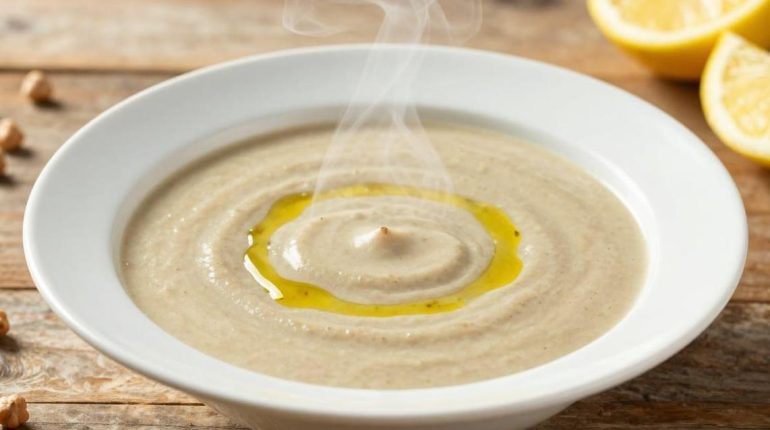
When serving, olive oil drizzled over the top traces golden arabesques on the surface. Ground pepper draws dark constellations. Sabrina Ghayour suggests an optional squeeze of lemon on the side, giving each guest the power to adjust the acidity according to their personal sensitivity. This final freedom transforms the tasting into a tailor-made experience, where everyone composes their ideal balance between creamy, spicy, and tangy.
The Origin Of A Signature Recipe
This soup is not the result of chance. It comes from Persiana Easy, the book published in October 2025 by Sabrina Ghayour with Hachette Cuisine. The author concentrates her philosophy there: creamy and nourishing recipes designed for weeknights, when time is short but the desire for a real meal persists.
Ghayour fully embraces the baffling nature of this proposal. “Maybe you’ll think I’ve lost my mind,” she writes in the preamble, before defending her intuition with conviction. Her bet: to transform an appetizer classic into a comforting hot dish, without losing the essence of what makes hummus irresistible.
For her, the question arises naturally: “Why couldn’t hummus be spicy?” This rhetorical question sweeps away conventions and legitimizes experimentation. Chickpeas, she reminds us, constitute the ideal base for “a creamy and nourishing delight” capable of satisfying midweek appetites.
The suggested accompaniment reveals her attachment to authenticity: warm mini-pitas, directly inspired by Levantine traditions. These small breads allow the experience to be extended, sometimes dipped in the soup, sometimes used to catch the last drops at the bottom of the bowl. At €29.95, Persiana Easy promises other culinary audacities of the same kind, where creativity rhymes with accessibility and respect for original flavors.