📌 Hummus Bowl with Soft-Boiled Eggs and Roasted Vegetables
Posted 1 April 2026 by: Admin
Bowls can be the most satisfying meal of the week or a bland plate that leaves you hungry two hours later. It all depends on one thing: whether the vegetables actually roasted, or if you just warmed them up next to each other. This bowl belongs to the right category.
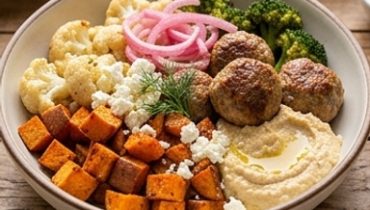
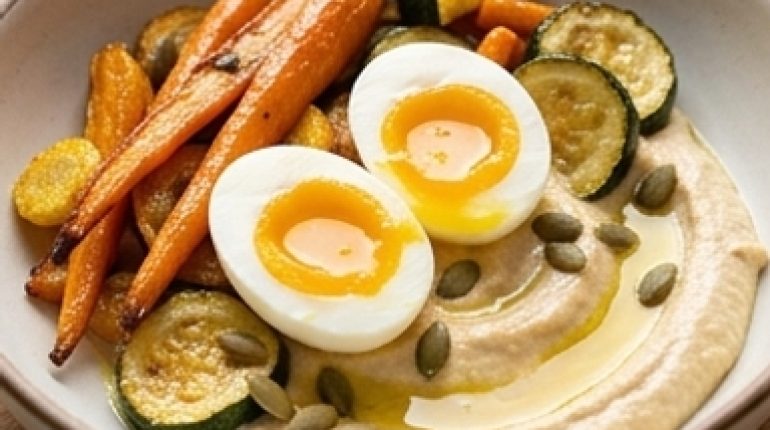
What you have before you is a thick layer of hummus hugging the shape of the bowl, as creamy as room-temperature butter. On top, vegetables whose edges have turned a light caramel—not just colored, but truly caramelized. Soft-boiled eggs cut in half release a still-shiny, almost orange yolk that begins to mingle with the hummus underneath. A light scent of cumin and warm olive oil still floats above the plate.
Why you’ll love this recipe
Ingredient Notes
Everyday products—eggs, seasonal vegetables, chickpeas, seeds—for a plate that truly sticks to your ribs.
- Roasted vegetables : This is the heart of the bowl and where many fail. In winter: butternut squash, carrots, parsnips cut into regular cubes. In summer: zucchini, eggplant, bell peppers in large chunks. The absolute rule: do not overcrowd the tray. Vegetables need to breathe—if they touch, they steam and stay soft and flavorless.
- Hummus : Store-bought if you’re in a hurry, homemade if you have ten minutes and a can of chickpeas. The difference is striking and easy to explain: homemade hummus smells of sesame, lemon, and garlic. Store-bought smells like preservatives. To make it yourself, you need quality tahini—not the cheap jar at the back of the shelf, but one with a golden cream color and a pronounced toasted sesame smell.
- Eggs : Soft-boiled. Not scrambled, not hard. The runny yolk is what binds the whole bowl together—visually and tastewise. Room temperature eggs into a rolling boil, exactly 6 minutes, followed by an immediate ice bath. No approximate timers on this part.
- Pumpkin seeds : Their slightly nutty taste and crunchy texture bring something that sunflower seeds don’t quite provide. Toast them dry in a hot pan for two minutes while stirring—they turn from pale green to deep green-brown and release a roasted hazelnut aroma. It’s quick and changes the whole plate.
- Final olive oil : Not the cooking kind. A good fruity, slightly peppery oil, poured raw just before serving. This drizzle of raw oil connects the elements and gives the bowl its Mediterranean character. If you only have basic oil, add a squeeze of fresh lemon juice instead.
Why failed roasted vegetables ruin everything else
A vegetable roasted at 180°C with too much moisture on the tray is a steamed vegetable. Waterlogged, soft, flavorless. For it to work, you need high heat—200°C minimum, 210°C for thick pieces—and vegetables well-dried before being oiled. Space them out. A single layer, no overlapping. When you open the oven halfway through and hear a slight sizzling, that’s a good sign. The smell that rises—slightly sweet, with a hint of smoke—is the caramelization starting. Wait until the edges are truly golden like light caramel before taking the tray out.
Homemade hummus: the only version worth the detour
Store-bought hummus is okay. But it often has that metallic preservative taste and a pasty texture that sticks to the palate. Making your own takes ten minutes. Drained and rinsed chickpeas, a good dose of quality tahini, the juice of a whole lemon, half a clove of garlic, salt, and cold water spoon by spoon for texture. Blend longer than you think—at least two minutes—until it is truly smooth, almost silky. If it’s still grainy, keep going. The final texture should spread easily under a spoon without resistance.
Soft-boiled eggs: two minutes too long and it all falls apart
This is the only part of this recipe that requires attention. Not much, but attention nonetheless. The water must be at a rolling boil before you put the eggs in. Exactly six minutes. Meanwhile, prepare a bowl of very cold water—with ice cubes if you have them. Upon coming out, the eggs plunge into this bath for at least two minutes. This step is not optional: without it, the cooking continues inside and you end up with a pasty yellowish yolk instead of the bright runny orange yolk. Peel under a stream of cold water so the shell comes off cleanly in two moves.
Assembly order—it matters more than you think
Hummus first, spread generously at the bottom of the bowl with the back of a spoon. It serves as a base that holds everything in place and its surface will soften slightly upon contact with the hot vegetables. Roasted vegetables next, while still warm. Soft-boiled eggs cut in half come last, yolk side up. Then the toasted seeds, a herb if you have one—flat-leaf parsley or cilantro, just one, not both—and the drizzle of raw oil over everything. Eat immediately. This bowl doesn’t wait.
Tips & Tricks
- Roast the vegetables the day before: they are often even better after a night in the fridge as the flavors concentrate. Reheat them for 5 minutes at 180°C before serving—they regain their crispy texture without softening.
- If using store-bought hummus, improve it by blending in an extra spoonful of tahini and a splash of fresh lemon juice. This erases much of the industrial taste.
- Don’t season the soft-boiled eggs directly—place your salt and pepper on the hummus or vegetables nearby. On a hot egg, salt draws out moisture and changes the texture of the white in seconds.
Can I prepare this bowl entirely in advance?
Roasted vegetables and hummus can be prepared 2 days in advance without any problem—store them separately in the fridge. Soft-boiled eggs can also be cooked in advance and peeled, but it is better to add them fresh or slightly warmed at serving time to keep the yolk runny.
How can I be sure to succeed with soft-boiled eggs?
Two non-negotiable rules: the water must be at a rolling boil before adding the eggs, and the cold water bath (ideally iced) is mandatory immediately upon removal. Exactly 6 minutes for a runny yolk, 7 minutes if you prefer a creamy but less liquid yolk.
Which vegetables work best in this bowl?
In winter: butternut squash, carrots, and parsnips hold up well at high temperatures and caramelize easily. In summer: zucchini, eggplant, and roasted peppers. The key is to cut pieces of similar size and not overcrowd the tray so the vegetables actually roast rather than steam.
Can I use store-bought hummus?
Yes, absolutely. To improve store-bought hummus, blend in an extra spoon of tahini and a splash of fresh lemon juice—this fixes the industrial taste in 30 seconds. If you have 10 minutes, homemade hummus remains significantly more flavorful.
How can I make this bowl more substantial for a post-workout meal?
Add a base of quinoa or brown rice at the bottom of the bowl, under the hummus. You can also add a fifth egg or a few slices of roasted chicken. These additions are enough to bring the protein intake up to 35-40g per serving without changing the balance of the dish.
How long does this assembled bowl keep?
An already assembled bowl does not keep well—the hummus softens everything around it and the eggs lose their texture. Keep each element separately in the fridge and assemble at the last minute. Roasted vegetables alone keep for 3 days, homemade hummus for 4 days.
Hummus Bowl with Soft-Boiled Eggs and Roasted Vegetables
Mediterranean
Main course
A complete and balanced bowl based on a simple logic: prepare the vegetables and hummus in advance, assemble in five minutes when it’s time to eat.
Ingredients
- 4 eggs
- 250g zucchini (about 1 large)
- 200g carrots (about 2 medium)
- 1 red bell pepper
- 3 tbsp olive oil + a drizzle to finish
- 1 tsp ground cumin
- 1 tsp sweet paprika
- Salt, pepper
- 30g pumpkin seeds
- A few leaves fresh flat-leaf parsley
- 200g hummus (store-bought or homemade, see note)
- 400g canned chickpeas (for homemade hummus)
- 60g tahini (for homemade hummus)
- 1 lemon, juice only (for homemade hummus)
- 1 garlic clove (for homemade hummus)
Instructions
- 1Preheat the oven to 210°C. Cut the zucchini, carrots, and pepper into similar-sized pieces (about 3 cm).
- 2Arrange the vegetables in a single layer on a tray, drizzle with olive oil, sprinkle with cumin, paprika, salt, and pepper. Mix well and space the pieces out.
- 3Roast for 22 to 25 minutes until the edges are golden like light caramel. Do not turn them before the first 15 minutes.
- 4If making homemade hummus: blend the drained chickpeas with tahini, lemon juice, garlic, and a pinch of salt. Add cold water spoon by spoon until smooth and creamy.
- 5Heat a dry frying pan over medium-high heat and toast the pumpkin seeds for 2 minutes while stirring until they brown slightly.
- 6Bring a pot of water to a boil. Lower the eggs in and cook for exactly 6 minutes. Transfer immediately to a bowl of cold water for 2 minutes, then peel.
- 7Divide the hummus into the bottom of two bowls, spreading with the back of a spoon. Arrange the warm roasted vegetables on top.
- 8Cut the eggs in half and place them yolk side up. Top with toasted seeds, flat-leaf parsley, and finish with a drizzle of raw olive oil.
Notes
• Make ahead: roasted vegetables and hummus can be prepared up to 2 days in advance and stored separately in the fridge. Reheat vegetables for 5 min at 180°C before serving.
• Winter variation: replace zucchini and pepper with 300g of butternut squash and 150g of parsnip. Cooking time increases to 30 minutes.
• For a heartier bowl, add 80g of cooked quinoa per serving to the bottom of the bowl, under the hummus.
Nutrition Facts (per serving, estimated)
| 620 kcalCalories | 26gProtein | 44gCarbs | 37gFat |