📌 Honey-Glazed Pork Tenderloin with Dried Fruits: The Caramelization Technique That Changes Everything
Posted 14 December 2025 by: Admin
Honey-Glazed Pork Preparation And Vegetable Base
The foundation of this honey-glazed masterpiece begins with meticulous preparation. Start by preheating your oven to 180°C, then turn your attention to the vegetable base—a critical element that will provide the dish’s aromatic backbone. Peel the celery, apple, and onion, then cut the celery into quarters and slice each piece into thin 5mm slivers. This precision matters: uniform thickness ensures even cooking and consistent flavor distribution.
Heat olive oil in your cooking vessel and begin sautéing the celery first, allowing it to soften slightly before introducing the onion and apple slices. Season lightly with salt and your selected peppercorn blend, stirring frequently as the vegetables gradually take on a delicate golden hue. This isn’t rushed cooking—maintain medium heat and cover the pot, letting the mixture cook undisturbed for approximately 15 minutes. What you’re creating here is caramelization, the chemical transformation that develops deep, complex flavors from simple vegetables.
The goal is achieving a light, appetizing coloration that signals the vegetables have released their natural sugars and begun to concentrate. This aromatic foundation will become the perfect companion to your protein, infusing the final dish with sweetness and textural contrast. Once this base reaches its golden moment, you’re ready to introduce the centerpiece.
Pork Tenderloin Searing And Caramelization Technique
With your vegetable foundation perfected, attention shifts to the protein’s precise preparation. Trim your pork tenderloin and cut it into uniform 3cm medallions—this thickness ensures even cooking while maintaining a tender, juicy interior. Each piece becomes a canvas for the technique that follows.
Heat olive oil in a heavy-bottomed cocotte until shimmering, then sear each medallion on both sides with confident, deliberate movements. You’re not merely cooking; you’re initiating the Maillard reaction, the chemical process that creates the savory crust distinguishing professional results from amateur attempts. As the meat develops its golden-brown exterior, add your finely sliced shallots to the pan, allowing them to soften and contribute their subtle sweetness to the emerging flavor profile.
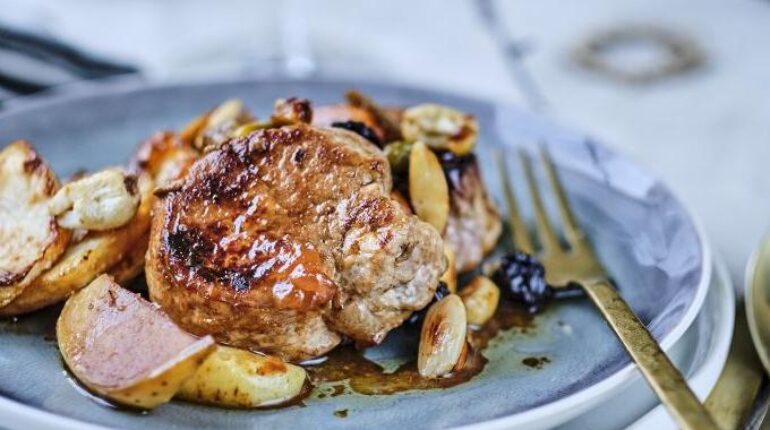
This is where honey enters the narrative. Pour it directly into the pan, watching as it caramelizes against the heat, coating each medallion in an amber glaze. The viscous liquid transforms into something deeper than mere sweetness—it becomes complexity itself. Deglaze immediately with passion fruit vinegar and a glass of water, scraping the flavorful fond from the pan’s bottom. This liquid gold captures every nuance of what the searing process created.
Cover your cocotte and allow the meat to cook for 15 minutes on medium heat, the gentle steam maintaining moisture while the sauce reduces and intensifies. The pork absorbs the surrounding flavors while remaining supremely tender, achieving that coveted balance between caramelized exterior and succulent interior.
Flavor Integration And Resting Process
The transformation from individual components to unified masterpiece begins now. Remove your cocotte from direct heat and introduce the pear confit—this golden preserve acts as the bridge between the honey-glazed pork and the vegetable foundation prepared earlier. The pear’s natural acidity and subtle fruit notes complement the caramelized meat without overwhelming it.
Gently fold in the celery-apple mixture, distributing it evenly around each medallion. This resting phase, occurring off-heat for several minutes, represents culinary patience at its finest. The meat doesn’t simply cool; it absorbs the surrounding sauce, drawing in layers of flavor that mere cooking time cannot achieve. The fibers relax, allowing the sweet-savory complexity to penetrate deeper into the protein’s structure.
The strategic layering of honey, pear confit, and the delicate vegetable base creates dimensional sweetness—not cloying, but multifaceted. Each element plays its assigned role: the honey provides initial richness, the pear adds subtle fruit undertones, while the caramelized celery and apple introduce necessary earthiness and textural contrast. This interplay is precisely why professional cooks insist on resting; it’s the moment when technique transforms into flavor.
What emerges is a dish hovering elegantly between savory and sweet, sophisticated yet approachable. The pork has evolved from seared medallions into something infinitely more refined.
Final Enhancement With Toasted Dried Fruits
The culinary journey reaches its crescendo with a singular element: toasted dried fruits. This final touch transforms an already refined dish into something unmistakably gourmet. Return to your stove and gently warm your nuts and dried fruits—almonds, walnuts, apricots, cranberries—in a dry pan, allowing their natural oils to release and their flavors to intensify. The raisins remain reserved; their delicate structure cannot withstand direct heat without compromising their integrity.
As the fruits achieve that perfect golden moment, their aroma signals completion. Scatter them throughout the cocotte, distributing the textural contrast evenly among the pork medallions. What was previously a harmonious marriage of flavors now gains dimension through contrast. The toasted fruits introduce crunch against tender meat, their concentrated sweetness amplifying the honey-pear complexity without redundancy.
Temperature remains paramount. Serve immediately while the dish maintains its optimal heat—the warmth coaxes maximum aromatic release from the toasted elements and ensures the pear confit retains its luxurious consistency. This is no longer merely filet mignon with vegetables; it has become a composed plate, where every component serves both flavor and presentation.
The result justifies the precision: honey-glazed pork enveloped in sweet-savory sauce, elevated by the sophisticated interplay of fruit, vegetable, and perfectly executed technique.