📌 Honey Balsamic Caramelized Brussels Sprouts
Posted 30 March 2026 by: Admin
Brussels sprouts have a bad reputation, and it’s entirely the fault of boiling. When boiled, they smell like sulfur and fall apart — nobody can blame people for hating them in that state. Roasted in the oven with honey and balsamic vinegar, they become a completely different vegetable.
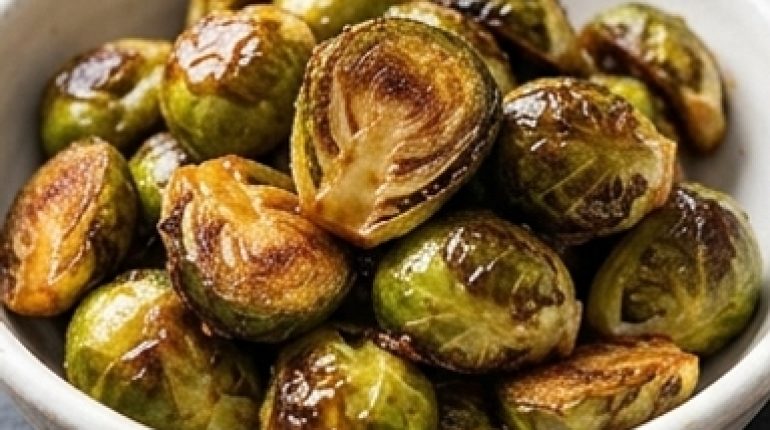
Take a close look at the outer edges: those tiny, almost black leaves, as crispy as thin potato chips. The heart remains tender to the bite. The glaze shines, slightly sticky, with a mahogany brown color reminiscent of deeply caramelized sugar. The smell coming out of the oven mixes the sweetness of honey with a hint of balsamic acidity — it smells like a restaurant dish, from a tray that took ten minutes to prepare.
Why you’ll love this recipe
Ingredient Notes
Five simple ingredients are enough: Brussels sprouts, honey, balsamic, Dijon mustard, and olive oil.
- Brussels Sprouts : Choose them firm, bright green, without yellowed leaves. Size really matters: if some are twice as big as others, cut the large ones into quarters and leave the small ones in halves. They will cook evenly. This is where the difference between a successful dish and a plate of half-burnt, half-raw sprouts is made.
- Honey (or maple syrup) : Classic wildflower honey works perfectly. Maple syrup gives a woodier, slightly less sweet note — some prefer it with sprouts. Avoid very fragrant honeys like lavender or thyme, which compete with the balsamic.
- Balsamic Vinegar : No need to bring out the expensive bottle. A standard supermarket balsamic does the job perfectly. It’s the acidity that counts here — to cut through the sweetness of the honey and balance the natural bitterness of the sprouts.
- Dijon Mustard : People often add it wondering if it’s really necessary. It is. You won’t taste it distinctly in the final result, but it brings a depth that’s missing without it — a slight background tang, something a bit more complex.
The part everyone gets wrong
The secret to crispy sprouts is placing the cut side face down on the tray. It sounds trivial. It is not. The flat surface, in direct contact with the hot metal, will dry and brown while the top cooks more gently. If you toss them on haphazardly, the sprouts will stew in their own steam — tender, sure, but never crispy. Spacing matters just as much: an overcrowded tray is a damp tray. If yours are all touching, use two trays.
The glaze that does all the work
Honey, balsamic, mustard, olive oil, salt, pepper — directly on the tray over the sprouts. Mix with your hands so every sprout is well coated. The texture is sticky under your fingers, slightly syrupy. This is exactly what we want: this consistency will cling to the tray and caramelize into a crust. Just make sure the glaze doesn’t pool too much at the bottom — if it sits in a thick puddle, it will burn before the sprouts are cooked.
Why oven position changes everything
Place the rack in the upper third of the oven, preheat to 200°C. The intense heat from above accelerates surface caramelization. Halfway through — around 12 to 13 minutes — flip the sprouts and rotate the tray. You’ll hear a dull sizzle when you flip them, a sign the reaction is well underway. After 20 to 25 minutes total, the outer edges should be a dark brown, almost amber in places — not just golden, but truly browned. That’s where all the flavor is concentrated.
What to serve them with without overcomplicating things
These sprouts go with almost everything. As a side for a roasted chicken breast, they bring the sweet-tart punch often missing from simple proteins. Over creamy polenta, the contrast in textures is amazing. You can also finish with a bit of grated parmesan — just before serving, while they are still very hot. The cheese partially melts on contact with the glaze and clings to it.
Tips & Tricks
- Dry the sprouts well before mixing with the glaze. After washing, give them a few minutes in a kitchen towel or spread them out on the cutting board. Residual moisture creates steam in the oven, and steam prevents caramelization.
- The glaze that remains stuck to the bottom of the tray after cooking is gold. Scrape it off with a spatula and mix it back into the sprouts when serving — it’s the most flavor-concentrated part.
- If your sprouts are store-bought in a bag (often smaller and already trimmed), reduce the cooking time by 5 minutes and check them starting at 15 minutes. they color faster than fresh ones.
Why aren’t my Brussels sprouts crispy?
Two main reasons: the tray is overcrowded, or the sprouts were still damp. To caramelize properly, they need space — if they touch, they will steam. Dry them well after washing and use two trays if necessary.
Can I prepare this dish in advance?
You can prepare the sprouts (trimmed and mixed with the glaze) a few hours in advance and keep them cool on the tray. The actual cooking should be done at the last minute — sprouts lose their crunch as they cool and don’t reheat quite as well as when they first come out of the oven.
How to store and reheat leftovers?
In the refrigerator in a sealed container for up to 3 days. To reheat, use a dry pan over medium-high heat — 3 to 4 minutes is enough to regain the crunch. The microwave makes them completely soft.
Can I use frozen Brussels sprouts?
Yes, but you must thaw them completely and dry them very thoroughly in a towel before seasoning. Frozen sprouts contain a lot of water and will take longer to caramelize — expect 5 to 10 extra minutes of cooking time.
What can I replace honey with?
Maple syrup works very well and gives a slightly woodier flavor. Date syrup is another option with a more caramelized, less sweet profile. Avoid liquid sweeteners like agave if you really want caramelization — natural sugar is what creates the reaction.
What size tray do I need for 4 people?
A large tray of at least 30×40 cm for 900g of sprouts. If they overflow, split them between two trays rather than piling them up. Space between the sprouts is the number one condition for roasting instead of steaming.
Honey Balsamic Caramelized Brussels Sprouts
American
Side Dish
Brussels sprouts roasted in the oven until the edges are crispy and well-browned, coated in a sweet-tart honey and balsamic vinegar glaze. Simple, fast, and convincing even for skeptics.
Ingredients
- 900g Brussels sprouts, trimmed and halved (large ones quartered)
- 3 c.s. (60ml) honey (or maple syrup)
- 2 c.s. (30ml) balsamic vinegar
- 1 c.s. (15ml) Dijon mustard
- 2 c.s. (30ml) olive oil
- ¾ c.c. fine salt
- ¼ c.c. ground black pepper
Instructions
- 1Preheat the oven to 200°C, rack in the upper third. Line a large baking sheet with parchment paper.
- 2Place the Brussels sprouts on the sheet. Pour over the honey, balsamic vinegar, Dijon mustard, olive oil, salt, and pepper.
- 3Mix with your hands to coat each sprout evenly, then spread them in a single layer, cut side down.
- 4Bake for 20 to 25 minutes, flipping the sprouts and rotating the tray halfway through. Edges should be dark brown and crispy.
- 5Adjust salt and pepper seasoning if needed. Serve immediately.
Notes
• Storage: leftovers keep for 3 days in the refrigerator. Reheat in a dry pan over high heat to regain crunch — avoid the microwave.
• Optional finishes: a handful of walnuts or pecans added in the last 5 minutes of cooking, or freshly grated parmesan when serving.
• If sprouts vary greatly in size, cut the largest ones into quarters for even cooking.
Nutrition Facts (per serving, estimated)
| 215 kcalCalories | 7gProtein | 32gCarbs | 8gFat |