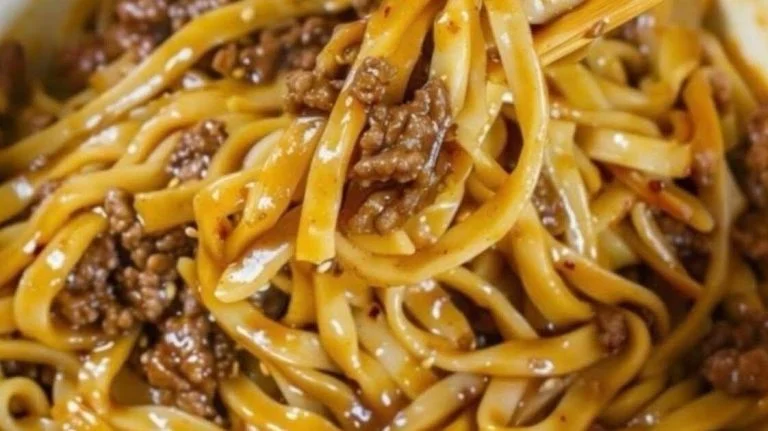
Japanese stir-fried noodles are the kind of dish that is systematically underrated. Yakisoba, in twenty minutes of actual cooking, with no special technique. The only secret: a very hot pan and a sauce you make yourself.
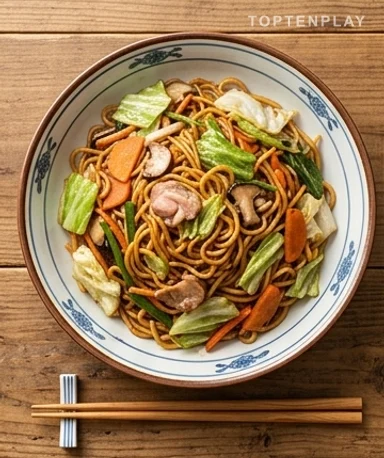
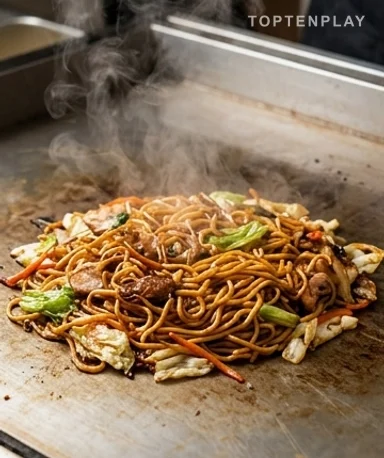
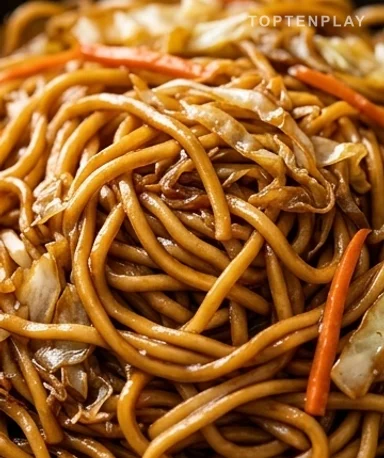
The bowl arrives at the table and immediately smells of caramelized sauce, slightly sweet, with that umami background lingering in the air. The noodles shine a mahogany brown, intertwined with still slightly crunchy cabbage pieces and golden carrots like light caramel. Red ginger on top, a few green flakes of aonori. Simple, dense, and it instantly makes you hungry.
Why you’ll love this recipe
Ingredient Notes
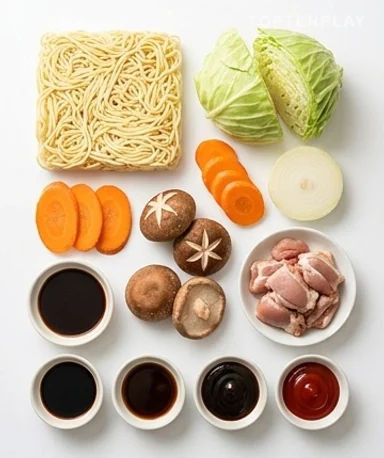
Everything you need for successful yakisoba: noodles, crunchy vegetables, and the four-ingredient sauce.
- Yakisoba noodles : Pre-steamed wheat noodles — not buckwheat soba, despite the name. You can find them in the fresh aisle of Asian groceries. Myojo brand if you can, otherwise fresh Chinese egg noodles work perfectly. The key: take them out of the fridge ten minutes before cooking so they separate without breaking.
- Boneless chicken thighs : Forget the chicken breast here. Thighs have fat, which means flavor, and they don’t dry out over high heat. Cut into one-centimeter strips — they cook in two minutes in the scorching pan.
- Worcestershire sauce : The backbone of yakisoba sauce. Don’t replace this one — it’s what gives that deep, slightly vinegary taste we’re looking for. Lea & Perrins in a pinch, Bulldog if you find the Japanese version in an Asian grocery store.
- Oyster sauce : Just a tablespoon, but it brings a dense umami and a slight viscosity that helps the sauce cling to the noodles. If you’re cooking meat-free, mushroom-based oyster sauces work great.
- Green cabbage : Cut into three-centimeter squares. It should stay slightly crunchy — it’s what provides texture to the dish. No Napa cabbage here, too soft and watery, it would drown everything.
Sauce first
Before turning on the heat, mix the four sauce ingredients in a small bowl: Worcestershire, oyster sauce, ketchup, soy sauce, and a pinch of sugar. Taste it. It should be balanced between sweet and salty, with that slightly acidic backbone. Adjust it now, not later — once in the hot wok, you won’t have time to fix anything. The color is dark brown, almost chocolate. That’s exactly what we want.
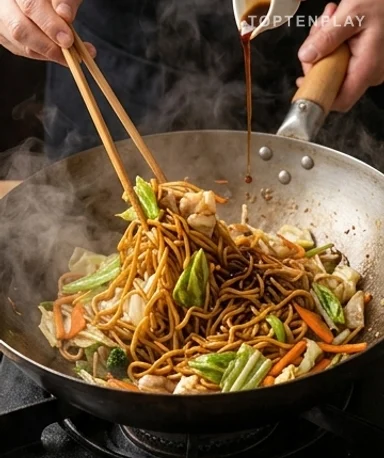
Wok first, noodles second
Heat your wok or large pan over high heat until it starts to smoke slightly. Add a drizzle of oil and the noodles directly. They will sizzle loudly as they hit the surface — that’s the sound we’re looking for. Separate them gently with chopsticks or a spatula without breaking them. Two to three minutes to warm them through, then move them to a plate. This step is important: if you add the noodles with everything else at once, they get soft and stick together. Keep them separate for now.
Chicken and vegetables in order
In the same still-hot pan, add the chicken strips. They should color quickly, in less than two minutes — an intense whistling sound on contact with the pan is a good sign. As soon as they are golden, the onion and carrot go in first. Thirty seconds later, the cabbage and mushrooms. The smell rising is already great: light caramel, sweating vegetables, a bit of smoke from the bottom of the pan. We don’t cook everything at once — hard vegetables stay crunchy if added before the tender ones.
Everything together, high heat
Put the noodles back in the pan with the vegetables and chicken. Pour the sauce around the edge of the wok — not directly on the noodles. It will caramelize for a second on contact with the burning surface before coating everything. Mix vigorously for one minute. The noodles take on a mahogany-brown tint, some catching slightly on the bottom. That’s what gives it that street food taste. Serve immediately, not in five minutes.
Tips & Tricks
- If your pan is small, cook the yakisoba in two batches. An overcrowded pan steams instead of searing — soggy results guaranteed.
- Taste the sauce before putting it in the wok. Every brand of Worcestershire is different, some more acidic, others sweeter. Adjust the sugar then, not after.
- Noodles stuck in a block despite resting at room temperature? Thirty seconds in the microwave in their packaging and they’ll separate effortlessly.
Where to buy yakisoba noodles and what to replace them with if I can’t find them?
Asian grocery stores always have them in the fresh aisle, often the Myojo brand. In supermarkets, look in the international products aisle. Alternatively, fresh Chinese egg noodles work very well — avoid dry noodles, they give a completely different texture.
Why are my noodles soft instead of seared?
Two possible reasons: the pan wasn’t hot enough, or it was too crowded. A crowded pan generates steam and boils the food instead of searing it. If needed, work in two batches — it’s the golden rule for getting noodles that catch slightly on the bottom.
Can the sauce be prepared in advance?
Yes, and it’s actually recommended. It keeps easily for 5 days in the refrigerator in a small closed jar. You can double the quantities and use it for yaki udon or a quick vegetable stir-fry.
How to reheat leftovers without ruining them?
In a pan, high heat, with a tiny drizzle of oil. Two to three minutes is enough. The microwave softens the noodles and makes them mushy — absolutely avoid it for a dish that relies on texture.
What are the best substitutions for chicken?
Peeled shrimp (ultra-fast cooking: 90 seconds), beef strips, pressed firm tofu cut into cubes, or simply portobello mushrooms for a vegetarian version. In any case, cook the protein first, alone, before adding the vegetables.
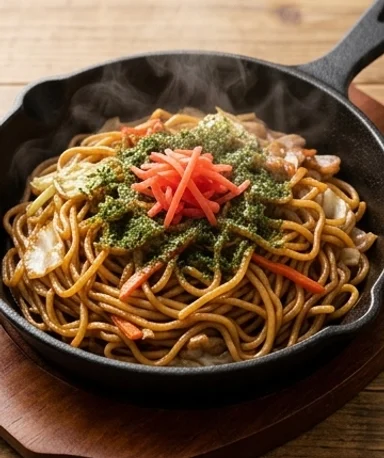
Homemade Yakisoba: Japanese stir-fried noodles in 30 minutes
Japanese
Main Course
Wheat noodles stir-fried over high heat with chicken, crunchy vegetables, and a sweet-savory Japanese street food style sauce. Ready in 30 minutes, one pan.
Ingredients
- 400g fresh yakisoba noodles (or Chinese egg noodles)
- 400g boneless, skinless chicken thighs, cut into 1 cm strips
- 200g green cabbage, cut into 3 cm squares
- 1 carrot (about 100g), peeled and julienned
- 1 medium onion (about 150g), sliced into half-moons
- 100g shiitake mushrooms (or button mushrooms), sliced
- 2 tbsp neutral vegetable oil
- ½ tsp freshly ground black pepper
- 3 tbsp Worcestershire sauce (45ml)
- 1 tbsp oyster sauce (15ml)
- 1 tbsp ketchup (15ml)
- 1 tbsp soy sauce (15ml)
- 1 tsp sugar
- 1 tbsp aonori (dried green seaweed) — optional
- 2 tbsp beni shoga (pickled red ginger) — optional
- 1 handful katsuobushi (bonito flakes) — optional
Instructions
- 1Mix the Worcestershire sauce, oyster sauce, ketchup, soy sauce, and sugar in a bowl. Taste and adjust the sugar to preference.
- 2Take the noodles out of the refrigerator 10 minutes before cooking. Gently separate them by hand.
- 3Heat a wok or large pan over high heat. Add 1 tbsp of oil, then the noodles. Stir-fry for 2-3 minutes, separating them with a spatula. Set aside on a plate.
- 4In the same pan over high heat, brown the chicken strips for 2 minutes with 1 tbsp of oil. Season with pepper. They should sear, not steam.
- 5Add the onion and carrot. Stir-fry for 1 minute while stirring.
- 6Add the cabbage and mushrooms. Stir-fry for another minute — the cabbage should remain slightly crunchy.
- 7Return the noodles to the pan. Pour the sauce around the edge of the wok, not directly onto the noodles.
- 8Mix vigorously for 1 minute until the noodles are evenly coated and slightly caramelized.
- 9Serve immediately. Garnish with aonori, beni shoga, and katsuobushi if desired.
Notes
• Storage: keeps for 2 days in the refrigerator. Reheat in a pan over high heat with a drizzle of oil — never in the microwave.
• The sauce can be prepared up to 5 days in advance and stored in the refrigerator in a closed jar.
• Protein variations: peeled shrimp (90 seconds cooking), pressed firm tofu, portobello mushrooms for a vegetarian version.
Nutrition Facts (per serving, estimated)
| 425 kcalCalories | 32gProtein | 44gCarbs | 14gFat |