📌 Homemade twisted brioches: the three-step folding technique that transforms your cinnamon dough
Posted 3 March 2026 by: Admin
Preparing The Enriched Brioche Dough
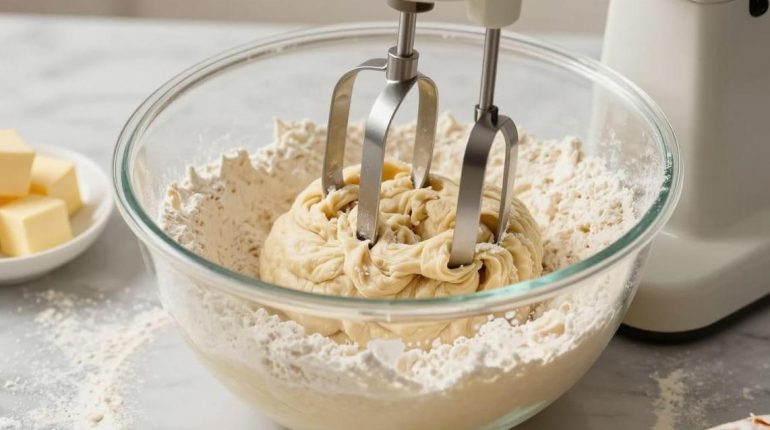
The success of these twisted brioches relies on an impeccable technical base. In the bowl of a stand mixer, pour the flour, forming a well. Place the salt and sugar on the side, never in direct contact with the yeast. In the center, incorporate the lukewarm water, crumbled yeast, and the whole egg.
Start kneading at low speed with the dough hook. Once the dough is homogeneous, introduce the butter cubes one by one, waiting for each piece to be completely absorbed before adding the next. This progressive incorporation prevents fat separation and guarantees a silky texture. Knead for 10 minutes to develop the gluten network that will give the brioche its fluffiness.
Form a ball, cover it with plastic wrap in direct contact to prevent drying. Two options are available depending on your schedule: a slow rise in the refrigerator overnight, ideal for anticipating and developing flavors, or a quick 45-minute fermentation in a turned-off oven with a bowl of boiling water for same-day use. The dough must double in volume, a sign that the yeast has worked perfectly.
This first step determines the airy structure that will house the upcoming aromatic filling.
The Signature Cinnamon-Brown Sugar Filling
Once the dough has risen, roll it out into a large rectangle half a centimeter thick on a lightly floured work surface. This precise thickness guarantees the perfect balance between fluffiness and hold during shaping.
Prepare the aromatic mixture by incorporating the sugar and cinnamon into the softened butter until a creamy consistency is obtained. Using an offset spatula, spread this preparation thinly over the entire surface of the dough, making sure to reach the edges for a homogeneous distribution.
Now comes the decisive step that distinguishes these brioches: fold the filled dough in half, then roll it out slightly again. This double pass concentrates the cinnamon-brown sugar layers and creates aromatic veins that will run through every bite. The technique intensifies the flavors without weighing down the texture.
This work in successive layers prepares the internal structure which, once braided and rolled, will reveal caramelized spirals upon baking. The rectangle thus prepared now awaits the strategic cutting that will transform this fragrant sheet into spectacular twists.
Shaping Into Spiraled Twists
The fragrant rectangle now requires strategic cutting. Divide it into 8 equal strips using a sharp knife or a pizza wheel. On each strip, make two longitudinal incisions to create three strands connected at their base – the upper end remains intact, ensuring cohesion during braiding.
Braid each trio of strands like a classic plait, alternately crossing the outer strands toward the center. This manipulation immediately reveals the cinnamon-brown sugar layers trapped in the dough, creating a promising marbled pattern.
Once the braid is complete, roll it onto itself in a tight spiral, like a snail. The trick lies in the placement of the final end: tuck it firmly under the formed brioche. This invisible fixation prevents any unrolling during baking and guarantees an impeccable shape.
Gently place each spiral on a baking sheet lined with parchment paper, leaving generous space between them – they will double in volume during the final rise. These spectacular twists, which seemed complex, result from a logical sequence accessible to any meticulous amateur baker.
Glazing, Final Rise, And Mastered Baking
These carefully aligned spirals now require their golden finish. Use a soft brush and a beaten egg yolk. Generously brush the surface of each brioche, making sure to uniformly cover all the ridges of the twist – this step determines the intensity of the final caramelized color.
Then allow them a final fermentation of 30 minutes in a warm atmosphere. Place the tray in a turned-off oven accompanied by a bowl of hot water, or simply in a temperate room away from drafts. The brioches visibly swell, their scrolls round out, and their texture becomes airy.
Preheat your oven to 175°C (350°F) during this rise. This moderate temperature is the secret to perfect baking: too high, and the crust would brown before the center is cooked; too low, and the brioches would dry out without developing that characteristic lacquered coat.
Bake for 25 to 30 minutes depending on your appliance’s power. Monitor the progressive coloring: when the spirals sport a deep amber hue and your kitchen smells of caramelized cinnamon, they are ready. Remove them gently and let them cool on a wire rack – their soft texture will be fully revealed at room temperature, each layer releasing its enchanting fragrance.