It starts with a scent. Not a subtle one—a real warm blast of cinnamon and cloves that takes over the kitchen the moment the water begins to simmer. Five ingredients, one pot, twenty minutes. That’s it.
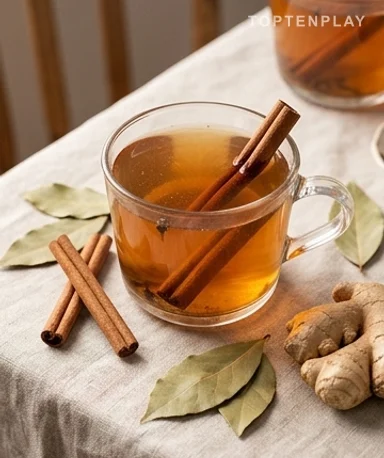
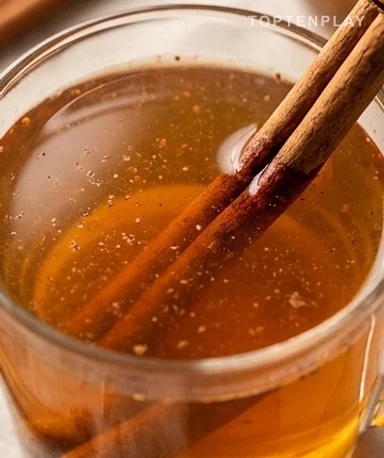
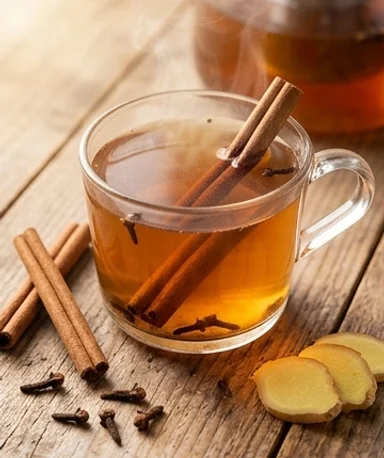
In the cup, the tea takes on a deep amber, almost copper color, with golden highlights when the light passes through the glass. The steam rises slowly, carried by that scent of pantry spices—the kind that vaguely reminds you of a winter market but in a more understated, more direct version. The cinnamon sticks still float on the surface. One sip and you first feel the ginger, clean and slightly sharp on the tip of the tongue, before the round warmth of the cinnamon takes over.
Why you’ll love this recipe
Ingredient Notes
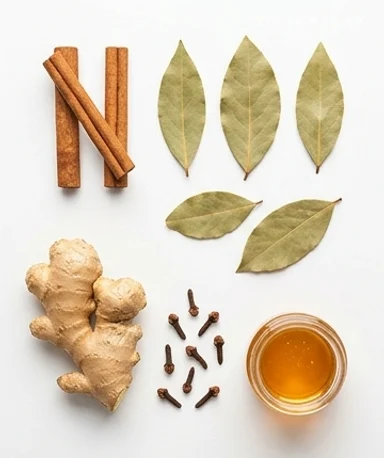
Five simple pantry ingredients are enough to prepare this traditional spiced tea.
- Cinnamon sticks (3 pieces) : Get Ceylon cinnamon if you can—finer, slightly sweeter, with a texture that curls into fragile little tubes you can crumble with your fingertips. Cassia cinnamon, the dark brown version in thick sticks found everywhere in supermarkets, also works; it’s just more powerful. Three sticks, no more—beyond that it starts tasting medicinal.
- Bay leaves (6 leaves) : Bay leaf in tea is surprising. Yet it brings something slightly herbaceous and earthy that balances the sweet spices. Use dry leaves—fresh leaves are too strong and turn bitter. Crumple them slightly between your fingers before putting them in the water.
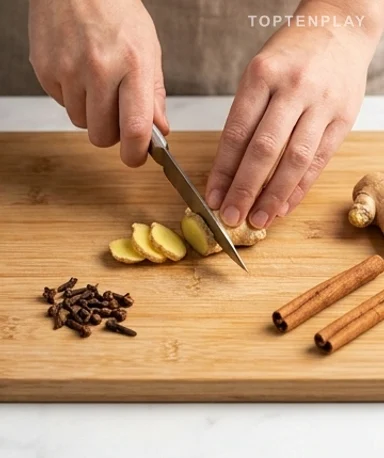
- Fresh ginger (a small piece) : A piece about the size of a thumb. Peel it with the edge of a spoon—it works better than a knife and you lose less flesh. Cut it into rough slices; no need to mince it fine since you’ll be straining it anyway.
- Cloves (10 pieces) : Ten cloves sounds like a lot. It is if you let them boil on high heat. But at a gentle simmer, they just give a warm and slightly numbing note at the back of the throat. Avoid very old cloves—if they smell like nothing when you open the jar, replace them; they won’t contribute anything.
Throw everything in the pot without overthinking it
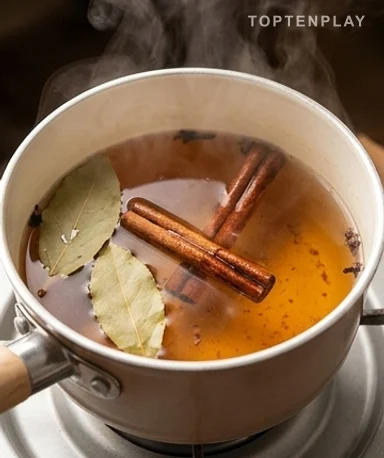
There is no magic order. The cinnamon sticks, the bay leaves crumpled between your fingers, the sliced ginger, the cloves—everything goes into the pot at the same time with the 500 ml of cold water. Start cold, not in already boiling water: the spices have time to begin infusing even before the heat really sets in. After a few minutes, a light light-brown foam forms on the surface. This is normal—it indicates that the essential oils are starting to be released.
Let it simmer, don’t touch it for 15 minutes
As soon as it reaches a boil, immediately turn down the heat. We don’t want a rolling boil—just a quiet simmer, with small bubbles gently rising along the sides. This is the stage where the kitchen starts to smell good. The scent changes over the minutes: first sharp and almost spicy, then rounder, warmer, with cinnamon notes gradually taking over. Fifteen minutes. Not ten, not eight. The cloves need this time to express themselves without dominating the rest.
Strain, wait a bit, then taste before adding anything
Strain through a fine mesh sieve directly into the cup. The liquid that falls is a translucent amber, slightly darker toward the bottom. Taste it plain first—it’s probably already balanced. If you want to add honey, wait until the tea has cooled a bit, around 65°C, hot but not scalding: the honey dissolves better and its aromas don’t evaporate instantly. A few drops of lemon accentuate the sharp side of the ginger. See what you prefer.
Tips & Tricks
- The spices can be used a second time—put them back in the pot with 500 ml of fresh water; they still give a decent result even if it’s a bit less intense. Don’t go beyond two uses.
- If the clove is too dominant for your taste, reduce to 6 or 7 pieces next time. The dosage indicated in the recipe is a guide, not a law.
- Drink it between 55 and 65°C—the tongue perceives aromas better in this window. Below 40°C the tea becomes flat and the spices lose all their depth.
Can I prepare this tea in advance and store it?
Yes, you can prepare a larger quantity and store it in the refrigerator for up to 48h in a closed jar. Reheat over low heat without re-boiling—a second boil makes the cloves too bitter. Strain well before storing.
Can I use ground ginger instead of fresh ginger?
Yes, but in moderation. Ground ginger is much more concentrated—start with half a teaspoon and adjust to your taste. The result is a little less fresh and sharper than fresh ginger, but it works very well.
Can the spices really be used twice?
Yes, a second infusion is perfectly valid. Put the same spices back in the pot with 500 ml of fresh water and repeat the process. The tea will be slightly less full-bodied but remains very pleasant. Beyond two uses, there isn’t much left to extract.
Is honey essential?
Not at all. The recipe works very well without sweetener—the spices already bring a natural sweetness via the cinnamon. If you want to sweeten it, add honey when the tea has cooled slightly (not scalding) to preserve its aromas. A slice of lemon is a good alternative.
Can I add other spices or ingredients?
Absolutely. Cardamom (2-3 pods) fits very well in this blend and strengthens the floral side. A stick of licorice adds an aniseed sweetness. Grated nutmeg (a pinch) also works. Avoid adding too many spices at once—the blend loses its clarity.
Why simmer instead of a rolling boil?
A prolonged rolling boil extracts bitter compounds from the cloves and bay leaves too harshly. Gentle simmering allows for a gradual and balanced extraction. The tea remains round and pleasant instead of becoming harsh.
Homemade Spiced Tea
Traditional
Beverage
A traditional tea with five pantry spices—cinnamon, bay leaf, ginger, cloves—gently simmered for a warm, amber, and comforting drink.
Ingredients
- 3 cinnamon sticks
- 6 dry bay leaves
- 15g fresh ginger (a thumb-sized piece)
- 10 cloves
- 500 ml cold water
- 1 tsp honey (optional)
- a few drops lemon juice (optional)
Instructions
- 1Peel the ginger with the edge of a spoon and cut it into rough slices.
- 2Crumple the bay leaves slightly between your fingers to release their oils.
- 3Place all ingredients (cinnamon, bay leaf, ginger, cloves) in a pot and cover with the 500 ml of cold water.
- 4Bring to a boil over medium heat, then immediately reduce to low heat.
- 5Let simmer gently for 15 minutes without a lid.
- 6Strain through a fine mesh sieve directly into the cup.
- 7Let cool slightly, then add honey and/or lemon to taste.
Notes
• Storage: strain the tea and store it in a closed jar in the refrigerator for up to 48h. Reheat over low heat without re-boiling.
• The spices can be used a second time by simply adding 500 ml of fresh water and repeating the same process.
• For a milder tea, reduce the cloves to 6-7 pieces. For a more intense ginger tea, add an extra 5g.
Nutrition Facts (per serving, estimated)
| 15 kcalCalories | 0gProtein | 3gCarbs | 0gFat |