📌 Homemade rolls in 4 ingredients: the express recipe that rivals your bakery
Posted 14 January 2026 by: Admin
The Minimalist Recipe Revolutionizing Home Baking
Four ingredients. That’s all that separates your kitchen from an artisan bakery. This easy rolls recipe overturns the misconception that homemade bread requires technical expertise and cupboards full of specialized ingredients. All-purpose flour, warm milk, instant yeast, and sugar: this deliberately short list demonstrates that accessibility rhymes with quality.
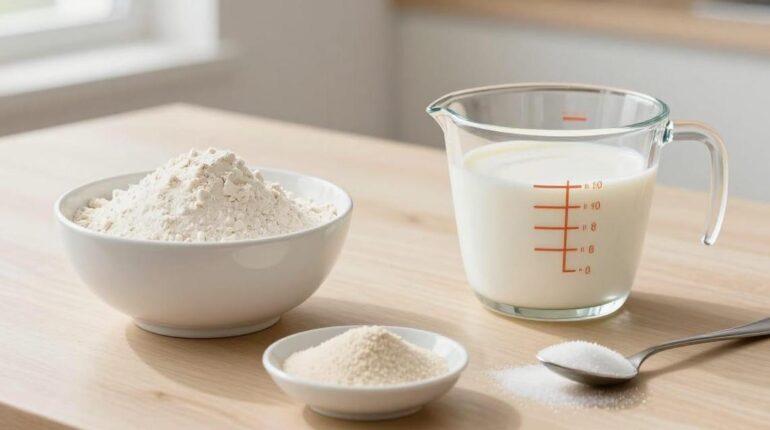
The quantities reveal a precision designed for guaranteed success. Three cups of flour (375 g) form the structural base, while one cup of warm milk (240 ml) activates 2¼ teaspoons of instant yeast – a standard packet. A single tablespoon of sugar completes the set. This simplicity measured in both metric and imperial systems eliminates any geographical or cultural barrier.
The deliberate absence of butter, eggs, or even salt distinguishes this approach. Where other recipes multiply components, this one proves that the essentials are enough. The cost per serving defies all commercial competition, transforming a few euros into a dozen fresh rolls. Faced with inflation eating into food budgets, this economic alternative responds to a quest for authenticity without financial compromise.
This recipe, recognized among the “best” by the culinary community, reshuffles the deck for home baking. It promises freshness on demand and zero waste, with each batch corresponding exactly to the moment’s needs.
Ingredients Decoded: Why These 4 Elements Are Enough
Each component plays a precise scientific role. All-purpose flour offers the ideal balance between protein (10-12%) and starch, creating the honeycomb structure without needing specialized flour. Its gluten develops naturally during kneading, trapping the gas bubbles produced by fermentation.
Warm milk is the essential thermal trigger. Between 37 and 43°C (98-110°F), it instantly activates the yeast without a prior resting phase. Unlike water, it provides lactose and proteins that enrich the crumb and brown the crust. This precise temperature explains why “warm” is non-negotiable: too cold, the yeast remains inert; too hot, it dies.
Instant yeast eliminates the traditional step of pre-activation in sugar water. This time-saving feature revolutionizes home baking: mix directly with dry ingredients, saving 15 minutes and an extra bowl. A standard packet (2¼ teaspoons) is enough to trigger the fermentation that will transform the dense dough into an airy structure.
Sugar, often misunderstood, does not sweeten the bread. It feeds the yeast, accelerating the production of CO₂ that makes the dough rise. A single tablespoon catalyzes the entire process without altering the final taste. This chemical synergy between four components explains why no additions are necessary: salt, butter, or eggs would unnecessarily complicate an already perfect equation.
The Simplified Step-By-Step Method
This chemical synergy translates into concrete actions accessible to novices. Preparation begins by mixing dry ingredients in a bowl: flour, instant yeast, and sugar harmonize before adding the warm milk. This sequence avoids lumps and ensures a homogeneous distribution of the yeast.
Kneading requires 8 to 10 minutes on a floured surface. The dough, initially sticky, gradually develops its elasticity under your hands. Fold, push, turn: this repetitive movement aligns the gluten strands until a smooth and supple surface is obtained. No mixer needed, just the patience to feel the transformation under your fingers.
The first rise lasts 1 hour in a covered bowl at room temperature. The dough doubles in volume, a sign that fermentation is working. Then divide it into equal portions, shaping regular balls on an oiled tray. This handling expels excess gas, restructuring the crumb for the final 30-minute rise.
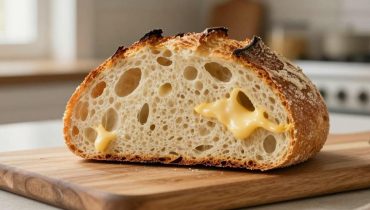
Baking at 180°C (350°F) for 20 to 25 minutes reveals the magic: golden crust, soft crumb, comforting aroma. The internal thermometer should read 90°C (195°F) at the core, guaranteeing complete cooking without drying out. This thermal precision transforms four ordinary ingredients into a tangible culinary achievement, proving that simplicity often surpasses complexity.
Economic and Practical Impact for Daily Life
This technical mastery reveals a considerable economic advantage. With less than €2 in raw materials, this recipe produces a dozen rolls, a unit cost of 15 cents compared to €0.80 to €1.20 in a bakery. This 85% saving represents a concrete solution to the food inflation hitting households in 2026.
Freshness on demand eliminates the chronic waste of industrial bread. No more hardened slices in the basket: you cook only the necessary quantity, when you want. Remaining portions freeze easily, providing a backup stock that reheats in 10 minutes in the oven. This flexibility transforms your kitchen into a personal bakery, accessible 24/7.
The recipe adapts easily to varying needs. Double the proportions for a family meal, halve them for a couple. Universal ingredients – flour, milk, yeast, sugar – are found in every supermarket, eliminating tedious searches for specialized items. This permanent accessibility guarantees food autonomy without complex planning.
Qualified as “Best Recipes” by international culinary communities, this method has already won over thousands of households seeking authenticity without compromise. The minimal investment in time and money produces results worthy of an artisan, democratizing a know-how long perceived as reserved for experts.