The first time I opened a jar of homemade kimchi, the smell stopped me in my tracks. Sour, fermented, with that heat from the chili slowly rising into my nostrils. Nothing like the jars sold in Asian grocery stores — this is more alive, rawer, more real.
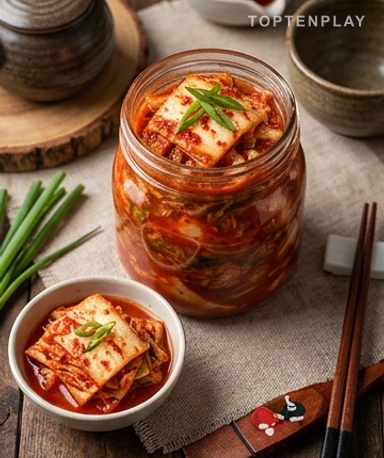
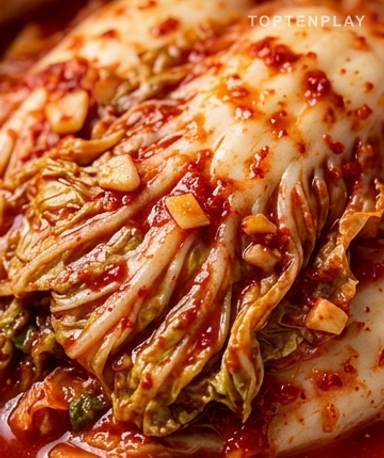
Red kimchi is that mass of napa cabbage leaves tinged with a deep brick red, almost carmine at the edges. They are glossy, coated in a sticky paste that smells of garlic, ginger, and chili all at once. Under your fingers, the cabbage keeps its crunch — not soft, not flabby, an honest resistance that gives just enough. And what they call umami flavor, here, you understand it physically.
Why you’ll love this recipe
Ingredient Notes
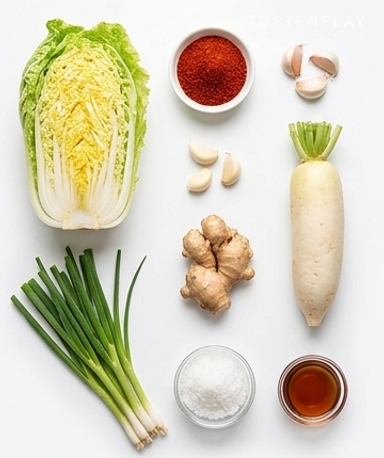
Everything needed for authentic red kimchi: napa cabbage, gochugaru, garlic, ginger, and daikon radish.
- Gochugaru (Korean chili flakes) : undefined
- Napa cabbage (Chinese cabbage) : undefined
- Fish sauce : undefined
- Fresh ginger : undefined
Salting: the part everyone messes up
Cutting the cabbage and covering it with coarse salt seems simple. The classic mistake is not leaving enough time. The salt needs at least two hours — ideally overnight — to extract the water from the cabbage and make it pliable. You’ll know it’s ready when a leaf bends without breaking, flexible like wet leather. Then rinse thoroughly with cold water, at least three times. Taste: the cabbage should be salty, but not overwhelming. This is the foundation everything rests on, and you can’t fix over-salted cabbage once you’ve started.
The red paste: why gochugaru changes everything
In a large bowl, combine the gochugaru, crushed garlic, grated ginger, fish sauce, and a small spoonful of sugar. The color shifts from pale red to dark brick red in seconds of mixing — almost brown at the edges when the garlic starts to incorporate. The smell is blunt. Raw garlic mixed with chili doesn’t do subtlety. Add the roughly chopped green onions and daikon radish strips. Taste the paste before going further: it should seem too salty, too spicy — that’s intentional, the cabbage will balance everything out.
The massage: hands in, no exceptions
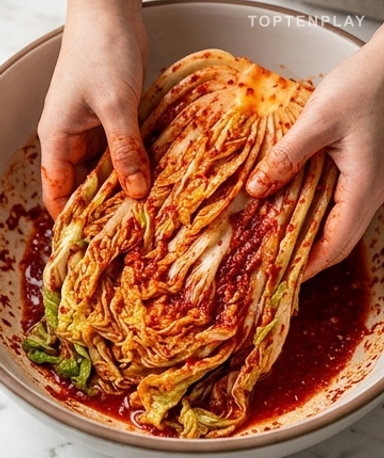
Put on gloves if you don’t want to end up with burgundy-red hands for 48 hours. Add the drained cabbage to the paste and really massage it — don’t just mix with a spoon. Hands in the bowl, you press, you coat, you work the paste between every leaf. The cabbage resists a bit at first, then it gives in, almost silky under the fingers. Every piece must be uniformly coated, with no pale zones. This moment is the heart of the recipe. Five minutes of work that decide everything.
Fermentation: why I always leave it longer than planned
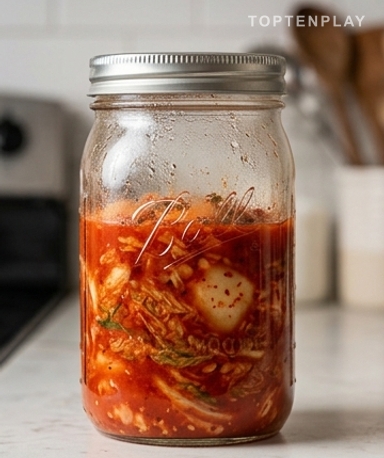
Pack the kimchi tightly into a clean jar, pressing firmly to push out the air — the brine will rise, and that’s exactly what we want. Leave 3 to 4 centimeters of space at the top of the jar; it will expand. At room temperature between 18 and 22°C, let it ferment for 1 to 2 days, opening the jar once a day to purge the gases. You’ll hear a slight hiss upon opening, a sourer smell rising. After this room temperature phase, head to the fridge. It will be edible the next day, but fully itself after a week. Two weeks is even better.
Tips & Tricks
- Taste your kimchi every day during room temperature fermentation — it’s the only way to know when the acidity suits you. Some like it very fresh after 24 hours, others wait a week for a stronger, deeper taste.
- If your jar overflows during fermentation, it’s a good sign. Place it on a plate to avoid a mess and open it briefly once a day to release pressure.
- Kimchi that is three or four weeks old, more acidic and slightly softened, shouldn’t be thrown out — it should be cooked. Mixed into fried rice with an egg and a drizzle of sesame oil, it’s probably the best use for it.
How long does homemade kimchi keep in the refrigerator?
Well-prepared kimchi packed into a clean jar easily keeps for 2 to 3 months in the fridge. The flavor evolves over time: tangier, more complex. A 6-week-old kimchi isn’t spoiled, it’s just different — perfect for cooking.
How do I know if the fermentation went well?
A slight hiss when opening the jar, a sour and fermented smell (not rotten), and a cloudy brine are all positive signs. If you see mold on the surface, remove it and ensure the vegetables stay submerged in the brine.
Can I make kimchi without fish sauce?
Yes. Replace it with 2 tablespoons of soy sauce mixed with one teaspoon of white miso. The result is slightly less deep in umami flavor, but perfectly fine and the fermentation proceeds exactly the same way.
Can I reduce the amount of gochugaru for a less spicy kimchi?
Yes, no problem. Two tablespoons instead of four result in a mild, slightly pinkish kimchi that children tolerate well. The acidity and fermented taste remain present — only the heat decreases.
Is an airtight glass jar mandatory?
No, not necessarily airtight — canning-type jars work very well. The important thing is that the jar is clean and the vegetables stay submerged under the brine. Avoid metal containers; the acidity attacks the metal.

Homemade Red Kimchi
Korean
Condiment / Side Dish
The great fermented Korean classic, homemade with 30 minutes of effort. Spicy, tangy, alive — it improves over the weeks in your refrigerator.
Ingredients
- 1 (approx. 1.2 kg) napa cabbage (Chinese cabbage)
- 50g coarse salt (for salting)
- 35g (4 tbsp) gochugaru (Korean chili flakes)
- 6 cloves crushed garlic
- 20g freshly grated ginger
- 3 tbsp (45ml) fish sauce
- 1 tsp (5g) sugar
- 200g daikon radish, julienned
- 4 stalks green onions, cut into 4 cm lengths
Instructions
- 1Cut the cabbage into quarters and then into 4-5 cm pieces. Place in a large bowl, cover with coarse salt, and massage for 2 minutes to distribute well.
- 2Let rest for at least 2 hours (or overnight) until the cabbage is flexible and has released its water.
- 3Rinse the cabbage 3 times in cold water, then squeeze firmly between your hands to remove excess moisture.
- 4In a bowl, mix the gochugaru, garlic, ginger, fish sauce, and sugar until a smooth paste forms.
- 5Add the drained cabbage, julienned radish, and green onions to the chili paste. Put on gloves and massage for 3-4 minutes until completely and uniformly coated.
- 6Pack the kimchi firmly into a clean jar, pressing down to bring the brine to the top. Leave 3-4 cm of free space at the top.
- 7Close the jar and let ferment at room temperature (18-22°C) for 1 to 2 days, opening briefly each day to release gases.
- 8Transfer to the refrigerator. The kimchi is ready to eat after 5 to 7 additional days and reaches its full potential around 2 weeks.
Notes
• Storage: up to 3 months in the refrigerator. The flavor intensifies and becomes more acidic over time — this is normal and intended.
• Gochugaru is not easily substituted: neither cayenne pepper nor paprika has the same grainy texture or fruity sweetness. It can be found in Korean grocery stores or online.
• Version without fish sauce: replace with 2 tbsp soy sauce + 1 tsp white miso for a vegan result with comparable umami.
Nutrition Facts (per serving, estimated)
| 22 kcalCalories | 1.5gProtein | 4gCarbs | 0.3gFat |