📌 Homemade Pão Français: the Brazilian recipe for crispy small breads in 6 simple steps
Posted 30 December 2025 by: Admin
The Foundations Of A Traditional Brazilian Recipe
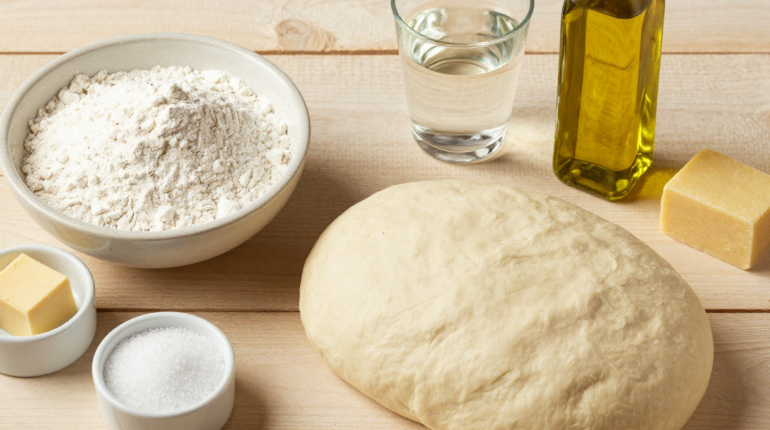
Six common ingredients are enough to recreate Pão Français, the daily bread that appears every morning on Brazilian tables. Wheat flour, salt, sugar, yeast, warm water, and optional oil: this minimalist list demystifies the apparent complexity of a bakery recipe that many consider inaccessible.
The proportions prove to be surgically precise. For 500 grams of flour, the formula requires exactly 10 grams of salt, 10 grams of sugar, and about 300 milliliters of warm water. The yeast adapts according to availability: 10 grams of dry yeast or 30 grams of fresh yeast produce the same fermentative effect. This flexibility allows these small crispy breads to be made without specialized equipment or rare ingredients.
The tablespoon of oil remains optional, a detail revealing the rustic authenticity of this recipe. Pão Français does not depend on any artifice: its airy texture and golden crust are born solely from the balance between these basic components. This accessible simplicity contrasts with bakery breads whose recipes jealously guard their secrets.
The temperature of the warm water is already the first indicator of a craftsmanship where every parameter counts.
The Balance Of Proportions For The Perfect Texture
This warm water temperature is between 35 and 40 degrees Celsius, a critical threshold that activates the yeast without compromising its vitality. Above 45 degrees, the ferments die; below 30 degrees, fermentation slows down to inertia. The dosage of 300 milliliters for 500 grams of flour establishes a 60% hydration ratio, a characteristic proportion for breads with a crispy crust.
The mention of “about” before this volume of water reveals a professional adjustment rarely explained. Depending on ambient humidity and the flour’s absorption rate, the exact amount varies by 10 to 20 milliliters. This flexibility distinguishes the experienced baker from the beginner: the texture of the dough takes precedence over absolute measurement.
The 10 grams of salt regulate fermentation and strengthen the gluten network, while the 10 grams of sugar feed the yeast and promote the Maillard reaction during baking. This chemical caramelization produces the iconic golden crust of Pão Français. Each ingredient fulfills a precise structural function in the final architecture of the bread.
The choice between dry and fresh yeast now determines the practical flow of preparation.
The Key Role Of Yeast In Lightness
This flexibility in the choice of yeast is based on a precise conversion equivalence: 10 grams of dry yeast correspond exactly to 30 grams of fresh yeast, a 1 to 3 ratio. This proportion results from water content: fresh yeast contains 70% moisture, while the dehydrated version retains only 8%. The fermenting power remains identical once the organisms are reactivated.
Activation by warm water constitutes the metabolic trigger. Upon contact with liquid between 35 and 40 degrees, dormant microorganisms resume their enzymatic activity. Fed by the sugar in the recipe, they produce carbon dioxide which creates the characteristic internal aeration. Without this gaseous rise, the bread would remain dense and compact.
Dry yeast offers a practical advantage: its prolonged shelf life at room temperature eliminates the need for immediate refrigeration. The fresh version, perishable within a few weeks even when cold, requires regular sourcing. This logistical accessibility democratizes the domestic production of Pão Français without specialized equipment or rare ingredients.
The list of ingredients ends here, but the source article then reveals a major editorial gap.
Interrupted Preparation: An Editorial Mystery
This gap materializes as an abrupt break in content after the list of ingredients. Where the reader naturally expects kneading instructions, resting times, and baking temperature, the source article offers a reference: “continue on the next page.” This mention points to inaccessible content, leaving the recipe incomplete.
The absence of a detailed protocol creates informative frustration. Crucial steps remain undocumented: how long to knead the dough to develop gluten? What rising duration guarantees optimal volume? At what temperature to bake to obtain the golden crust? These questions remain unanswered in the provided document.
To reconstruct the complete process, one would need to rely on standard bread-making techniques: initial mixing of dry ingredients, gradual incorporation of warm water, vigorous kneading for 10 to 15 minutes, first rise of one hour, shaping of individual breads, second rise of 30 minutes, then baking in a hot oven. These steps follow the universal logic of artisanal baking.
This editorial interruption transforms a promised recipe into a simple inventory of ingredients, requiring prior knowledge to fill the methodological gaps.