Everyone knows onion-garlic-ginger syrup. And everyone avoids it. Too strong, too smelly, too weird — or so they say. In reality, it’s one of the gentlest remedies you can prepare on a Sunday afternoon, using three ingredients that are already hanging around your kitchen.
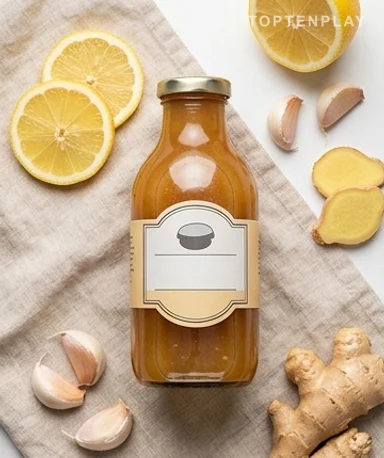
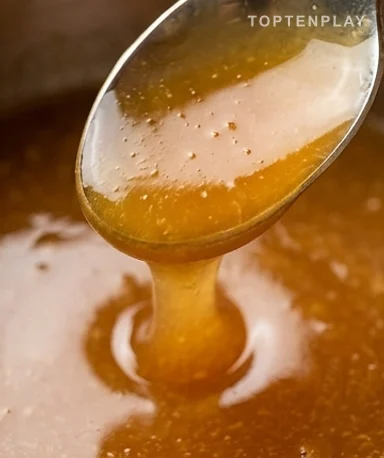
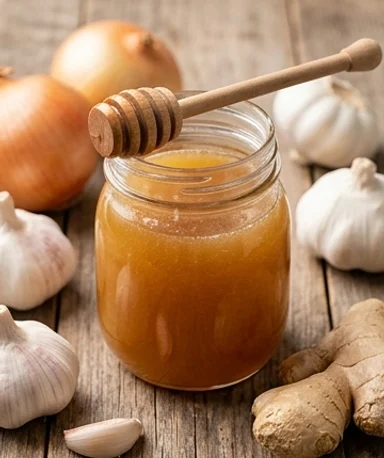
In the jar, the syrup takes on a deep amber color, somewhere between light caramel and well-steeped tea. It is slightly thick — not like honey, but more like a juice reduced over low heat. When hot, the smell is pungent and frank. But once cooled and put in the fridge, it mostly smells of ginger with a background sweetness. A tablespoon in the morning, and you move on with your day.
Why you’ll love this recipe
Ingredient Notes
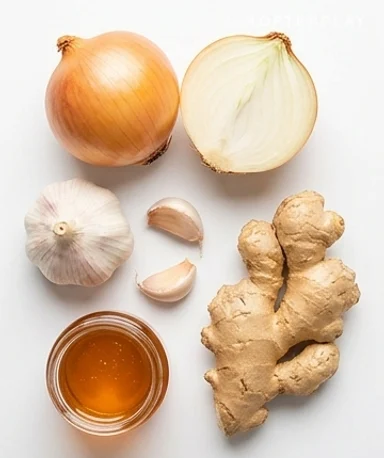
The three pillars of the remedy: onion, garlic, ginger — plus honey to bind it all together.
- Yellow onion : Not red, not shallots. The classic yellow onion has the most useful sulfur compounds and holds up well to cooking without becoming bitter. Two medium onions will do the trick.
- Fresh garlic : A whole head. Not garlic powder, not garlic preserved in oil in a jar — fresh garlic, crushed then gently heated, releases something that processed versions simply don’t have. Choose firm cloves without a green germ inside.
- Fresh ginger : A piece weighing about 100 g, roughly the size of your index and middle fingers combined. The skin comes off easily with the back of a spoon. Avoid powder here; the impact is really not the same.
- Honey : Good quality liquid honey. Raw, unpasteurized honey is ideal, but a classic acacia works very well. It sweetens, preserves, and gives the syrup that slightly coating texture.
- Lemon : Optional but recommended. The juice of half a lemon added off the heat brings a slight acidity that balances the honey and wakes everything up. If your lemon is untreated, a few zests in the pot during cooking won’t hurt.
Crush the garlic instead of finely chopping it
Start with the garlic. Lay each clove flat, place the flat side of the knife on top, and press down with your palm. The skin slips off easily — it’s the only really useful trick for garlic. Crushing is more than enough: no need to chop to the millimeter; coarse pieces are perfect here. Cut the onion into thick quarters, and slice the ginger into rounds about 5 mm thick. No surgical precision is required. Everything will simmer for a long time and will end up being filtered anyway.
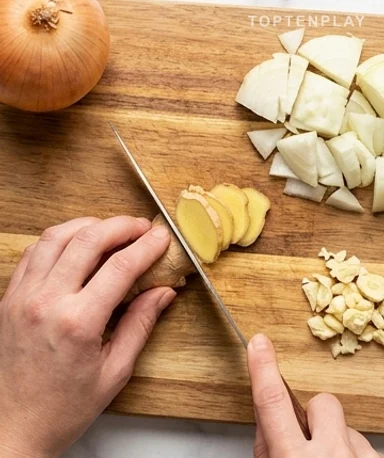
Set to low heat and don’t touch anything for 25 minutes
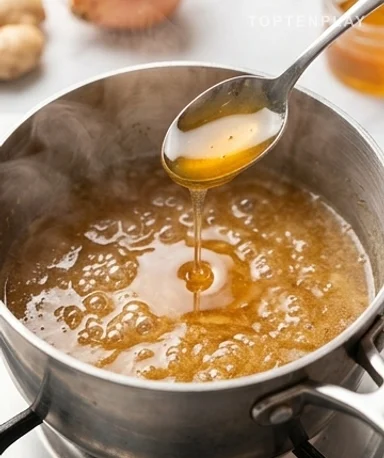
Pour the ingredients into a small saucepan, cover with water to the same level — about 500 ml — and bring to a simmer. Not a boil. A simmer: a few lazy bubbles rising to the surface from time to time, not an agitated boiling. At this stage, the smell in the kitchen is frank, sharp, almost aggressive. This is normal, and it’s temporary. Let simmer uncovered for 25 minutes, resisting the urge to stir constantly — let the liquid do its work. It will reduce by about a third and take on a golden hue like a very light caramel.
Add the honey off the heat — never during cooking
Remove the pan from the heat and wait 5 minutes. Honey should always be added to a liquid that is hot but not boiling — excessive heat degrades its compounds. Start with 3 tablespoons, taste, and adjust to your liking. The syrup should be sweet without being truly sugary, with the ginger still present in the aftertaste. Add the lemon juice at this point if using. Then pass everything through a fine sieve, pressing the solids well with the back of a spoon — every drop counts. The result is dense, slightly viscous, and a beautiful amber brown.
Tips & Tricks
- Pour into a sterilized glass jar rather than a plastic container — the syrup keeps for 3 to 4 weeks in the fridge, and glass won’t pick up odors after a few days.
- If the olfactory intensity bothers you when hot, know that once cooled and stored in the fridge, the syrup loses much of its aggressiveness. The first day is the strongest.
- One tablespoon a day is enough. Consistency over several weeks matters much more than the dose.
How long does this syrup keep in the refrigerator?
Between 3 and 4 weeks in a well-sterilized, airtight glass jar. If the syrup becomes cloudy, develops a strange smell, or shows signs of mold, discard it without hesitation — but in practice, honey acts as a natural preservative.
Can I use garlic powder or ground ginger instead of fresh?
For garlic, no. Powder gives an acrid taste and a cloudy texture that is difficult to filter. For ginger, it’s possible in a pinch — count one teaspoon of powder for 100 g of fresh — but the result is clearly less aromatic and less effective.
Why must honey be added off the heat?
Temperatures that are too high (above roughly 60°C) degrade the enzymes and active compounds in raw honey. By adding honey to a hot but not boiling liquid, you preserve its qualities while ensuring it dissolves properly.
How and when should I take this syrup?
One tablespoon a day is enough, ideally in the morning on an empty stomach or diluted in a hot — not boiling — herbal tea. Avoid putting it directly into simmering tea for the same reasons as the honey.
Can I add other ingredients for variety?
Yes, absolutely. A cinnamon stick during cooking adds warmth and balances the spiciness. A pinch of turmeric powder added off the heat also works. Avoid large quantities of spices that might mask the main flavors.
Is this syrup suitable for children?
Not for children under one year of age due to the honey, which can contain botulism spores. For older children, half a teaspoon diluted in hot water is a reasonable dose, but consult a pediatrician if you have any doubts.
Homemade Onion Garlic Ginger Syrup
Traditional remedy
Drink & Homemade Remedy
A concentrated syrup made from three pantry staples, sweetened with honey and lemon. Simple to prepare, surprising to taste.
Ingredients
- 2 (about 300 g) medium yellow onions, peeled and cut into quarters
- 1 head (about 50 g) fresh garlic, cloves crushed and peeled
- 100 g fresh ginger, peeled and cut into thick rounds
- 500 ml water
- 4 tbsp (about 80 ml) liquid honey (raw honey preferred)
- 1 lemon, juiced (about 30 ml)
Instructions
- 1Peel the onions and cut them into thick quarters. Crush the garlic cloves flat with the side of a knife to remove the skin easily. Peel the ginger with the back of a spoon and slice into 5 mm rounds.
- 2Place all solid ingredients in a small saucepan and cover with 500 ml of cold water.
- 3Bring to a simmer over medium heat, then reduce to low heat. Simmer uncovered for 25 minutes until the liquid reduces by about a third and takes on a golden amber color.
- 4Remove the pan from the heat and let cool slightly for 5 minutes.
- 5Add the honey and lemon juice. Stir and taste — adjust the honey if necessary.
- 6Filter through a fine sieve, pressing the solids well with the back of a spoon to extract all the liquid.
- 7Pour into a sterilized glass jar, let cool completely, then store in the refrigerator.
Notes
• Storage: 3 to 4 weeks in the refrigerator in a well-sterilized airtight jar. The syrup may solidify slightly when cold — this is normal, honey behaves this way. A minute at room temperature is enough to thin it out.
• Dosage: 1 tablespoon per day, preferably in the morning on an empty stomach or diluted in a hot (not boiling) herbal tea.
• Spicy variant: add a cinnamon stick and a pinch of turmeric powder during cooking for a more complex and warming version.
Nutrition Facts (per serving, estimated)
| 22 kcalCalories | 0 gProtein | 6 gCarbs | 0 gFat |