📌 Homemade Mini Beef Pies
Posted 5 April 2026 by: Admin
Homemade pastry: many people have stopped believing in it. They’re wrong. Twenty minutes of work, five ingredients, and the result is nothing like what you find on the shelves. These mini beef pies are the direct proof.
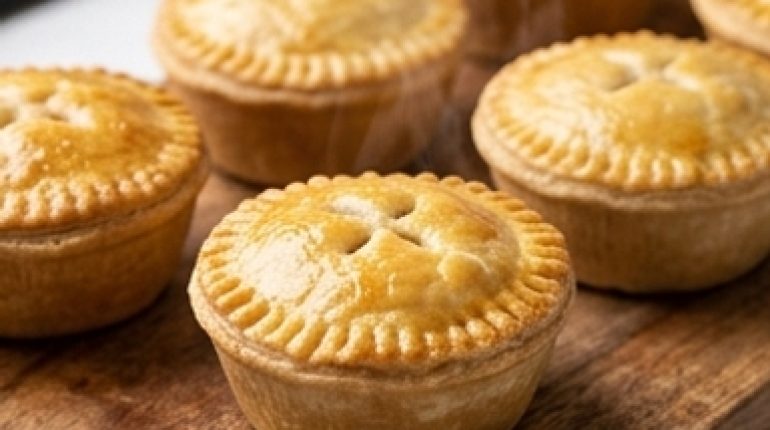
Take them out of the oven and look: the pastry has taken on a light caramel hue, almost russet on the edges, with a slight steam escaping from the small incisions on top. Open one. The beef filling is glossy, well-bound, and the aromas of thyme mixed with garlic fill the entire kitchen. The pastry cracks under the fork—that dry, sharp sound that announces a good flaky crust. Inside, the filling is tender, contrasting perfectly with that crunch.
Why you’ll love this recipe
Ingredient Notes
All the simple ingredients that make the magic: ground beef, cold butter, and pantry spices.
- Ground beef : Get 15-20% fat content. Extra-lean beef dries out during cooking and lacks character in a filling. Fat is what binds the filling and gives it depth once simmered.
- Cold butter : Literally the key to the pastry. It must come out of the refrigerator 5 minutes before, no more. Those small pieces that remain visible in the flour create steam pockets during baking—hence the flakiness. Room temperature butter, and you get a shoe sole.
- Worcestershire sauce : Only one tablespoon, but it makes all the difference. It brings an umami depth that you couldn’t identify blindly, but whose absence you would notice. Lea & Perrins if you have the choice.
- Tomato paste : Not tomato sauce. Two spoons that give the filling a mahogany color and an incomparable density of flavor. Sauté it for 30 seconds in the pan before adding the broth—the aroma changes completely.
- Cornstarch : The discreet binding agent. Mixed with cold water before entering the pan, it thickens the filling without making it sticky or floury. No cornstarch? A spoonful of ordinary flour, added directly to the meat during cooking, does the trick.
Starting the dough
The dough begins with hands in the flour. Cut the cold butter into small cubes and work them with your fingertips into the flour and salt. The goal is not a homogeneous mixture: we still want to see pea-sized pieces of butter. That sandy, irregular texture under your palms is exactly what we’re looking for. Cold water goes in tablespoon by tablespoon—just enough for the dough to hold in a ball without tearing. Wrap it and leave it in the fridge for 30 minutes. This step is not optional: it allows the gluten to relax and the butter to firm up, making the dough much easier to roll out and, above all, much better to eat.
The filling that scents the whole kitchen
The onion becomes translucent in five minutes over medium heat. Wait until it has that slight shine before adding the garlic. When the beef goes into the pan, crumble it well: no large blocks, just a fine and uniform texture. The smell changes completely when the meat browns—something deeper, almost toasted, replaces the raw smell. That’s when we add the tomato paste, Worcestershire, thyme, and paprika. Then the broth, which will deglaze the juices stuck to the bottom of the pan. The cornstarch goes in last: in two or three stirs, the sauce goes from liquid to coating. Let it cool completely before filling the pastry—a hot filling melts the butter and ruins all the work.
Assembly, the moment that makes it all happen
Roll out the dough on a floured surface, about 3 mm thick—not too thin. Cut circles large enough to overflow by one centimeter from each mold cavity. Press gently, without pulling, so as not to break the dough. Fill generously, but not to the brim: you need space for the lid. To seal the edges, the tines of a fork pressed in a circle give that scalloped look and, above all, prevent the filling from escaping during baking. A small cross on top to let the steam escape, and an egg wash applied with a brush for a uniform result—not with your finger.
And now, patience
25 to 30 minutes at 180°C. The signal that it’s ready? The color: a light caramel brown, almost amber, over the entire surface—not just the edges. At the end of cooking, a slight sizzling can be heard, a sign that the fat is caramelizing under the dough. Let it cool for 5 minutes before removing from the mold. A pie that is too hot will deform when leaving the mold. A thin knife slid between the pastry and the wall is enough to release them cleanly.
Tips & Tricks
- Prepare the filling the day before and keep it in the fridge overnight—the aromas intensify, and the next day assembly takes half the time.
- If the dough sticks while rolling it out, put it back in the fridge for 10 minutes. Do not add excess flour—this would toughen the final result.
- These pies freeze very well raw: assemble them, put them in the freezer on a tray, then transfer to a bag. When ready to bake, put them directly into the oven frozen, adding 10 minutes.
Can I prepare these mini pies in advance?
Yes, and it’s even recommended. The filling can be prepared the day before and keeps for 48 hours in the refrigerator—the flavors intensify. Assembled but unbaked pies keep for 24 hours in the fridge covered with plastic wrap, ready to bake.
Can they be frozen?
Very well, raw or cooked. Raw, freeze them on a tray before transferring to a bag—bake directly from frozen with 10 extra minutes. Cooked, reheat them for 15 minutes at 160°C to regain the crunch.
I don’t have a muffin tin, what can I use?
Individual tart molds work perfectly. Failing that, greased ramekins will do—the pies will be a bit taller and more rustic, but the result is identical. Avoid parchment paper alone without a container, the dough would spread.
How do I prevent the edges from opening during baking?
Two things: the filling must be completely cooled before filling, otherwise the fat makes the seal slip. Then, seal the edges with the tines of a fork by pressing firmly—not just pinching with your finger.
Can I replace the ground beef with another meat?
Ground beef remains the best choice for this recipe, but ground lamb works very well with an extra pinch of cumin. Ground turkey is drier—add an extra tablespoon of olive oil to the filling to compensate.
The dough looks too dry and cracks when I roll it out, what should I do?
Add a few drops of cold water, one at a time, and knead briefly. If it is too cold and rigid after resting in the fridge, leave it for 5 minutes at room temperature before rolling—it becomes much more flexible.
Homemade Mini Beef Pies
French
Main course
Small individual pies with homemade flaky pastry and a beef filling seasoned with thyme. Crunchy on the outside, melting on the inside.
Ingredients
- 250g (2 cups) all-purpose flour
- 115g (½ cup) cold butter, cubed
- 5-6 tablespoons cold water
- ½ teaspoon salt
- 500g ground beef (15-20% fat)
- 1 medium onion, finely chopped
- 2 garlic cloves, minced
- 120ml (½ cup) beef broth
- 2 tablespoons tomato paste
- 1 tablespoon Worcestershire sauce
- 1 teaspoon dried thyme
- ½ teaspoon paprika
- 1 tablespoon cornstarch
- 2 tablespoons cold water (for cornstarch)
- 1 tablespoon olive oil
- 1 beaten egg (for glaze)
- salt and pepper to taste
Instructions
- 1Mix flour and salt in a bowl. Work in the cold butter with your fingertips until you get a sandy texture with visible pieces.
- 2Add cold water tablespoon by tablespoon until a smooth ball forms. Wrap and refrigerate for 30 minutes.
- 3In a pan, sauté the onion in olive oil for 5 minutes. Add garlic and cook for 1 minute.
- 4Add ground beef and cook while crumbling until completely browned.
- 5Stir in tomato paste, Worcestershire, thyme, paprika, salt, and pepper. Pour in the broth and simmer for 3 minutes.
- 6Add the cornstarch dissolved in cold water, stir until thickened. Remove from heat and let cool completely.
- 7Preheat the oven to 180°C. Generously grease a muffin tin.
- 8Roll out the dough on a floured surface (3mm). Cut circles and line them into the mold cavities.
- 9Fill each pastry base with a good spoonful of cold filling.
- 10Cut discs to cover each pie. Seal the edges with the tines of a fork and make a small incision in the center.
- 11Brush each pie with the beaten egg. Bake for 25 to 30 minutes until caramel-colored.
- 12Let cool for 5 minutes before removing from the mold.
Notes
• Make ahead: the filling can be prepared 48 hours in advance and stored in the refrigerator. Raw assembled pies keep for 24 hours in the fridge before baking.
• Freezing: freeze raw on a tray, then transfer to a bag. Bake directly from frozen at 180°C, adding 10 minutes of cooking time.
• Cheese variation: add 40g of grated cheddar or Emmental to the cooled filling before filling the pies.
Nutrition Facts (per serving, estimated)
| 230 kcalCalories | 11gProtein | 18gCarbs | 13gFat |