Some desserts are reserved for big occasions. And then there are those you make on a Sunday afternoon, for no real reason, just because you want something delicious. This homemade milk cream filled cake clearly belongs to the second category.
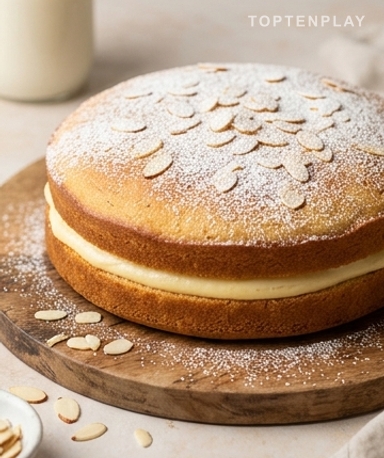
Imagine a slice on your plate: the tender dough yielding under the fork, almost like shortbread but softer, and in the center this thick, pale yellow cream that smells of real vanilla. The top is golden like light caramel, slightly pearly under the powdered sugar. And when you grab the slice with your fingers before even getting a plate — yes, it happens to everyone — it holds together perfectly without collapsing. This is honest comfort food.
Why you’ll love this recipe
Ingredient Notes
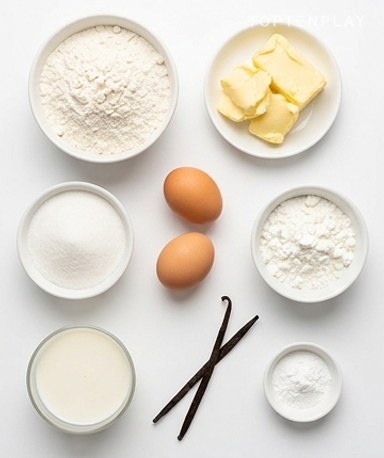
Simple and honest ingredients, the ones you almost always have in your cupboards.
- The vanilla bean : It’s the one ingredient you shouldn’t skimp on. A real Bourbon or Tahitian bean — those tiny black seeds in the milk are irreplaceable. If you don’t have one, a teaspoon of vanilla paste will do. Synthetic bottled flavoring, no.
- Cornstarch (Maïzena) : This gives the cream its tight, smooth texture without being sticky. Don’t replace it with flour — the cream would be heavier and less refined on the palate.
- Butter : It must be soft, not melted. Out of the fridge for at least an hour. Butter that’s too cold gives a lumpy dough that you’ll be tempted to overwork — and that’s when the texture suffers.
- Egg yolks : They do double duty here: in the dough for richness and beautiful color, and in the cream for binding. Fresh eggs are really all we ask for.
Cream first
Always start with the cream because it must cool down completely before assembly. In a saucepan, gently heat the milk with the split vanilla bean — the small black seeds disperse in the liquid as it heats up without boiling. Meanwhile, whisk the yolks with the sugar until the mixture turns slightly pale, then stir in the cornstarch. Pour the hot milk in a thin stream over this mixture while whisking constantly. Return to medium heat, and stay right there. In two to three minutes, the cream thickens suddenly — you can feel it resisting the spatula; it gains body. Turn off the heat, pour into a bowl, and wrap with plastic film touching the surface to prevent a skin. Off to the fridge.
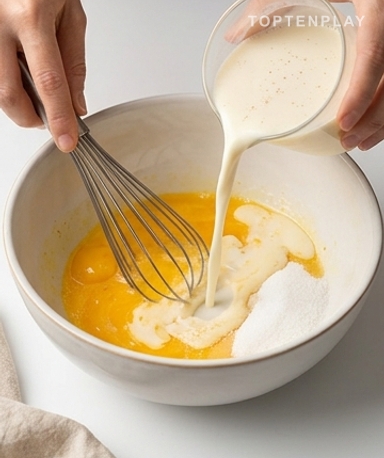
Start the dough
The dough is straightforward. Soft butter and sugar first — work them until you get a creamy texture, almost like a smooth ointment. Then the yolks and the extra egg. Next, add the flour and baking powder all at once. Mix just enough: the dough should be soft, homogeneous, with that slightly sandy feel under your fingers indicating it’s ready. Not a second more. Form a ball and slip it into the fridge for 20 to 30 minutes — this rest will make rolling much easier.
Assembly is earned
Divide the dough into two equal parts. Roll the first one directly into the greased and floured mold — you can use the bottom of a glass or your fingers to cover evenly up to the edges. Prick lightly with a fork. Spread the cold, firm cream over it in an even layer, leaving about 1 cm from the edges. Then comes the second layer of dough, placed delicately on top. Seal the edges by pressing lightly. This is the most delicate moment — go slowly without tearing.
And now, patience
Oven at 180°C, 40 to 45 minutes. During baking, the smell of warm butter and vanilla begins to fill the kitchen — that’s a good sign. The top gradually takes on a golden color like light caramel, uniform and slightly shiny. When it’s cooked, take the mold out and don’t touch anything. Really nothing. The cake cools completely in its mold before being unmolded — the cream must have time to set properly. A dusting of powdered sugar just before serving, a few flaked almonds for the final touch.
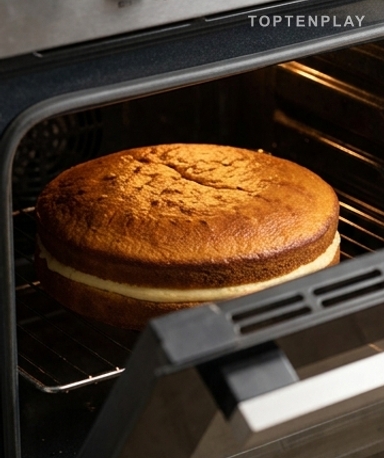
Tips & Tricks
- Cover the cream with plastic film ‘at contact’ as soon as it’s poured into the bowl — meaning the plastic film is placed directly on the surface, not over it. This avoids the thick skin that forms as it cools and creates lumps during assembly.
- Don’t overwork the dough once the flour is incorporated. If over-kneaded, it becomes elastic and hard after baking. Mix just until homogeneous, then stop.
- Wait until the cake is completely cold before unmolding — not lukewarm, cold. The cream must be firmly set, otherwise the first slice will collapse, which would be a shame.
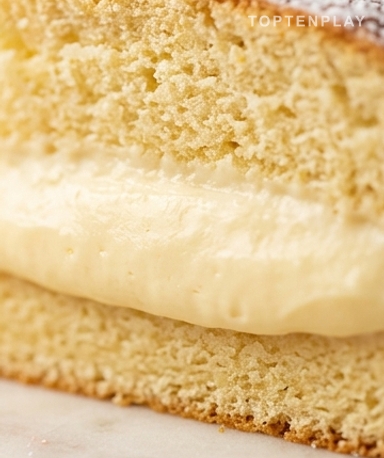
Can I prepare this cake the day before?
Yes, and it’s even recommended. The cream has time to stabilize well and the flavors develop. Keep it in the fridge once cooled, wrapped or in an airtight box. Add the powdered sugar only when serving.
How to store the milk cream filled cake?
In the refrigerator, well covered, it keeps for up to 3 days. Homemade pastry cream does not tolerate room temperature for long — do not leave it out of the fridge for more than 2 hours.
My cream is lumpy, what happened?
Two possible causes: the milk was poured too quickly onto the egg yolks without whisking, or the cream was heated too high at the end of cooking. If lumps form, go over the cream with an immersion blender or through a fine sieve — it’s very easy to fix.
Can I replace the cornstarch?
You can use potato starch in the same quantity. Classic white flour can work in a pinch but will result in a slightly heavier and less smooth cream. Cornstarch remains the best choice here.
The dough sticks to my fingers, what should I do?
It probably hasn’t rested enough in the fridge. 30 minutes minimum, ideally 45 if your kitchen is warm. You can also roll it between two sheets of parchment paper to prevent it from sticking to the work surface.
Can I freeze this cake?
Not really. Pastry cream doesn’t handle freezing well — it releases water when thawing and loses its smooth texture. This cake is much better fresh or prepared the day before.
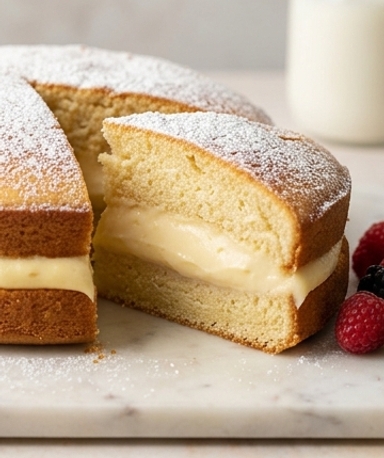
Homemade Milk Cream Filled Cake
French
Dessert
A tender, shortbread-like dough wrapping a creamy and generous vanilla pastry cream. The quintessential homemade dessert, simple to make and frankly irresistible.
Ingredients
- — For the dough —
- 267g flour
- 133g soft butter
- 107g sugar
- 2 egg yolks
- 1 small whole egg
- 8g baking powder (¾ packet)
- — For the cream —
- 330ml whole milk
- 2 egg yolks
- 27g cornstarch (Maïzena)
- 67g sugar
- 1 vanilla bean
- — Finishing —
- powdered sugar (to taste)
- flaked almonds (optional)
Instructions
- 1Split and scrape the vanilla bean. Heat the milk with the bean over low heat without boiling.
- 2Whisk 2 egg yolks with 67g of sugar until slightly frothy. Add the cornstarch and mix.
- 3Pour the hot milk in a thin stream over the yolk-sugar mixture while whisking. Return to the saucepan over medium heat.
- 4Cook while stirring constantly until the cream thickens (2-3 minutes). Pour into a bowl, cover with film at contact, let cool completely in the fridge.
- 5Work the soft butter with 107g of sugar until creamy. Add the 2 egg yolks and the whole egg, mix.
- 6Incorporate the flour and baking powder. Mix until you get a soft and homogeneous dough. Form a ball, refrigerate for 25 minutes.
- 7Preheat the oven to 180°C. Grease and flour a round or square mold (22-24 cm).
- 8Divide the dough in two. Roll the first half into the mold, prick lightly with a fork.
- 9Spread the cooled cream evenly over the dough. Cover with the second layer of dough, seal the edges.
- 10Bake for 40 to 45 minutes until the top is golden like light caramel. Let cool completely before unmolding.
- 11Dust with powdered sugar and sprinkle with flaked almonds before serving.
Notes
• Storage: up to 3 days in the refrigerator, well covered. Do not leave at room temperature for more than 2 hours.
• Make ahead: the cake is best prepared the day before — the cream stabilizes and the flavors intensify.
• Variations: add lemon or orange zest to the cream, some dark chocolate chips, or a thin layer of raspberry jam under the cream.
Nutrition Facts (per serving, estimated)
| 780 kcalCalories | 12gProtein | 95gCarbs | 38gFat |