How many times have you thrown away a lemon zest without thinking? Just into the bin, even though it was the most fragrant part of the fruit. There is a simple way to never do that again — and to have on hand an ingredient that you will use more often than you imagine.
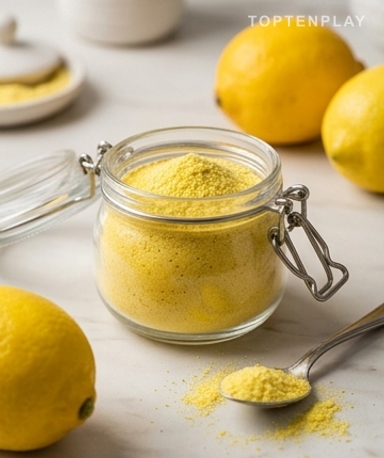
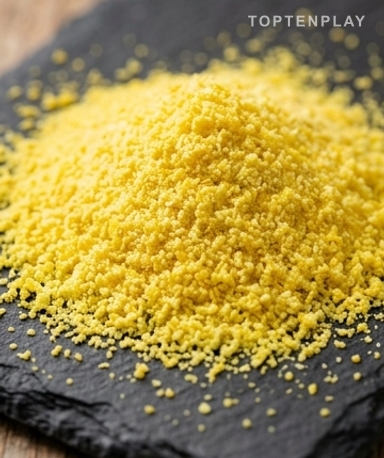
Lean over the open jar. The scent coming out of it is concentrated lemon — more direct than fresh grated zest, cleaner than juice. The powder itself is a light straw yellow, almost luminous when the light passes through it, fine like very finely ground semolina. Rub a pinch between your fingers and the essential oils are released immediately, leaving your fingers scented for several minutes after. A spoonful in a vinaigrette or a cake batter is enough to transform everything.
Why you’ll love this recipe
Ingredient Notes
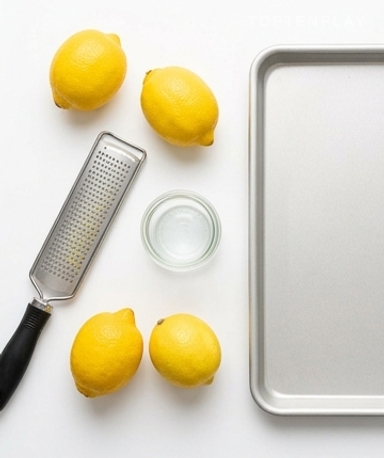
All you need: fresh lemons, a grater, and patience. That’s it.
- Organic, untreated lemons : This is the only non-negotiable point. Standard supermarket lemons are often waxed and surface-treated — you are concentrating the zest, so you are also concentrating all of that if you aren’t careful. Look for ‘untreated after harvest’ or go for organic. Lemons from Sicily or Spain in winter are generally excellent.
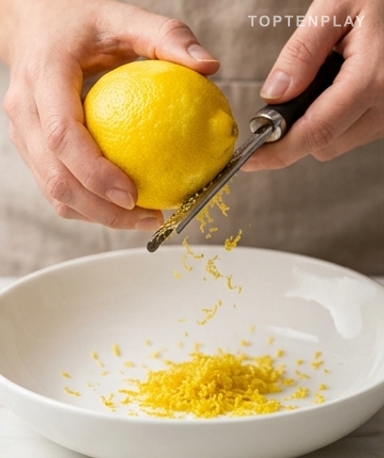
- A Microplane zester or a very fine grater : With a vegetable peeler, you take too much of the white pith, and the white is bitter. The Microplane just brushes the yellow layer, fine and full of essential oil. It’s the only equipment purchase for the recipe and it really changes everything.
Why I never throw away a lemon zest anymore
It started as a reflex — zesting a lemon for a cake and finding myself with a beautiful pile of zest that I didn’t know what to do with. Drying them was the obvious answer. Fresh grated zest has that bright and somewhat herbaceous smell, almost sharp in the nose. Dried, it becomes something else: rounder, softer, with an almost floral note. Today, I collect the zest as soon as I use a lemon — a zero-waste cooking reflex that always pays off.
The part everyone misses: drying without burning
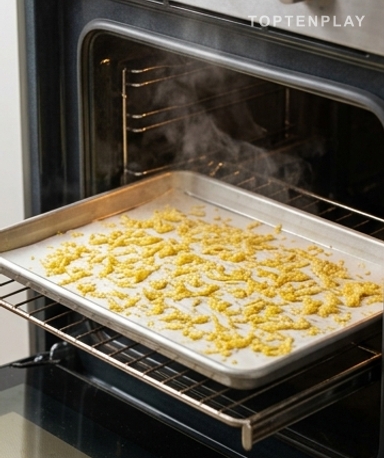
The oven at 50°C maximum, door slightly ajar with a wooden spoon to let the moisture escape. The zest is spread in a very thin layer on a tray — not in a heap, otherwise they dry underneath and stay soft on top. After an hour, you begin to smell the kitchen changing: a warm scent of concentrated lemon, slightly candied. The color changes from bright sun yellow to a light straw yellow, almost translucent in places. Touch the zest: if it snaps clean between your fingers without bending, it’s ready. Above all, do not turn up the temperature to go faster — you would lose the essential oils which are precisely the whole point of this.
Grind, sift, and keep the jar within reach
A clean coffee grinder or a small blender will do the job perfectly. The dried zest turns into powder in a few seconds — you hear the sound change from cracking to whistling when the texture becomes truly fine. Sift if you want something uniform, keep the larger particles to sprinkle directly on hot dishes. The jar goes into a dark cupboard, hermetically sealed. Write the date on it.
What you’re going to put in everything now
A teaspoon in a chicken marinade, and the whole sauce takes on a different depth. In a yogurt cake, it’s immediate — the powder disperses uniformly in the batter where fresh zest remains in filaments. On roasted carrots with cumin. In ginger tea. In a mustard vinaigrette. The reflex takes a few weeks to settle in, but once it’s there, you reach for your jar instinctively, just like you reach for pepper.
Tips & Tricks
- Only zest the yellow part: the white (albedo) is bitter and this bitterness concentrates during drying. A Microplane forgives mistakes; an ordinary knife much less so.
- If your oven doesn’t go down to 50°C, let the zest air dry on a plate for 48 hours. It works very well, it just takes longer.
- Keep the zest of several lemons in a small bag in the freezer until you have enough for a batch — no need to wait until you’ve used five lemons on the same day.
How many lemons are needed to get a jar of powder?
Count 6 to 8 lemons for about 20g of powder, which is about twenty teaspoons. The yield is low because drying evaporates all the water — but that is precisely what concentrates the fragrance.
Can non-organic lemons be used?
In theory no, because conventional lemons are treated and waxed on the surface, and you are going to concentrate the zest. If you really have no choice, scrub them thoroughly under hot water with a stiff brush — it doesn’t remove everything, but it significantly reduces residues.
How do you know when the zest is truly dry?
Take a piece of zest and snap it between two fingers. If it breaks clean with a small crack without bending or flexing, it’s ready. If it stays flexible or sticks slightly, put it back in the oven for another 30 minutes — insufficiently dry zest will mold in the jar.
Can you dry zest without an oven?
Yes, air drying works very well — spread the zest on a plate or a rack in a dry, ventilated place, and wait 48 hours. The result is identical, it’s just longer. Avoid humid places like near the sink.
Can lemon powder replace fresh zest in recipes?
Yes. Count about 1 teaspoon of powder for the zest of half a lemon. It disperses better in batters and sauces, but it doesn’t have quite the same vegetal freshness — it’s a bit warmer, more candied. For raw recipes or garnishes, fresh zest remains better.
Can you do the same with other citrus fruits?
Absolutely — limes, organic oranges, tangerines, grapefruits. The technique is identical. Orange powder is particularly useful in baking, while lime powder gives a more floral and fragrant result than classic yellow lemon.
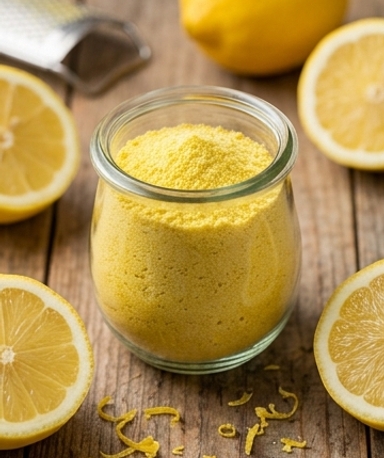
Homemade Lemon Powder
International
Homemade Condiment & Spice
The simplest way to upgrade the zest we usually throw away — dried and ground, they yield an intense condiment that keeps for six months and can be used in both sweet and savory dishes.
Ingredients
- 6 to 8 organic untreated lemons (large size preferred)
Instructions
- 1Wash the lemons carefully under cold water, scrub the skin well, then dry them with a clean kitchen towel.
- 2Grate the zest of each lemon with a Microplane or a very fine grater — only take the yellow layer, not the bitter white pith underneath.
- 3Spread the zest in a thin, uniform layer on a baking sheet lined with parchment paper. Do not overlap.
- 4Place in the oven at 50°C (lowest setting) with the oven door ajar, held by a wooden spoon, for 2h to 2h 30.
- 5Check for doneness: a zest should snap clean between the fingers without bending. If not, extend by 30 minutes.
- 6Allow to cool completely at room temperature, then blend in a coffee grinder or small blender for 15 to 20 seconds.
- 7Sift if you want a very fine texture. Pour into an airtight jar and close immediately.
Notes
• Storage: up to 6 months in an airtight jar, away from light and humidity. The powder gradually loses intensity after that.
• Multi-citrus variation: mix lemon, lime, and orange zest for a more complex citrus powder. The technique is identical.
• Easy accumulation: keep the zest as you go in a freezer bag until you have enough for a full batch.
Nutrition Facts (per serving, estimated)
| 3 kcalCalories | 0.1gProtein | 0.6gCarbs | 0gFat |